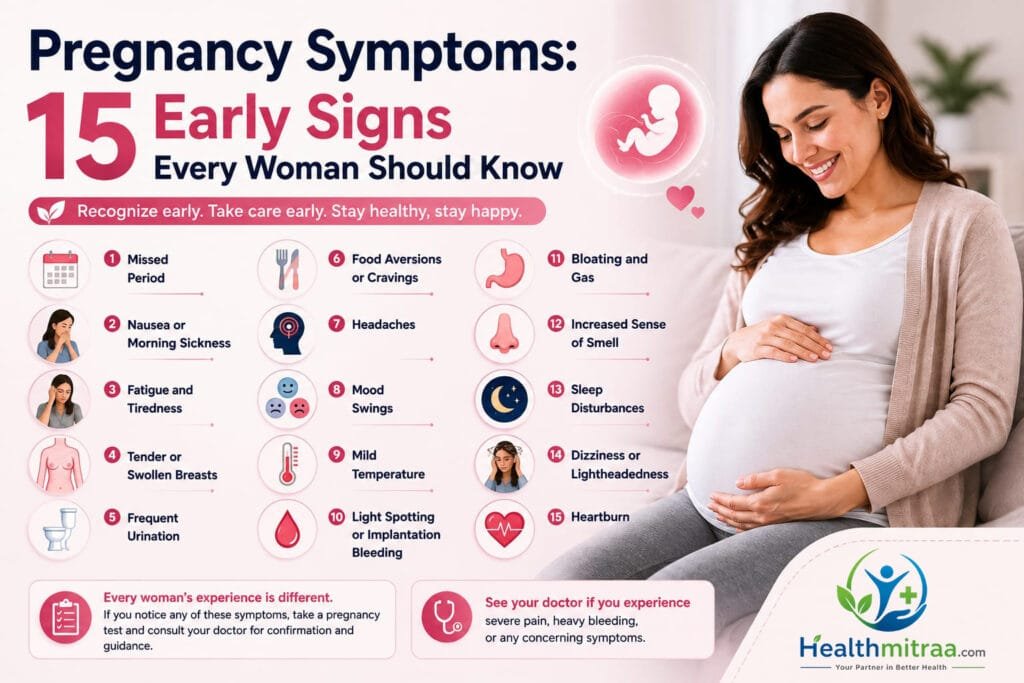
Could you be pregnant? For many women, the first signs of pregnancy appear even before a missed period, while others may not notice any changes for several weeks. Understanding pregnancy symptoms can help you recognize early changes in your body and decide when to take a pregnancy test or consult a healthcare professional.
Early pregnancy affects every woman differently. Some experience morning sickness, fatigue, breast tenderness, frequent urination, or mood changes, whereas others have only mild or no noticeable symptoms. These changes are mainly caused by rising pregnancy hormones that prepare your body to support a growing baby.
Although early symptoms may suggest pregnancy, they are not enough to confirm it because they can resemble premenstrual symptoms or other health conditions. A home pregnancy test and medical evaluation are the most reliable ways to confirm pregnancy.
In this guide, you’ll learn about the 15 most common pregnancy symptoms, when they usually begin, what causes them, how pregnancy is confirmed, and when you should seek medical care for a healthy pregnancy journey.
What Are Pregnancy Symptoms?
Pregnancy symptoms are the physical, emotional, and hormonal changes that many women experience after conception. These changes occur because the body begins producing pregnancy hormones, especially human chorionic gonadotropin (hCG), progesterone, and estrogen, which help support the developing baby and prepare the body for pregnancy.
The timing and intensity of these symptoms vary from one woman to another. Some women notice early changes within the first few weeks, while others may not experience noticeable symptoms until later. Common early signs include a missed period, nausea, breast tenderness, fatigue, frequent urination, food cravings, and mood changes. However, not every woman experiences the same symptoms, and some may have a healthy pregnancy with very few noticeable changes.
It is important to remember that pregnancy symptoms alone cannot confirm pregnancy because they may resemble premenstrual symptoms or other medical conditions. If you think you may be pregnant, taking a home pregnancy test after a missed period and consulting a qualified healthcare professional are the most reliable ways to confirm pregnancy and begin appropriate prenatal care.
When Do Early Pregnancy Symptoms Start?
For many women, the earliest pregnancy symptoms begin one to two weeks after conception, although the timing varies from person to person. Some women notice subtle changes even before a missed period, while others may not experience any obvious symptoms until several weeks later. Every pregnancy is unique, so the absence of early symptoms does not necessarily mean that pregnancy has not occurred.
One of the first signs is often a missed menstrual period, especially in women with regular cycles. Around the same time, rising levels of human chorionic gonadotropin (hCG) and other pregnancy hormones may trigger nausea, breast tenderness, fatigue, frequent urination, bloating, and an increased sense of smell. These hormonal changes help support the developing embryo and prepare the body for pregnancy.
Because pregnancy symptoms can closely resemble premenstrual symptoms, it is not always possible to tell the difference based on symptoms alone. If your period is late or you suspect pregnancy, taking a home pregnancy test after a missed period and confirming the results with a healthcare professional provides the most reliable diagnosis and ensures timely prenatal care.
15 Early Pregnancy Symptoms Every Woman Should Know
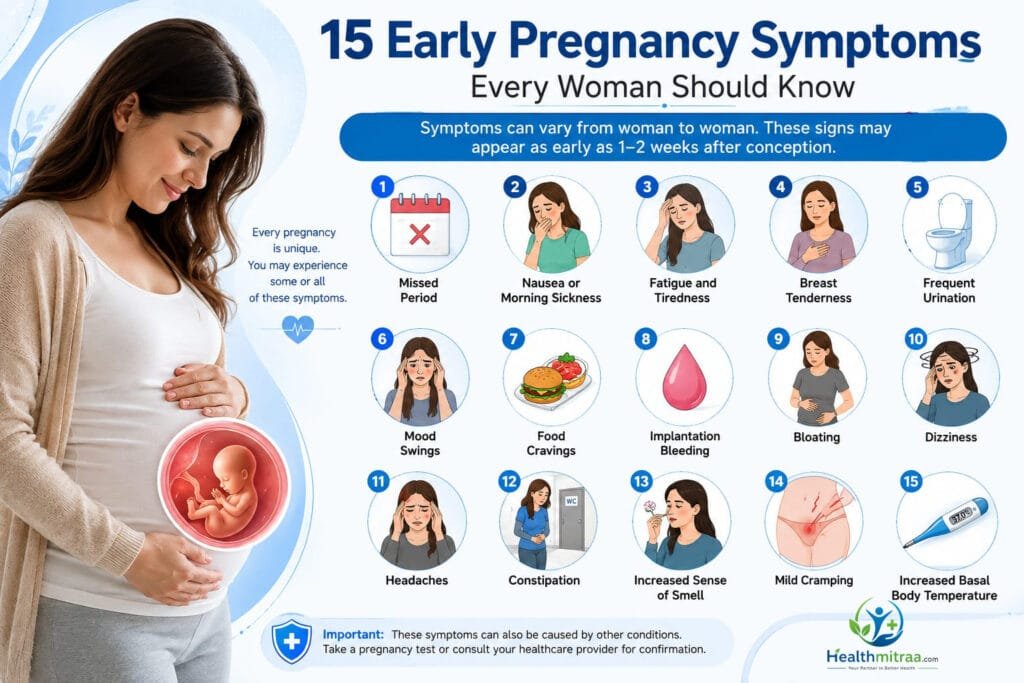
Every pregnancy is different, but these are among the most common pregnancy symptoms that may appear during the first few weeks:
1. Missed Period
A missed menstrual period is often the earliest and most noticeable sign of pregnancy.
2. Morning Sickness
Nausea or vomiting can occur at any time of the day and usually begins around the sixth week.
3. Breast Tenderness
Breasts may feel swollen, sore, heavier, or more sensitive because of hormonal changes.
4. Fatigue
Rising progesterone levels can make you feel unusually tired, even after getting enough rest.
5. Frequent Urination
Increased blood flow and hormonal changes may cause more frequent trips to the bathroom.
6. Light Spotting or Implantation Bleeding
Some women notice light pink or brown spotting when the fertilized egg attaches to the uterine lining.
7. Mild Cramping
Light cramps may occur during implantation and are usually milder than menstrual cramps.
8. Food Cravings or Aversions
You may suddenly crave certain foods or become sensitive to foods you previously enjoyed.
9. Heightened Sense of Smell
Strong odors may seem more intense during early pregnancy.
10. Mood Changes
Hormonal fluctuations can affect emotions, making mood swings more noticeable.
11. Bloating
Slower digestion caused by hormones may lead to abdominal bloating.
12. Headaches
Some women develop mild headaches as hormone levels and blood circulation change.
13. Dizziness
Lower blood pressure and changing circulation may occasionally cause dizziness or lightheadedness.
14. Constipation
Hormonal changes can slow bowel movements, resulting in constipation.
15. Increased Basal Body Temperature
A body temperature that remains slightly elevated after ovulation may be another early sign.
While these pregnancy symptoms are common, they do not confirm pregnancy on their own. If you suspect you are pregnant, take a home pregnancy test after a missed period and consult a qualified healthcare professional for confirmation and appropriate prenatal care.
What Causes Pregnancy Symptoms?
Most pregnancy symptoms are caused by the rapid hormonal and physical changes that begin soon after a fertilized egg implants in the uterus. During this stage, the body starts producing higher levels of human chorionic gonadotropin (hCG), progesterone, and estrogen. These hormones help maintain the pregnancy and support the baby’s early development, but they also trigger many of the common symptoms women experience.
For example, rising hCG levels are closely linked to nausea and morning sickness, while progesterone can slow digestion, leading to bloating and constipation. Increased blood flow and hormonal changes may cause frequent urination, breast tenderness, fatigue, dizziness, and mood changes. As the uterus begins to grow, the body continues adapting to meet the nutritional and oxygen needs of the developing baby.
The severity of pregnancy symptoms varies from one woman to another. Some experience several noticeable symptoms, whereas others have only mild changes or almost none at all. This variation is completely normal and does not necessarily indicate whether a pregnancy is healthy. Regular prenatal care is the best way to monitor both maternal and fetal health.
Risk Factors & When Symptoms May Vary
Not all women experience pregnancy symptoms in the same way. The timing, number, and intensity of symptoms can vary because every pregnancy is unique. Some women notice changes within the first few weeks, while others may have very mild symptoms or none at all during early pregnancy.
Several factors can influence how pregnancy symptoms develop. Hormone levels, whether it is a first pregnancy or a later one, carrying twins or multiple babies, overall health, stress levels, and individual body differences may all affect symptom severity. Women with higher pregnancy hormone levels may experience stronger nausea or fatigue, whereas others remain relatively symptom-free.
It is important to remember that mild or absent pregnancy symptoms do not necessarily indicate a problem. Likewise, more noticeable symptoms do not always mean the pregnancy is healthier. If symptoms suddenly disappear, become severe, or are accompanied by heavy bleeding, intense abdominal pain, or fainting, seek prompt medical evaluation to ensure both maternal and fetal well-being.
How Is Pregnancy Confirmed?
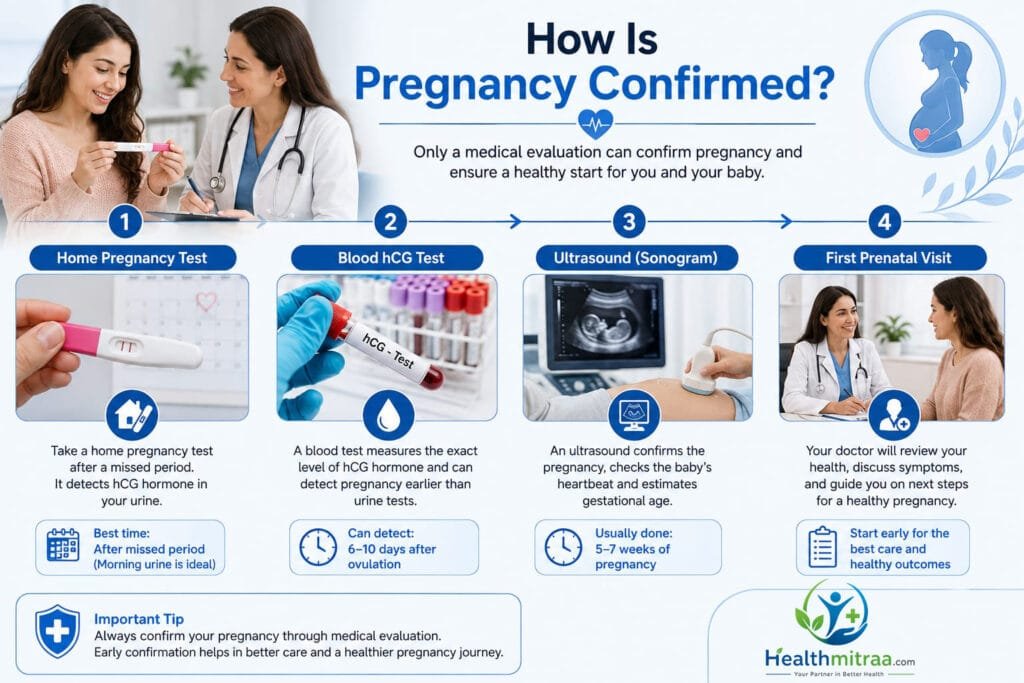
Although pregnancy symptoms can strongly suggest pregnancy, they cannot confirm it with certainty. The most reliable first step is a home urine pregnancy test, which detects the hormone human chorionic gonadotropin (hCG). For the most accurate result, the test should be taken after a missed menstrual period and according to the manufacturer’s instructions.
If the home test is positive or if pregnancy symptoms continue despite a negative result, a healthcare professional may recommend a blood hCG test. Blood tests can detect pregnancy earlier than most urine tests and measure hormone levels more precisely.
Your healthcare provider will also review your medical history, menstrual cycle, and current symptoms. To confirm that the pregnancy is developing normally and to estimate the baby’s gestational age, an ultrasound scan may be performed during the first trimester.
Once pregnancy is confirmed, it is important to begin prenatal care as early as possible. Regular checkups help monitor the health of both the mother and the developing baby, identify potential complications early, and provide guidance on nutrition, supplements, vaccinations, and healthy lifestyle habits throughout pregnancy.
Healthy Tips During Early Pregnancy
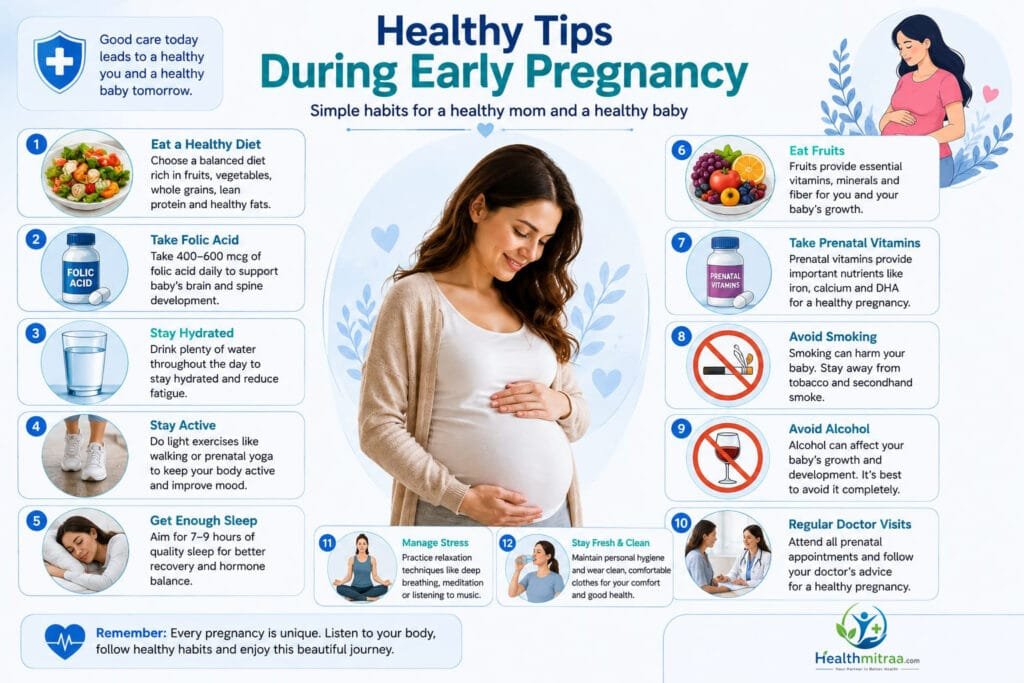
Healthy daily habits can support both the mother and the developing baby from the very beginning. While every pregnancy is different, these practical steps can help reduce discomfort, promote overall well-being, and support a healthy pregnancy.
Eat a Balanced Diet
Choose a variety of fruits, vegetables, whole grains, lean proteins, dairy or calcium-rich alternatives, and healthy fats. Eating small, frequent meals may also help reduce nausea.
Take Prenatal Vitamins
Begin taking prenatal vitamins as recommended by your healthcare provider. Folic acid is especially important during early pregnancy because it helps reduce the risk of neural tube defects.
Stay Hydrated
Drink plenty of water throughout the day. Proper hydration supports healthy blood circulation, digestion, and amniotic fluid production while helping reduce constipation.
Get Regular Physical Activity
If your healthcare provider approves, activities such as walking, prenatal yoga, or swimming can improve energy levels, mood, and overall fitness during pregnancy.
Prioritize Sleep and Rest
Aim for adequate sleep every night and rest whenever your body feels tired. Fatigue is common during the first trimester.
Avoid Harmful Substances
Do not smoke, drink alcohol, or use recreational drugs during pregnancy. Discuss all medications and supplements with your healthcare provider before taking them.
Attend Regular Prenatal Checkups
Even if pregnancy symptoms are mild, early and regular prenatal visits are essential. These appointments help monitor your health, track your baby’s development, identify possible complications early, and provide personalized advice on nutrition, vaccinations, and lifestyle choices throughout pregnancy.
When Should You See a Doctor?
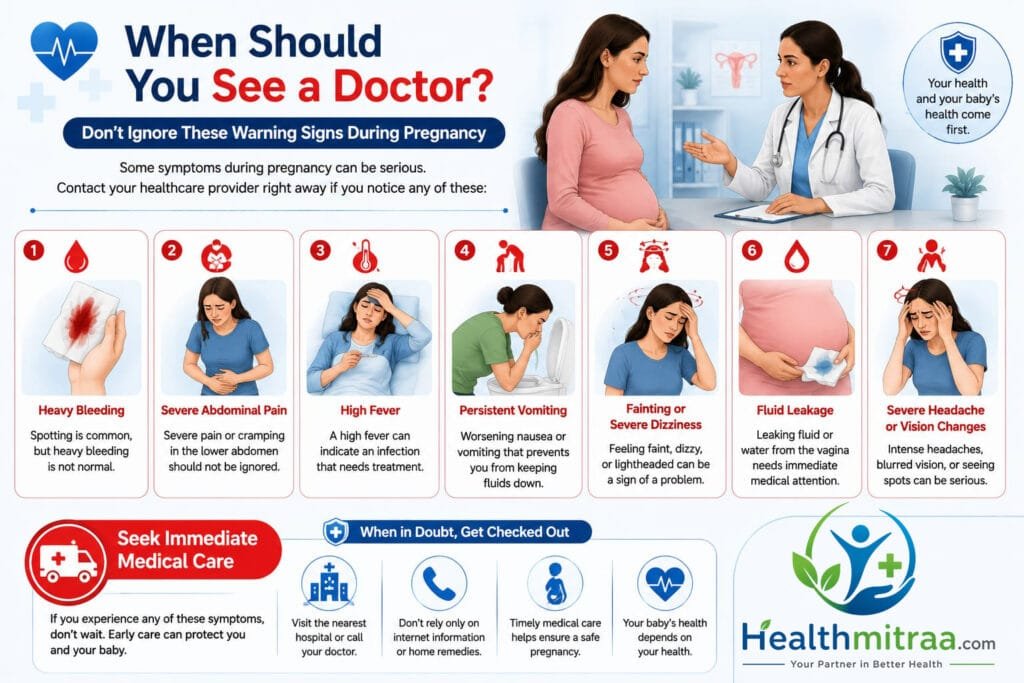
While mild pregnancy symptoms are common, certain signs require prompt medical attention. Schedule a healthcare visit as soon as you suspect pregnancy so that prenatal care can begin early and your health and your baby’s development can be monitored.
Seek immediate medical care if pregnancy symptoms are accompanied by heavy vaginal bleeding, severe abdominal or pelvic pain, persistent vomiting that prevents eating or drinking, high fever, fainting, severe dizziness, or fluid leaking from the vagina. These symptoms may indicate a condition that requires urgent evaluation.
You should also contact your healthcare provider if you notice a sudden disappearance of symptoms after pregnancy has been confirmed, or if you have a history of miscarriage, ectopic pregnancy, or chronic medical conditions such as diabetes or high blood pressure.
Early medical care allows healthcare professionals to identify potential complications, answer your questions, and provide guidance on nutrition, supplements, medications, and lifestyle choices. Regular prenatal checkups remain one of the most important steps toward a healthy pregnancy and a healthy baby.
Frequently Asked Questions About Pregnancy Symptoms
1. What is usually the first pregnancy symptom?
For many women, a missed period is the earliest and most noticeable sign. However, some may first experience fatigue, breast tenderness, or mild nausea.
2. Can pregnancy symptoms appear before a missed period?
Yes. Some pregnancy symptoms, such as implantation spotting, mild cramping, fatigue, or breast tenderness, may develop a few days before a missed period, although this varies between women.
3. Can I be pregnant without noticeable symptoms?
Yes. Some women have very mild pregnancy symptoms or none at all during the early weeks. A lack of symptoms does not necessarily indicate an unhealthy pregnancy.
4. Are pregnancy symptoms the same as PMS symptoms?
Not always. While some symptoms overlap, pregnancy is more likely if they are accompanied by a missed period and a positive pregnancy test.
5. When should I take a pregnancy test?
For the most accurate result, take a home pregnancy test after your missed period. If the result is negative but pregnancy symptoms continue, repeat the test after a few days or consult your healthcare provider.
Bonus Section
Expert Tips
Do not rely on pregnancy symptoms alone to confirm pregnancy. Take a home pregnancy test after a missed period, begin prenatal care early, follow a balanced diet, take prenatal vitamins with folic acid, stay hydrated, and discuss any medications with your healthcare provider before using them.
Did You Know?
Every pregnancy is unique. Some women experience several pregnancy symptoms during the first few weeks, while others notice only mild changes or no obvious symptoms. Both situations can occur in healthy pregnancies.
Pregnancy Symptom Self-Assessment
Ask yourself:
- Have you missed your menstrual period?
- Are you experiencing nausea or unusual fatigue?
- Have your breasts become tender or swollen?
- Are you urinating more often than usual?
- Have you taken a home pregnancy test?
If you answered “Yes” to several questions, schedule a medical evaluation for confirmation.
Healthy Pregnancy Checklist
- ✓ Eat a nutritious, balanced diet
- ✓ Take prenatal vitamins daily
- ✓ Drink plenty of water
- ✓ Get adequate sleep
- ✓ Attend prenatal appointments
- ✓ Avoid smoking and alcohol
Myth vs. Fact
Myth: Severe pregnancy symptoms always mean a healthier pregnancy.
Fact: The intensity of symptoms varies widely and does not determine whether a pregnancy is healthy.
Key Takeaways
- Pregnancy symptoms often begin within the first few weeks after conception but vary from woman to woman.
- A missed period, nausea, fatigue, and breast tenderness are among the earliest signs.
- Pregnancy symptoms alone cannot confirm pregnancy; a home pregnancy test and medical evaluation are essential.
- Early prenatal care, healthy lifestyle habits, and regular checkups support a healthier pregnancy for both mother and baby.
Conclusion
Recognizing pregnancy symptoms early can help you take timely steps toward confirming pregnancy and protecting your health. Because symptoms vary from woman to woman, they should never be used as the only basis for diagnosis. If you think you may be pregnant, take a pregnancy test, schedule an early prenatal visit, and follow your healthcare provider’s advice to support a healthy pregnancy for both you and your baby.
External References
- Mayo Clinic – Pregnancy week by week
- American College of Obstetricians and Gynecologists (ACOG) – Pregnancy
- National Institute of Child Health and Human Development (NICHD) – Pregnancy
- NHS – Pregnancy
- MedlinePlus – Pregnancy
Related Articles
- Low Blood Pressure (Hypotension): Symptoms, Causes, Treatment & Prevention
- High Blood Pressure: Symptoms, Causes, Treatment & Prevention
- High Cholesterol: Symptoms, Causes, Treatment & Prevention
- Diabetes: Symptoms, Causes, Treatment & Prevention
- Menopause: 15 Common Symptoms, Stages & Best Natural Ways to Manage Them
Medical Disclaimer
This article is for educational and informational purposes only and should not be considered medical advice, diagnosis, or treatment. Pregnancy symptoms vary from person to person, and only a qualified healthcare professional can confirm pregnancy and provide personalized care. If you think you may be pregnant or experience severe symptoms such as heavy bleeding, severe abdominal pain, persistent vomiting, or fainting, seek immediate medical attention.