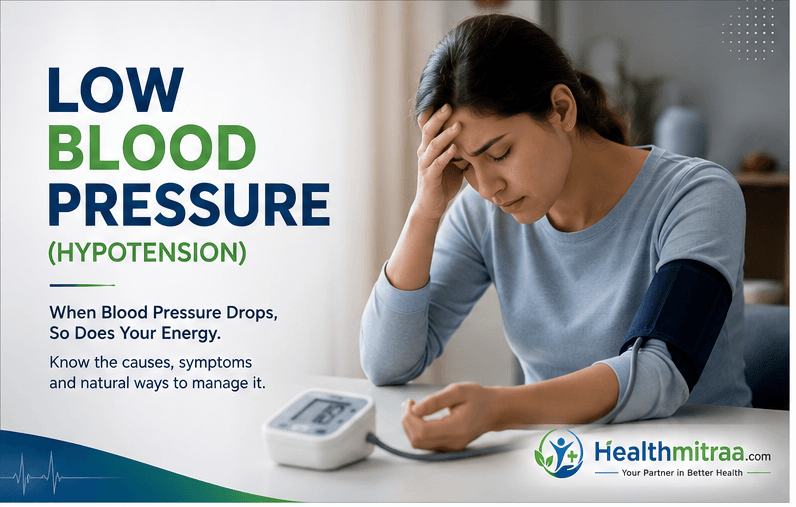
Low blood pressure, medically known as hypotension, is a condition in which the force of blood against the walls of the arteries is lower than normal. While many people naturally have low blood pressure without experiencing any health problems, a sudden or severe drop can reduce the flow of oxygen-rich blood to vital organs, including the brain and heart. This may lead to dizziness, fainting, fatigue, and in serious cases, life-threatening complications.
Understanding the causes, symptoms, and treatment options for low blood pressure can help you recognize when it is harmless and when it requires immediate medical attention.
What Is Low Blood Pressure?
Blood pressure measures how strongly your heart pumps blood through your arteries. It is recorded using two numbers:
- Systolic pressure: The pressure when your heart beats.
- Diastolic pressure: The pressure when your heart rests between beats.
A normal blood pressure reading is generally around 120/80 mmHg.
Low blood pressure is usually considered to be 90/60 mmHg or lower. However, some healthy individuals naturally have readings below this level and experience no symptoms. In such cases, low blood pressure is not considered a medical problem.
Common Symptoms of Low Blood Pressure
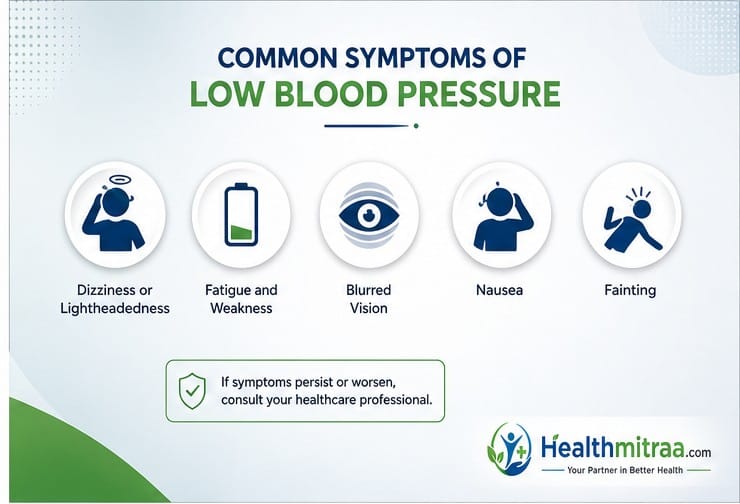
Symptoms occur when blood pressure drops enough to reduce blood flow to the brain and other organs.
Some of the most common symptoms include:
- Dizziness or lightheadedness
- Fainting (syncope)
- Blurred vision
- Weakness or fatigue
- Difficulty concentrating
- Cold, pale, or clammy skin
- Nausea
- Rapid or shallow breathing
- Feeling thirsty or dehydrated
If symptoms appear suddenly or become severe, medical evaluation is important. sources:https://www.mayoclinic.org/diseases-conditions/low-blood-pressure/symptoms-causes/syc-20355465
Causes of Low Blood Pressure
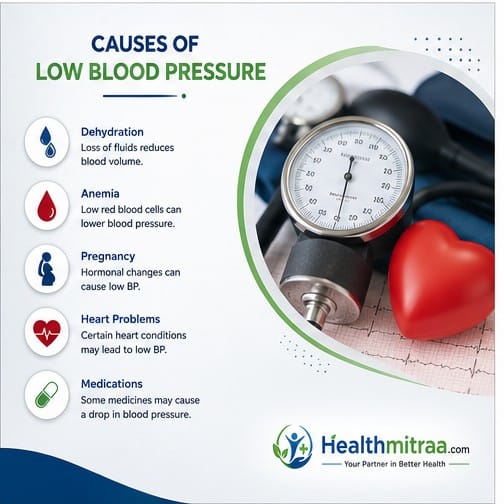
There are several reasons why blood pressure may become too low.
1. Dehydration
One of the leading causes of hypotension is dehydration. When your body loses more fluids than it takes in, blood volume decreases, causing blood pressure to fall.
Common causes include:
- Excessive sweating
- Vomiting
- Diarrhea
- Fever
- Not drinking enough water
2. Nutritional Deficiencies
A lack of important nutrients such as vitamin B12, folate, or iron can reduce the production of healthy red blood cells, contributing to low blood pressure.
3. Heart Conditions
Certain heart problems reduce the heart’s ability to pump blood effectively, including:
- Slow heart rate (bradycardia)
- Heart valve disorders
- Heart attack
- Heart failure
4. Endocrine Disorders
Hormonal imbalances can affect blood pressure. Conditions such as diabetes, adrenal insufficiency (Addison’s disease), and thyroid disorders may contribute to hypotension.
5. Medications
Some medications may lower blood pressure as a side effect, including:
- Blood pressure medicines
- Diuretics
- Certain antidepressants
- Parkinson’s disease medications
- Erectile dysfunction medications (when combined with nitrates)
Never stop taking prescribed medication without consulting your doctor.
6. Pregnancy
Blood pressure often decreases during pregnancy because the circulatory system expands rapidly. In most cases, it returns to normal after childbirth.
Types of Low Blood Pressure
Doctors classify hypotension into several types:
Orthostatic Hypotension
This occurs when blood pressure drops suddenly after standing up from sitting or lying down. It may cause dizziness or fainting and is more common in older adults.
Postprandial Hypotension
Some individuals experience low blood pressure after eating, particularly older adults or those with nervous system disorders.
Neurally Mediated Hypotension
This type mainly affects children and young adults. It occurs after standing for long periods due to miscommunication between the heart and brain.
Severe Hypotension (Shock)
A dramatic drop in blood pressure can result in shock, which is a medical emergency requiring immediate treatment.
Signs of shock include:
- Confusion
- Cold and clammy skin
- Weak pulse
- Rapid breathing
- Loss of consciousness
Call emergency medical services immediately if shock is suspected.
Diagnosis
A healthcare provider may perform several tests to determine the cause of low blood pressure.
These may include:
- Blood pressure measurements in different positions
- Blood tests
- Electrocardiogram (ECG)
- Echocardiogram
- Tilt table test
- Stress testing
Accurate diagnosis helps identify any underlying condition that requires treatment.
Treatment for Low Blood Pressure
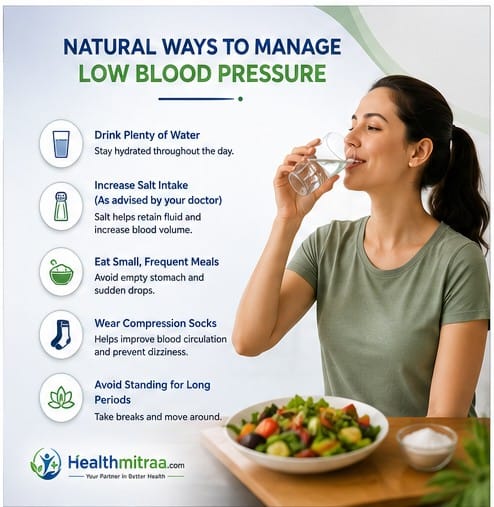
Treatment depends on the underlying cause and the severity of symptoms.
Lifestyle Changes
Many mild cases improve with simple lifestyle modifications.
- Drink plenty of water.
- Increase fluid intake during hot weather.
- Stand up slowly after sitting or lying down.
- Avoid standing for long periods.
- Eat smaller, more frequent meals.
- Limit alcohol consumption.
- Wear compression stockings if recommended.
Increase Salt Intake Carefully
Some people may benefit from increasing sodium intake, but this should only be done under medical supervision because excessive salt can raise blood pressure too much and increase the risk of heart disease.
Medications
If lifestyle changes are not enough, doctors may prescribe medications such as:
- Fludrocortisone
- Midodrine
- Droxidopa (for certain conditions)
Medication should always be taken exactly as prescribed.
Foods That May Help
A balanced diet supports healthy blood pressure.
Foods that may help include:
- Water-rich fruits
- Coconut water
- Soups and broths
- Eggs
- Lean meats
- Dairy products
- Leafy green vegetables
- Whole grains
- Bananas
- Nuts and seeds
People with anemia-related hypotension should also consume iron-rich foods such as spinach, beans, lentils, and lean red meat.
Can Low Blood Pressure Be Dangerous?
Not always.
Many healthy people naturally have lower blood pressure and experience no symptoms. However, persistent or sudden low blood pressure can become dangerous if it reduces blood flow to the brain, heart, or kidneys.
Repeated fainting episodes increase the risk of falls and injuries, especially in older adults.
Tips to Prevent Low Blood Pressure
You can reduce your risk by following healthy daily habits.
- Stay hydrated throughout the day.
- Avoid skipping meals.
- Exercise regularly.
- Rise slowly from bed each morning.
- Avoid excessive alcohol intake.
- Manage chronic medical conditions properly.
- Follow your doctor’s advice regarding medications.
Small lifestyle changes often make a significant difference in maintaining healthy circulation.
When Should You See a Doctor?
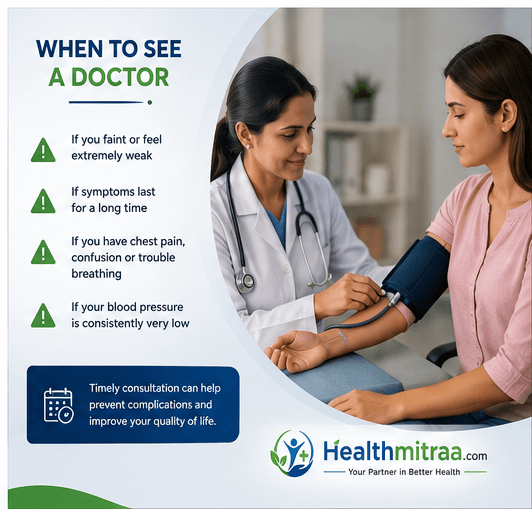
Consult your healthcare provider if you experience:
- Frequent dizziness
- Repeated fainting
- Chest pain
- Shortness of breath
- Persistent fatigue
- Confusion
- Blood pressure readings below 90/60 mmHg along with symptoms
Seek emergency medical care if symptoms appear suddenly or are accompanied by signs of shock.
Final Thoughts
Low blood pressure is not always a cause for concern, especially if it occurs without symptoms. However, when hypotension leads to dizziness, fainting, or weakness, it should not be ignored. Identifying the underlying cause is the key to effective treatment.
Maintaining proper hydration, eating a nutritious diet, exercising regularly, and following medical advice can help manage low blood pressure and reduce the risk of complications. If symptoms persist or worsen, consult a qualified healthcare professional for a thorough evaluation and personalized treatment plan.
Disclaimer: This article is for educational purposes only and should not replace professional medical advice, diagnosis, or treatment. Always consult your doctor regarding any medical condition or concerns about your blood pressure.
link: https://healthmitraa.com/high-cholesterol-causes-symptoms-treatment/
Medical Disclaimer
The information provided in this article is for general educational and informational purposes only. It is not intended to replace professional medical advice, diagnosis, or treatment. Always consult a qualified doctor or healthcare professional regarding any medical condition or health concern. Never ignore or delay seeking professional medical advice because of something you have read on this website.