Introduction
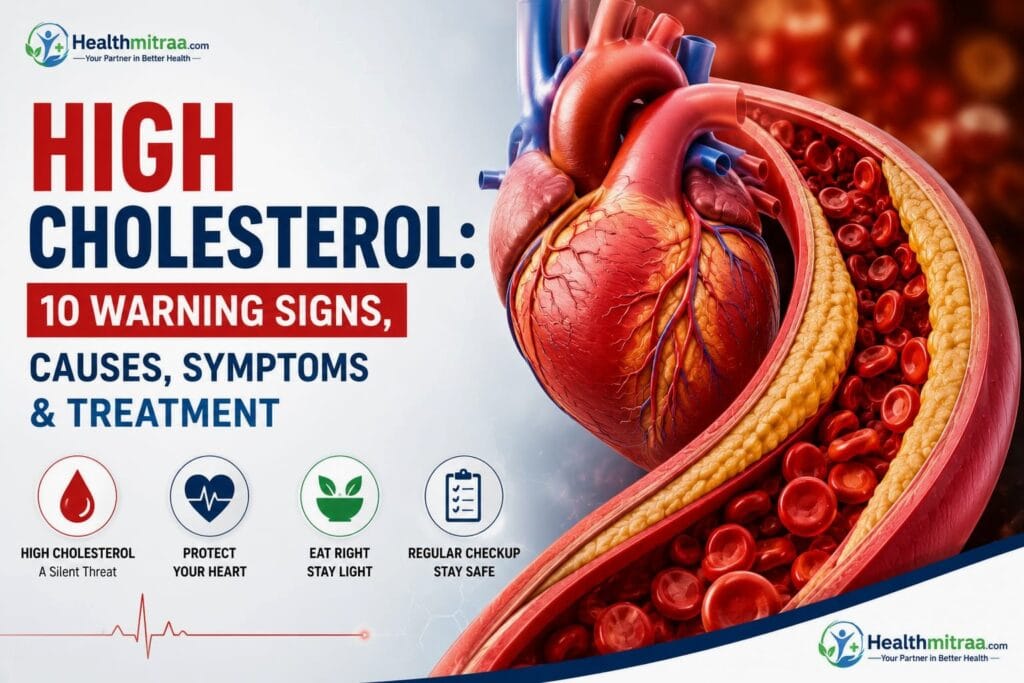
High cholesterol is one of the most common health conditions worldwide and a major risk factor for heart disease and stroke. Cholesterol is a waxy, fat-like substance that is naturally produced by the liver and is also obtained from certain foods. While the body needs cholesterol to build healthy cells, produce hormones, vitamin D, and digestive substances, having too much cholesterol in the blood can be harmful.
When cholesterol levels become too high, fatty deposits can build up inside the arteries. Over time, these deposits can narrow the arteries, reducing blood flow and increasing the risk of serious health problems such as heart attack and stroke. High cholesterol often develops without noticeable symptoms, which is why it is commonly called a “silent condition.”
What is Cholesterol?
Cholesterol is a waxy, fat-like substance found in every cell of the body. It is essential for many important functions, including:
- Building healthy cell membranes
- Producing hormones
- Making vitamin D
- Helping the body digest fats
Although cholesterol is necessary for good health, too much cholesterol can increase the risk of cardiovascular diseases.
Types of Cholesterol
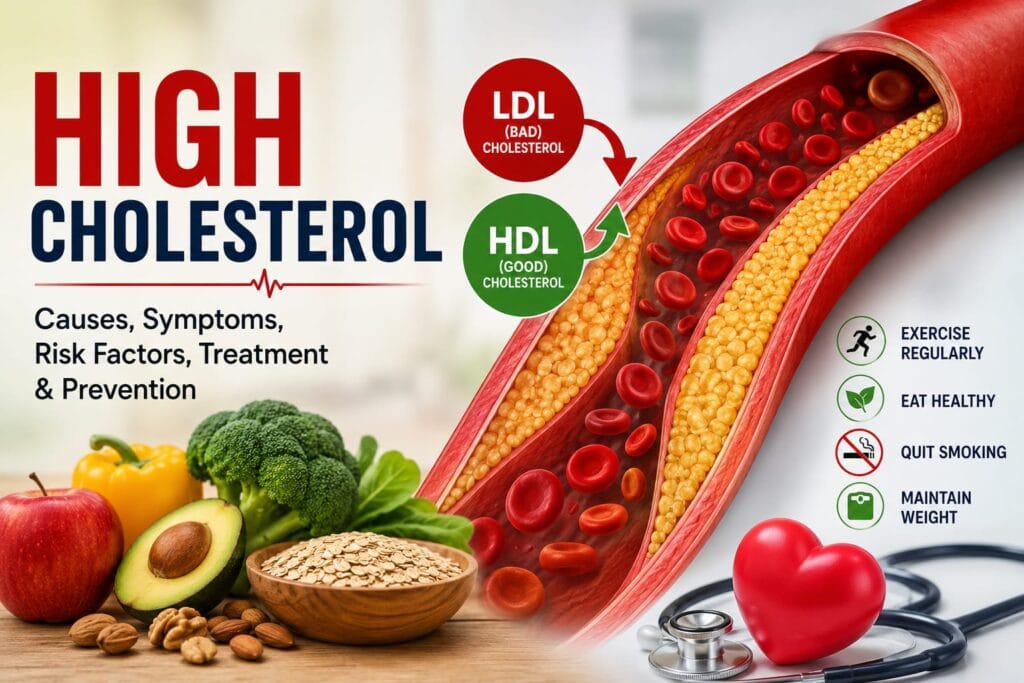
1. LDL (Low-Density Lipoprotein): LDL is known as bad cholesterol. High LDL levels can lead to plaque buildup inside arteries, increasing the risk of heart disease and stroke.
2. HDL (High-Density Lipoprotein): HDL is called good cholesterol because it helps remove excess cholesterol from the bloodstream and carries it back to the liver.
3. VLDL (Very Low-Density Lipoprotein): VLDL mainly transports triglycerides in the blood. High VLDL levels may contribute to artery blockage.
4. Triglycerides: Triglycerides are a type of fat stored for energy. High triglyceride levels may increase the risk of heart disease, especially when combined with high LDL and low HDL.
High Cholesterol Causes
Several factors can increase cholesterol levels, including:
- Unhealthy diet rich in saturated fats
- Trans fats in processed foods
- Lack of physical activity
- Obesity, Smoking
- Excessive alcohol consumption
- Diabetes, Hypothyroidism
- Kidney disease
- Liver disease
- Family history of high cholesterol
- Increasing age
- Stress
- Poor sleeping habits.
High Cholesterol Symptoms
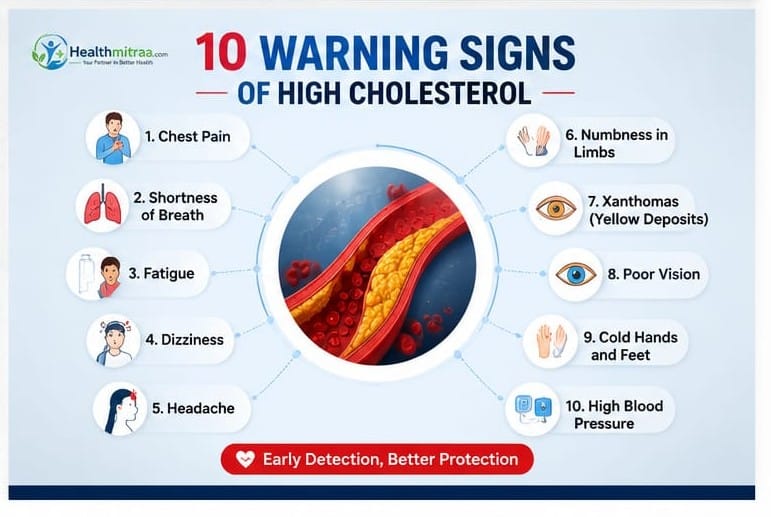
High cholesterol usually does not cause noticeable symptoms. Many people only discover they have high cholesterol after a blood test. If left untreated for many years, it may contribute to: Chest pain (Angina), Heart attack, Stroke, Peripheral artery disease, Poor blood circulation
Risk Factors
Several conditions increase the risk of developing high cholesterol:
Being overweight or obese, Unhealthy eating habits, Smoking, Physical inactivity, High blood pressure, Diabetes, Family history, Older age, Chronic kidney disease, Hypothyroidism.
Diagnosis
Doctors usually diagnose high cholesterol using a Lipid Profile Blood Test.
The test measures:
Total Cholesterol, LDL Cholesterol, HDL Cholesterol, Triglycerides
Regular cholesterol testing helps detect problems early, especially for adults over 20 years of age or those with risk factors.
High cholesterol Treatment
Treatment depends on cholesterol levels, overall health, and other medical conditions.
It may include:
Healthy diet, Regular physical activity, Weight management, Quitting smoking, Limiting alcohol consumption, Stress management, Adequate sleep.
In some cases, a doctor may prescribe cholesterol-lowering medications. Always take medicines only as advised by a qualified healthcare professional.
Healthy Diet for High Cholesterol
A heart-healthy diet can help maintain healthy cholesterol levels.
Foods to Include, Oats, Whole grains, Fruits, Vegetables, Beans, Lentils, Nuts, Seeds, Olive oil, Fatty fish
Low-fat dairy products, Foods to Limit, Fried foods, Fast food, Processed meat, Butter, Bakery products, Sugary drinks, Packaged snacks, Foods containing trans fats, Lifestyle Changes, Simple lifestyle changes can significantly improve cholesterol levels. Exercise regularly, Maintain a healthy weight, Eat a balanced diet, Quit smoking, Reduce alcohol intake, Get enough sleep, Manage stress, Stay physically active throughout the day.
High cholesterol Prevention
High cholesterol can often be prevented by adopting healthy habits.
Eat nutritious foods, Exercise at least 150 minutes per week, Avoid smoking, Maintain a healthy body weight, Limit unhealthy fats, Reduce sugar intake, Drink enough water, Have regular health checkups
Complications
If high cholesterol remains untreated, it may increase the risk of:
Coronary artery disease, Heart attack, Stroke, Peripheral artery disease, High blood pressure, Poor circulation.
sources:
When to See a Doctor
Consult a qualified healthcare professional if you:
Have a family history of high cholesterol, Have diabetes or high blood pressure, Experience chest pain, Are overweight, Have abnormal cholesterol test results, Have concerns about your heart health, Regular health checkups can help detect cholesterol problems before complications develop.
https://healthmitraa.com/low-blood-pressure-hypotension-causes-symptoms-treatment-and-preventions/
Frequently Asked Questions (FAQs)
1. Is high cholesterol dangerous?
Yes. High cholesterol increases the risk of heart disease and stroke if left untreated.
2.Does high cholesterol cause symptoms?
Usually, no. It is often detected only through a blood test.
3.Can exercise reduce cholesterol?
Regular physical activity may help improve cholesterol levels and support overall heart health.
4.Which foods help lower cholesterol?
Whole grains, fruits, vegetables, nuts, beans, and healthy fats are generally considered heart-friendly.
5.Can young adults have high cholesterol?
Yes. High cholesterol can occur at any age, especially due to unhealthy lifestyle habits or family history.
Conclusion
High cholesterol is a common but manageable health condition. Because it often develops without symptoms, regular health checkups and cholesterol testing are important for early detection. A healthy lifestyle—including a balanced diet, regular exercise, maintaining a healthy weight, and avoiding smoking—can help support healthy cholesterol levels and reduce the risk of heart disease. If cholesterol levels are high, consult a qualified healthcare professional for proper evaluation and treatment.
Medical Disclaimer
The information provided in this article is for general educational and informational purposes only. It is not intended to replace professional medical advice, diagnosis, or treatment. We do not provide personalized medical advice, prescribe medications, recommend dosages, or guarantee the treatment or cure of any disease. Always consult a qualified healthcare professional or doctor regarding any medical condition before making healthcare decisions.