Life can feel overwhelming when stress, endless notifications, and busy schedules leave little time to slow down. That’s where meditation can make a real difference. The meditation benefits go far beyond simply feeling calm for a few minutes. Research suggests that regular meditation may help reduce stress, improve focus, support emotional well-being, enhance sleep quality, and promote overall health. The best part is that you don’t need special equipment or years of experience to get started. Just a few minutes of daily practice can become a meaningful habit over time. In this guide, you’ll discover 15 proven reasons to meditate every day, along with practical, science-backed tips to help you build a simple meditation routine that fits your lifestyle.
What Is Meditation and How Does It Work?
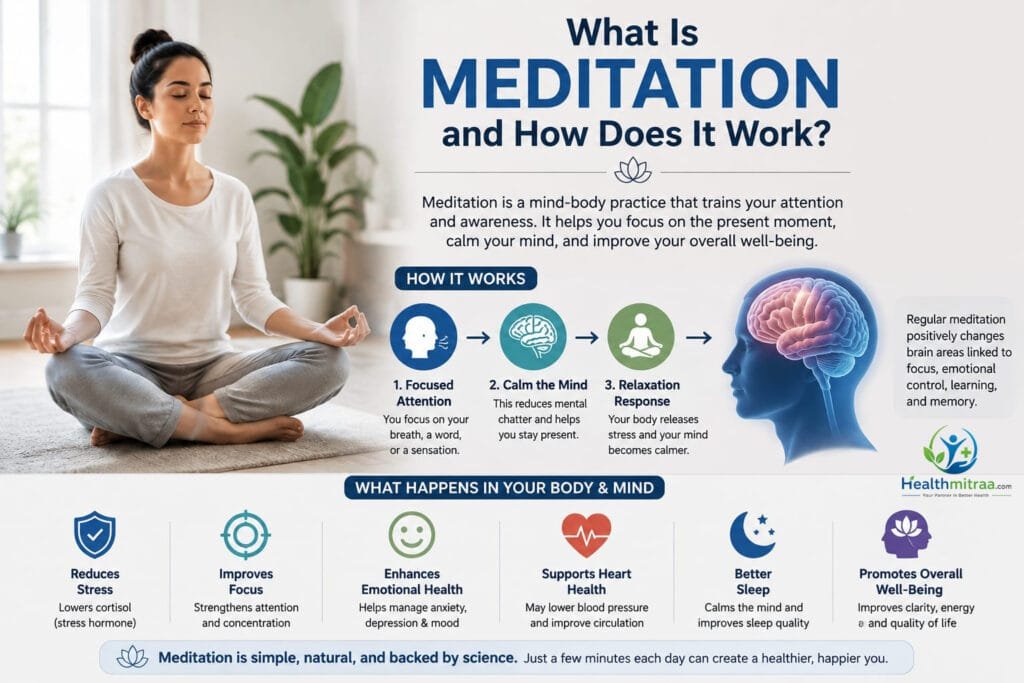
Meditation is a simple mind-body practice that involves focusing your attention and becoming more aware of the present moment. Contrary to popular belief, meditation doesn’t require you to stop thinking completely. Instead, it teaches you to notice your thoughts without judging them and gently bring your attention back to your breath, a word, or another point of focus. Over time, this practice helps train the mind to become calmer and more attentive. Meditation Benefits.
Many of the well-known meditation benefits are linked to its effects on the brain and nervous system. Studies suggest that regular meditation may help lower stress, improve emotional regulation, enhance concentration, and support better sleep. It can also encourage healthier responses to everyday challenges by reducing the body’s stress response. Whether you choose mindfulness meditation, guided meditation, or simple breathing exercises, practicing consistently for just 10–20 minutes a day can contribute to better mental and physical well-being.
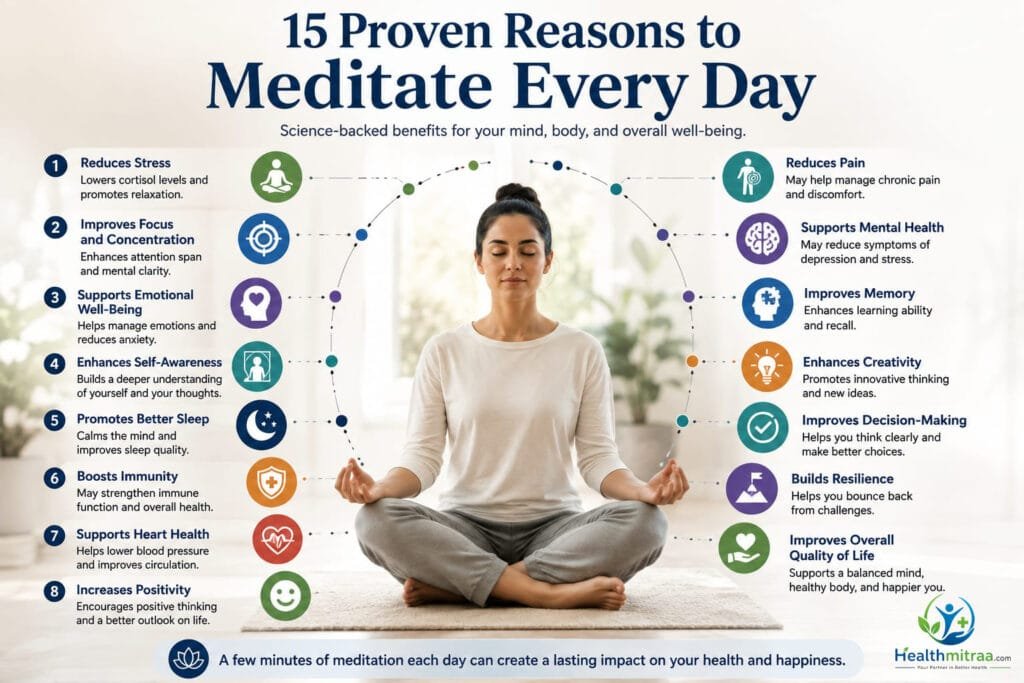
15 Proven Reasons to Meditate Every Day
1. Helps Reduce Stress
One of the most well-known meditation benefits is its ability to help manage stress. Regular meditation encourages relaxation and may reduce the body’s stress response, making it easier to cope with everyday challenges. Even a short daily session can leave you feeling calmer and more balanced. Meditation Benefits.
2. Improves Focus and Concentration
Meditation trains your mind to stay present instead of constantly jumping from one thought to another. Over time, this practice may improve attention span, concentration, and mental clarity, making it easier to stay productive at work, school, or during daily tasks.
3. Supports Better Sleep
If racing thoughts keep you awake at night, meditation may help you relax before bedtime. Mindfulness and breathing exercises can quiet the mind, reduce stress, and support better sleep quality. A consistent evening meditation routine may help you fall asleep more easily.
4. Promotes Emotional Well-Being
Meditation encourages greater self-awareness and emotional balance. It helps you observe your thoughts and feelings without reacting immediately, which may improve resilience and make it easier to handle difficult situations with a calmer mindset.
5. Encourages Healthy Daily Habits
People who meditate regularly often become more mindful of their daily choices, including eating, exercising, and managing stress. These positive lifestyle changes contribute to long-term health and are among the most valuable meditation benefits for overall well-being.
6. May Help Lower Anxiety
Meditation can help calm an overactive mind by encouraging present-moment awareness. Regular practice may reduce feelings of worry and help you respond to stressful situations with greater confidence and emotional balance. These are among the most meaningful meditation benefits for everyday mental well-being.
7. Supports Heart Health
Chronic stress can affect blood pressure and heart health over time. While meditation is not a replacement for medical treatment, it may support cardiovascular health by promoting relaxation and helping manage stress as part of a healthy lifestyle.
8. Improves Self-Awareness
Meditation encourages you to notice your thoughts, emotions, and habits without judgment. This increased self-awareness can help you recognize negative thinking patterns, make healthier decisions, and develop a more positive outlook on life.
9. Enhances Patience and Emotional Control
Daily meditation teaches you to pause before reacting. Over time, this can improve emotional regulation, making it easier to stay calm during disagreements, workplace challenges, or other stressful situations.
10. May Boost Productivity
A clear and focused mind often leads to better decision-making and improved efficiency. By reducing mental distractions and increasing concentration, one of the practical meditation benefits is the ability to complete daily tasks with greater focus and less stress.
11. May Help Manage Chronic Pain
Some research suggests that meditation may help people cope with chronic pain by changing how the brain processes pain signals. While it should not replace medical treatment, meditation can be a useful complementary practice as part of a comprehensive pain management plan.
12. Encourages Healthier Relationships
Meditation can improve mindfulness, empathy, and emotional awareness. By becoming more patient and less reactive, you may communicate more effectively and strengthen your relationships with family, friends, and colleagues.
13. Supports Healthy Aging
Keeping your mind active is an important part of healthy aging. Regular meditation may help maintain attention, memory, and mental flexibility, supporting cognitive health as you grow older.
14. Builds Resilience
Life is full of unexpected challenges, but meditation can help you develop greater resilience. By practicing mindfulness regularly, you may recover from stressful situations more quickly and maintain a more balanced perspective during difficult times.
15. Improves Overall Quality of Life
Perhaps the greatest of all meditation benefits is its positive impact on overall well-being. When combined with healthy habits such as regular exercise, balanced nutrition, and quality sleep, daily meditation can help you feel calmer, more focused, emotionally balanced, and better prepared to enjoy everyday life.
Science-Backed Benefits of Meditation
Scientific research has shown that regular meditation can positively affect both mental and physical well-being. Many studies suggest that meditation may help reduce stress, improve attention, enhance emotional regulation, and support better sleep. Some research also indicates that consistent meditation can influence areas of the brain involved in learning, memory, and self-awareness. Meditation Benefits.
While meditation is not a cure for medical conditions, it can be a valuable addition to a healthy lifestyle when practiced regularly. One of the greatest meditation benefits is that it is accessible to almost everyone—requiring no special equipment and only a few minutes each day. Combined with balanced nutrition, regular physical activity, quality sleep, and stress management, meditation can play an important role in supporting long-term health and overall well-being.
How to Start a Daily Meditation Practice
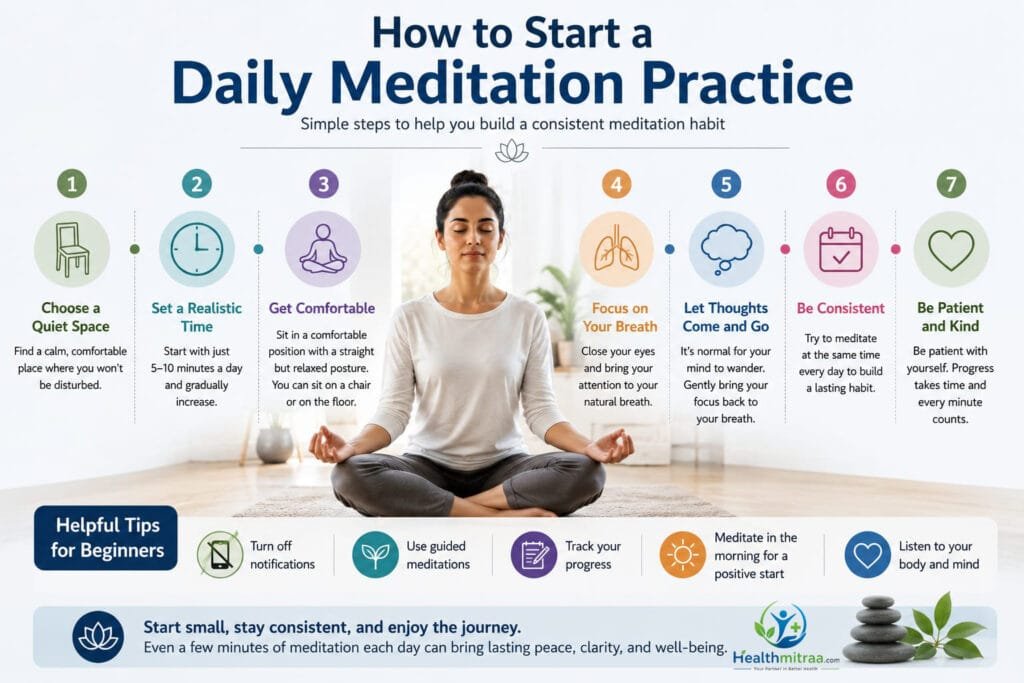
Starting a meditation practice doesn’t have to be complicated. One of the greatest meditation benefits is that it requires very little time and no special equipment. Begin with just 5–10 minutes a day and gradually increase the duration as you become more comfortable. Choose a quiet place where you can sit comfortably with your back straight. Close your eyes or soften your gaze, and focus on your natural breathing. Meditation Benefits.
When your mind wanders—which is completely normal—gently bring your attention back to your breath without judging yourself. You don’t need to “empty your mind” to meditate successfully. The goal is simply to notice distractions and return your focus with patience.
If you’re new to meditation, guided meditation apps or audio recordings can make the process easier. You can also practice mindfulness while walking, eating, or performing daily activities by paying full attention to the present moment.
The key to experiencing long-term meditation benefits is consistency rather than duration. Meditating for 10 minutes every day is often more effective than practicing for an hour once a week. Treat meditation like any other healthy habit, and over time it can become a natural part of your daily routine.
Common Meditation Mistakes to Avoid
Many beginners expect immediate results, but meditation is a skill that develops with regular practice. One of the most common mistakes is believing you must completely stop thinking. In reality, thoughts are natural, and meditation teaches you to notice them without judgment before gently returning your focus. Meditation Benefits.
Another mistake is trying to meditate for too long in the beginning. Starting with just 5–10 minutes a day is often more effective than forcing yourself to sit for extended periods. Inconsistent practice is another reason people miss out on the long-term meditation benefits. It’s also important not to compare your progress with others, as everyone’s experience is different. Be patient, stay consistent, and focus on building a simple daily habit rather than striving for perfection.
Who Can Benefit Most from Meditation?
Almost anyone can benefit from making meditation part of their daily routine. Students may find it helpful for improving focus and concentration, while working professionals can use it to manage stress and maintain productivity. Parents, caregivers, and people with busy schedules may appreciate the calming effects of regular practice.
Older adults may benefit from improved emotional well-being and mental clarity, and athletes often use meditation to enhance focus and performance. Many of the meditation benefits apply regardless of age or experience, making meditation a simple and accessible habit for people who want to support their overall health. If you have a mental health condition or ongoing medical concerns, speak with a qualified healthcare professional for personalized guidance. Meditation Benefits.
Signs Meditation Is Working for You
The benefits of meditation often appear gradually rather than overnight. You may first notice small but meaningful changes in how you think, feel, and respond to everyday situations. Feeling calmer during stressful moments, recovering more quickly after setbacks, sleeping better, and finding it easier to focus are all positive signs that your practice is making a difference. Many people also become more patient, emotionally balanced, and mindful of their daily habits over time.
Another sign that you’re experiencing meditation benefits is becoming less reactive to negative thoughts or challenging situations. Instead of acting on impulse, you may pause, think more clearly, and respond with greater awareness. Improved concentration, better decision-making, and a greater sense of gratitude are also common outcomes of consistent practice. Meditation Benefits.
Remember that meditation is not about achieving perfection or eliminating every stressful thought. Progress looks different for everyone. The most important sign is that you feel more present, balanced, and better equipped to handle daily life. Even a few minutes of regular meditation each day can lead to meaningful improvements in your overall mental and emotional well-being.
Meditation Self-Assessment Scorecard
How meditation is affecting you can be difficult to notice because the changes often happen gradually. Use this quick self-assessment to see whether your daily practice is becoming a healthy habit. Give yourself 1 point for every “Yes” answer.
| Question | Yes / No |
|---|---|
| I meditate at least 5–10 minutes most days. | ☐ |
| I feel calmer during stressful situations. | ☐ |
| My focus and concentration have improved. | ☐ |
| I sleep better than I did before. | ☐ |
| I react less emotionally to everyday challenges. | ☐ |
| I feel more present and mindful during the day. | ☐ |
| I recover from stress more quickly. | ☐ |
| I enjoy my meditation sessions instead of forcing them. | ☐ |
| Meditation has become part of my routine. | ☐ |
| I feel happier or more emotionally balanced. | ☐ |
Your Score
- 0–3: Great start—keep practicing consistently.
- 4–7: You’re experiencing early meditation benefits. Stay consistent.
- 8–10: Excellent! Meditation has likely become a healthy lifestyle habit that’s supporting your overall well-being.
Frequently Asked Questions (FAQs)
1. How long should I meditate each day?
Beginners can start with 5–10 minutes daily. As you become more comfortable, you can gradually increase your practice to 15–20 minutes. Consistency is more important than duration.
2. What is the best time to meditate?
There is no single best time. Many people prefer meditating in the morning to start the day with a clear mind, while others find evening meditation helpful for relaxing before bed. Choose a time you can stick to consistently.
3. Can meditation improve mental health?
Meditation may help reduce stress, improve emotional well-being, and support mental health. However, it is not a substitute for professional medical or psychological treatment when needed.
4. Do I need special equipment to meditate?
No. One of the greatest meditation benefits is that you only need a quiet place and a few uninterrupted minutes. A comfortable chair or cushion is optional.
5. How long does it take to notice meditation benefits?
Some people feel calmer after a single session, while others notice changes after several weeks of regular practice. The key is to meditate consistently and make it part of your daily routine.
Bonus Section
Expert Tips
- Meditate at the same time each day to build a lasting habit.
- Focus on your breathing instead of trying to stop every thought.
- Turn off phone notifications before you begin to avoid distractions.
Did You Know?
Research suggests that regular meditation can improve attention, emotional regulation, and stress management. Even a short 10-minute daily session may provide meaningful benefits when practiced consistently.
Daily Meditation Checklist
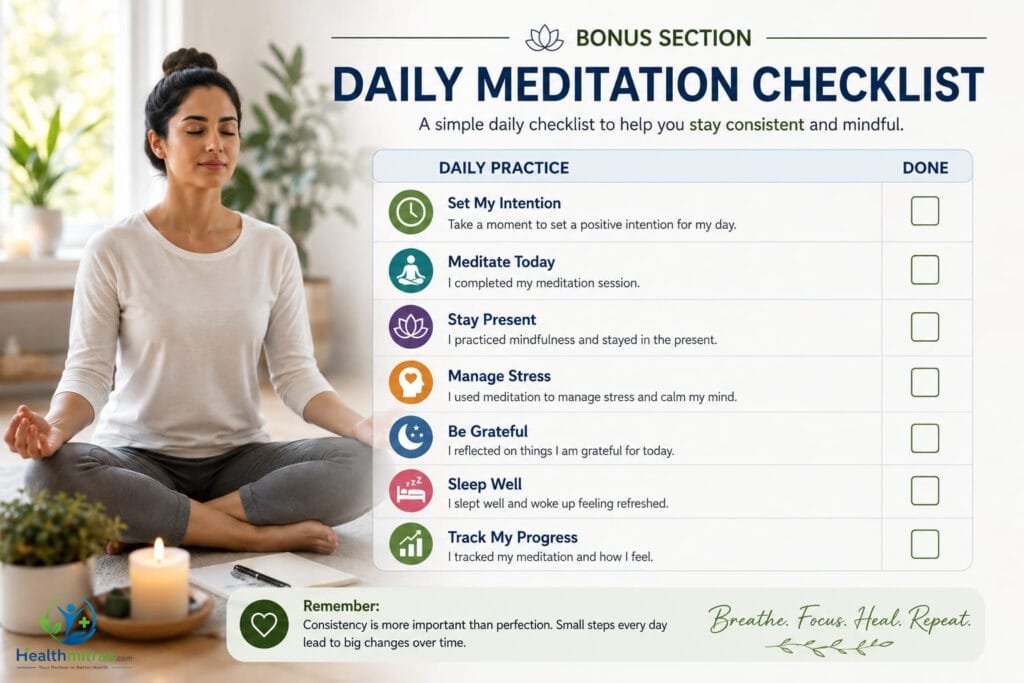
- ✅ Meditated for 10–20 minutes
- ✅ Chose a quiet place
- ✅ Focused on slow, deep breathing
- ✅ Avoided distractions
- ✅ Stayed present without judging thoughts
- ✅ Practiced consistently
Healthy Swaps
- ❌ Morning phone scrolling → ✅ 10 minutes of meditation
- ❌ Stressful reactions → ✅ Deep breathing before responding
- ❌ Constant multitasking → ✅ Mindful single-tasking
- ❌ Late-night overthinking → ✅ Evening mindfulness practice
Myth vs. Fact
| Myth | Fact |
|---|---|
| Meditation means having no thoughts. | Meditation is about noticing thoughts and gently returning your focus. |
| You need an hour every day. | Even 10–20 minutes of daily practice can be beneficial. |
| Meditation is only for spiritual people. | Meditation is a practical wellness habit that anyone can practice. |
| Results appear immediately. | Most meditation benefits develop gradually with regular practice. |
Key Takeaways
- Meditation is a simple daily habit that supports both mental and physical well-being.
- Regular practice may help reduce stress, improve focus, enhance sleep, and promote emotional balance.
- Start with just 5–10 minutes a day and stay consistent.
- The greatest meditation benefits come from making meditation a long-term part of a healthy lifestyle.
Conclusion
Meditation is a simple yet powerful habit that can support your mental, emotional, and physical well-being. The many meditation benefits—from reduced stress and better focus to improved sleep and emotional balance—are best achieved through regular practice. Start with a few minutes each day, stay consistent, and allow meditation to become a natural part of your healthy lifestyle.
External References
- Mayo Clinic – Meditation: A Simple, Fast Way to Reduce Stress
- National Center for Complementary and Integrative Health (NCCIH) – Meditation and Mindfulness
- American Psychological Association (APA) – Mindfulness Meditation
- National Institutes of Health (NIH) – MedlinePlus: Meditation
- World Health Organization (WHO) – Mental Health
Related Articles
- Healthy Morning Routine: 15 Simple Habits That Can Transform Your Health
- Stress Management: 15 Proven Ways to Reduce Stress Naturally
- Sleep Hygiene: 15 Proven Habits for Better Sleep and Overall Health
- Boost Your Immune System Naturally: 15 Proven Habits That Really Work
- Best Fruits for Weight Loss: 25 Healthy Choices Backed by Science
Medical Disclaimer: This article is for educational purposes only and is not a substitute for professional medical advice, diagnosis, or treatment. Always consult a qualified healthcare professional for personalized medical guidance.
Thank you for visiting HealthMitraa. We hope this article helped you better understand meditation and its benefits. Stay healthy, stay mindful, and visit us again for more trusted, evidence-based health information.