Can eating more fruit really help you lose weight? The answer is yes—but choosing the right fruits and eating them in the right way matters. While some people avoid fruits because they contain natural sugar, research shows that many fruits are low in calories, rich in fiber, packed with water, and loaded with vitamins that can support healthy, sustainable weight loss.
The best fruits for weight loss can help you stay full for longer, reduce unhealthy cravings, improve digestion, and make it easier to maintain a calorie deficit without feeling deprived. However, not every fruit fits every weight loss plan, and portion size is just as important as food choice.
In this science-backed guide, you’ll discover the 25 best fruits for weight loss, learn which fruits are highest in fiber, lowest in sugar, the best time to eat them, common mistakes to avoid, and practical tips to include more fruit in your daily diet for long-term success.
Why Are Fruits Good for Weight Loss?
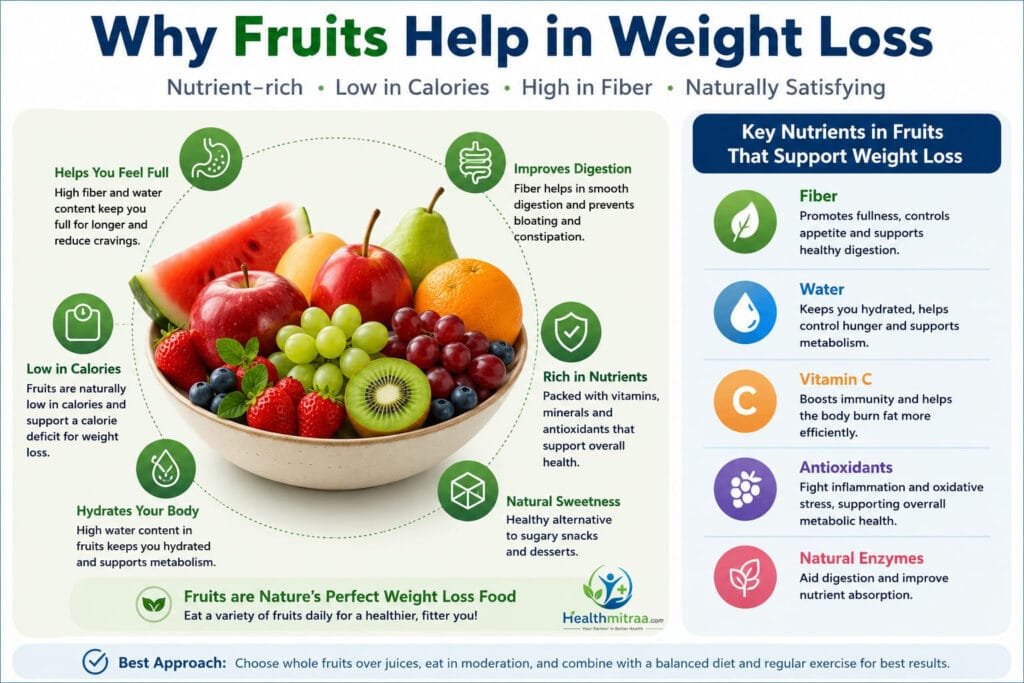
Fruits are naturally rich in nutrients that support healthy weight management without adding excessive calories. Most fruits contain plenty of water and dietary fiber, which help increase fullness, slow digestion, and reduce the urge to snack between meals. As a result, you may naturally eat fewer calories throughout the day.
Unlike sugary desserts or processed snacks, whole fruits provide natural sugars along with vitamins, minerals, antioxidants, and beneficial plant compounds that support overall health. Many fruits also have a low energy density, meaning you can enjoy a satisfying portion while consuming relatively few calories.
Fiber is one of the biggest reasons fruits support weight loss. It promotes healthy digestion, helps regulate appetite, and may contribute to more stable blood sugar levels when eaten as part of a balanced diet. In addition, fruits are an excellent alternative to high-calorie sweets, making healthy eating easier and more sustainable.
Key Benefits of Fruits for Weight Loss
- Naturally low in calories and high in water.
- Rich in dietary fiber that helps you stay full longer.
- May reduce cravings for sugary processed foods.
- Packed with vitamins, minerals, and antioxidants.
- Support healthy digestion and overall well-being.
- Easy to include in meals, snacks, and smoothies.
When combined with a balanced diet and regular physical activity, whole fruits can be a delicious and nutritious part of a long-term weight loss plan.
25 Best Fruits for Weight Loss
1. Apple
Why it helps: Apples are low in calories and high in fiber, helping you feel full for longer and reducing unnecessary snacking.
Key nutrients: Fiber, vitamin C, potassium, antioxidants.
Best way to eat: Eat a whole apple with the skin as a snack or add sliced apples to oatmeal or Greek yogurt.
Simple tip: Choose whole apples instead of apple juice to get more fiber.
2. Grapefruit
Why it helps: Grapefruit is rich in water and naturally low in calories, making it a refreshing fruit that can support appetite control.
Key nutrients: Vitamin C, fiber, vitamin A, antioxidants.
Best way to eat: Enjoy fresh grapefruit as part of breakfast or a healthy snack.
Simple tip: If you take prescription medications, ask your healthcare provider whether grapefruit is safe for you, as it can interact with certain medicines.
3. Strawberries
Why it helps: Strawberries are naturally sweet, low in calories, and high in fiber, making them an excellent substitute for sugary desserts.
Key nutrients: Vitamin C, manganese, fiber, antioxidants.
Best way to eat: Add fresh strawberries to yogurt, oatmeal, or smoothies.
Simple tip: Avoid strawberries served with added sugar or sweet syrups.
4. Blueberries
Why it helps: Blueberries provide fiber and powerful antioxidants while satisfying sweet cravings with relatively few calories.
Key nutrients: Fiber, vitamin C, vitamin K, anthocyanins.
Best way to eat: Eat fresh or frozen blueberries as a snack or mix them into breakfast bowls.
Simple tip: Frozen blueberries are just as nutritious as fresh ones.
5. Pear
Why it helps: Pears are one of the highest-fiber fruits, helping increase fullness and support healthy digestion.
Key nutrients: Fiber, vitamin C, potassium, copper.
Best way to eat: Enjoy a fresh pear with the skin intact for maximum fiber.
Simple tip: Pair a pear with a handful of nuts for a more satisfying snack.
6. Kiwi
Why it helps: Kiwi is packed with fiber and vitamin C while being relatively low in calories, making it a nutritious addition to a weight loss diet.
Key nutrients: Vitamin C, vitamin K, fiber, potassium.
Best way to eat: Slice into salads, yogurt, or enjoy on its own.
Simple tip: Eat ripe kiwi for the best flavor and texture.
7. Raspberries
Why it helps: Raspberries are among the highest-fiber fruits, helping you stay full longer while supporting healthy digestion.
Key nutrients: Fiber, vitamin C, manganese, antioxidants.
Best way to eat: Add fresh raspberries to yogurt, oatmeal, or enjoy them as a healthy snack.
Simple tip: Pair raspberries with Greek yogurt for a filling, high-protein snack.
8. Blackberries
Why it helps: Blackberries are low in calories and packed with fiber, making them an excellent fruit for appetite control.
Key nutrients: Fiber, vitamin C, vitamin K, manganese.
Best way to eat: Eat fresh, blend into smoothies, or add to fruit salads.
Simple tip: Choose fresh or frozen blackberries without added sugar.
9. Watermelon
Why it helps: Watermelon contains over 90% water, helping you stay hydrated and feel full with relatively few calories.
Key nutrients: Vitamin C, vitamin A, lycopene, potassium.
Best way to eat: Enjoy chilled watermelon as a refreshing snack.
Simple tip: Eat whole watermelon instead of drinking watermelon juice to benefit from its fiber.
10. Papaya
Why it helps: Papaya is naturally low in calories and contains fiber and digestive enzymes that support healthy digestion.
Key nutrients: Vitamin C, vitamin A, folate, fiber.
Best way to eat: Enjoy fresh papaya at breakfast or as an afternoon snack.
Simple tip: Avoid adding sugar, condensed milk, or sweet syrups.
11. Orange
Why it helps: Whole oranges provide fiber and vitamin C while helping satisfy sweet cravings more effectively than fruit juice.
Key nutrients: Vitamin C, fiber, folate, potassium.
Best way to eat: Peel and eat whole oranges instead of drinking orange juice.
Simple tip: Whole fruit keeps you fuller because it contains fiber.
12. Guava
Why it helps: Guava is rich in fiber and vitamin C, making it one of the most nutrient-dense fruits for healthy weight management.
Key nutrients: Fiber, vitamin C, potassium, folate.
Best way to eat: Eat fresh guava with the skin after washing thoroughly.
Simple tip: Guava makes a satisfying mid-morning or evening snack.
13. Avocado
Why it helps: Although higher in calories than most fruits, avocados are rich in healthy fats and fiber that help keep you full for longer and reduce overeating.
Key nutrients: Healthy monounsaturated fats, fiber, potassium, vitamin E, folate.
Best way to eat: Add sliced avocado to salads, whole-grain toast, or balanced meals.
Simple tip: Stick to about one-quarter to one-half of an avocado per serving.
14. Pomegranate
Why it helps: Pomegranate provides fiber and powerful antioxidants that support overall health while satisfying sweet cravings naturally.
Key nutrients: Fiber, vitamin C, vitamin K, polyphenols.
Best way to eat: Sprinkle fresh pomegranate seeds over yogurt, salads, or oatmeal.
Simple tip: Choose fresh pomegranate instead of sweetened packaged juice.
15. Pineapple
Why it helps: Pineapple is naturally sweet, low in fat, and contains bromelain, an enzyme that supports normal digestion.
Key nutrients: Vitamin C, manganese, bromelain.
Best way to eat: Enjoy fresh pineapple as a snack or add it to fruit salads.
Simple tip: Avoid canned pineapple packed in sugary syrup.
16. Peach
Why it helps: Peaches are low in calories, rich in water, and provide fiber that can help control hunger.
Key nutrients: Vitamin C, vitamin A, potassium, fiber.
Best way to eat: Eat fresh peaches as a snack or slice them into yogurt.
Simple tip: Choose fresh peaches over sweetened canned varieties.
17. Plum
Why it helps: Plums contain fiber and antioxidants that support healthy digestion and may help you feel satisfied between meals.
Key nutrients: Fiber, vitamin C, vitamin K, antioxidants.
Best way to eat: Enjoy fresh plums as a healthy snack.
Simple tip: Eat whole plums instead of drinking plum juice.
18. Cherries
Why it helps: Cherries provide antioxidants and fiber while offering a naturally sweet alternative to processed desserts.
Key nutrients: Fiber, vitamin C, potassium, anthocyanins.
Best way to eat: Enjoy fresh cherries in moderation as a snack.
Simple tip: Choose fresh or frozen cherries without added sugar.
19. Dragon Fruit
Why it helps: Dragon fruit is low in calories and provides fiber, antioxidants, and plenty of water, making it a refreshing choice for healthy weight loss.
Key nutrients: Fiber, vitamin C, magnesium, antioxidants.
Best way to eat: Scoop out the flesh and enjoy it fresh or add it to fruit bowls.
Simple tip: Pair dragon fruit with Greek yogurt for a filling snack.
20. Passion Fruit
Why it helps: Passion fruit is rich in fiber, which helps promote fullness and supports healthy digestion.
Key nutrients: Fiber, vitamin C, vitamin A, potassium.
Best way to eat: Scoop the pulp into yogurt, smoothies, or oatmeal.
Simple tip: Enjoy the edible seeds for extra fiber.
21. Cantaloupe
Why it helps: Cantaloupe has a high water content and relatively few calories, helping you stay hydrated while satisfying your sweet tooth.
Key nutrients: Vitamin A, vitamin C, potassium.
Best way to eat: Enjoy chilled cantaloupe cubes as a snack or breakfast.
Simple tip: Eat fresh cantaloupe instead of sweetened fruit cups.
22. Honeydew Melon
Why it helps: Honeydew melon is naturally hydrating and low in calories, making it a refreshing addition to a weight loss diet.
Key nutrients: Vitamin C, potassium, water, antioxidants.
Best way to eat: Serve fresh as a snack or combine with other fruits.
Simple tip: Keep pre-cut honeydew in the refrigerator for a quick healthy snack.
23. Lemon
Why it helps: Lemon adds fresh flavor to foods and drinks with almost no calories, making healthy meals more enjoyable without added sugar.
Key nutrients: Vitamin C, antioxidants.
Best way to eat: Add fresh lemon juice to water, salads, seafood, or vegetables.
Simple tip: Lemon water supports hydration but isn’t a magic weight loss drink.
24. Lime
Why it helps: Like lemon, lime provides a burst of flavor with very few calories, helping reduce the need for sugary dressings and beverages.
Key nutrients: Vitamin C, antioxidants.
Best way to eat: Squeeze fresh lime over salads, grilled foods, or plain water.
Simple tip: Use fresh lime instead of sugar-rich sauces whenever possible.
25. Cranberries
Why it helps: Fresh cranberries are low in calories and rich in antioxidants, making them a nutritious addition to a balanced weight loss diet.
Key nutrients: Vitamin C, fiber, manganese, antioxidants.
Best way to eat: Add fresh or frozen cranberries to oatmeal, smoothies, or salads.
Simple tip: Avoid sweetened dried cranberries, as they often contain large amounts of added sugar.
Which Fruits Are Highest in Fiber?
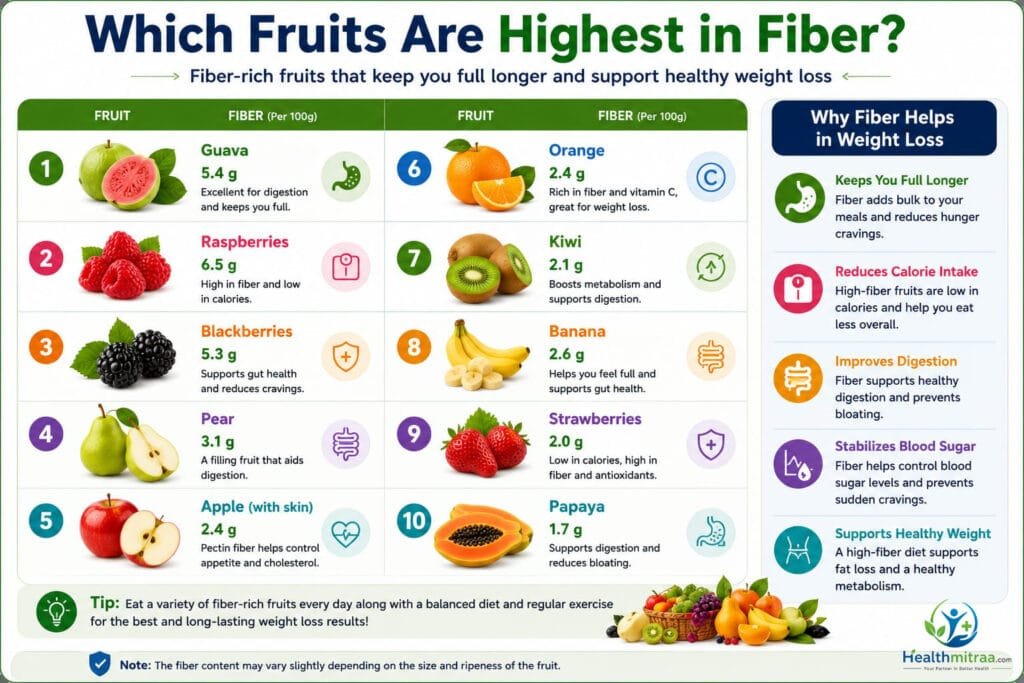
Fiber is one of the most important nutrients for healthy weight loss because it slows digestion, helps control appetite, and keeps you feeling full for longer. High-fiber fruits can also support healthy digestion and reduce the urge to snack on less nutritious foods between meals.
If your goal is to manage hunger naturally, these fruits are some of the best choices to include in your daily diet.
| Fruit | Fiber (Approx. per 100 g) | Why It Helps |
|---|---|---|
| Raspberries | 6.5 g | Very high in fiber and low in calories |
| Blackberries | 5.3 g | Promotes fullness and digestive health |
| Guava | 5.4 g | Fiber-rich and packed with vitamin C |
| Pear | 3.1 g | Helps increase satiety |
| Apple (with skin) | 2.4 g | Great everyday high-fiber snack |
| Passion Fruit | 10.4 g | One of the richest natural fiber sources |
| Avocado | 6.7 g | High in fiber and healthy fats |
Tips for Getting More Fiber from Fruits
- Eat whole fruits instead of drinking fruit juice.
- Keep the edible skin on fruits like apples and pears whenever possible.
- Pair fruit with protein-rich foods such as Greek yogurt or nuts for a more satisfying snack.
- Increase your fiber intake gradually and drink enough water to support healthy digestion.
Adding a variety of high-fiber fruits to your weekly diet can make weight loss more satisfying while providing essential vitamins, minerals, and antioxidants.
Which Fruits Are Lowest in Sugar?
Natural sugar in whole fruits is different from the added sugar found in soft drinks, candy, and many processed foods. Because whole fruits also provide fiber, water, vitamins, and antioxidants, they have a different effect on fullness and overall diet quality. If you’re trying to reduce your sugar intake while losing weight, choosing lower-sugar fruits can be a smart option.
Here are some of the best low-sugar fruits to include in a balanced weight loss diet.
| Fruit | Sugar (Approx. per 100 g) | Why It’s a Good Choice |
|---|---|---|
| Lemon | 2.5 g | Very low in sugar and calories |
| Lime | 1.7 g | Adds flavor without added sugar |
| Raspberries | 4.4 g | High in fiber, naturally low in sugar |
| Blackberries | 4.9 g | Rich in antioxidants and fiber |
| Strawberries | 4.9 g | Sweet, refreshing, and low in calories |
| Watermelon | 6.2 g | Hydrating with moderate natural sugar |
| Grapefruit | 6.9 g | Low in calories and high in vitamin C |
Tips for Choosing Low-Sugar Fruits
- Choose whole fruits instead of fruit juices or sweetened dried fruits.
- Pair fruit with protein or healthy fats to make snacks more satisfying.
- Rotate different fruits throughout the week to enjoy a wide range of nutrients.
- Remember that portion size still matters, even with healthier fruit choices.
Whole fruits can be part of a healthy weight loss plan, even if they contain natural sugars. The key is choosing a variety of nutrient-dense fruits and enjoying them as part of an overall balanced diet.
What Is the Best Time to Eat Fruits for Weight Loss?
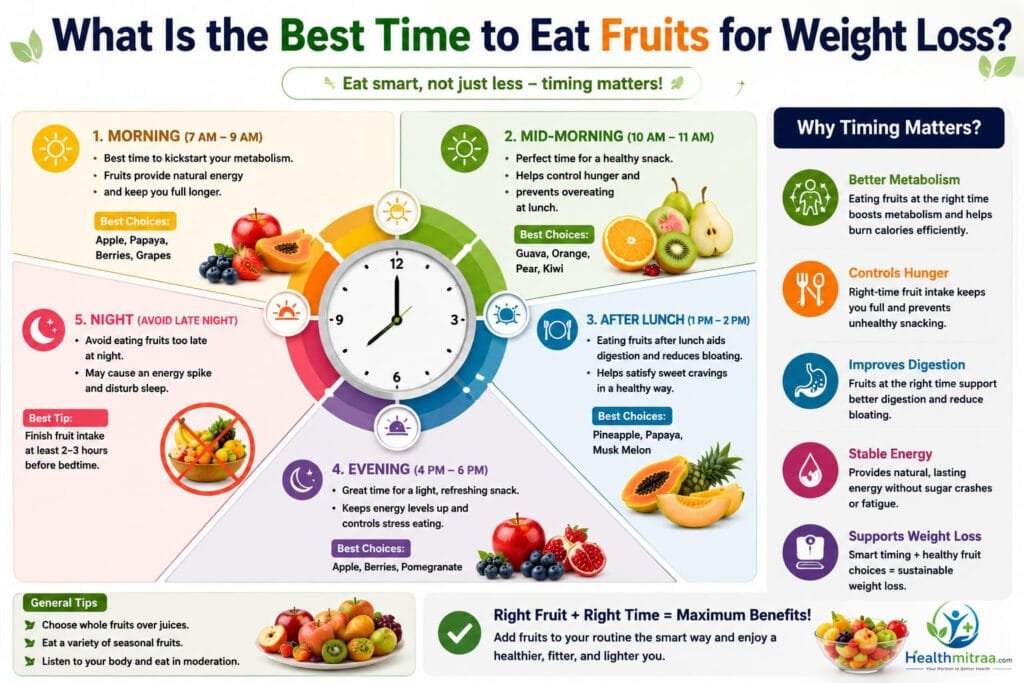
There isn’t a single “perfect” time to eat fruit for weight loss. What matters most is your overall eating pattern, portion sizes, and total calorie intake. However, eating fruit at certain times of the day may help you stay full, manage cravings, and make healthier food choices.
Morning
Starting your day with whole fruits can provide fiber, water, and essential vitamins while helping you feel satisfied. Pair fruit with a protein-rich food such as Greek yogurt or eggs for a more balanced breakfast.
Between Meals
Fresh fruit makes an excellent snack when hunger strikes. Choosing fruit instead of chips, cookies, or candy can help reduce calorie intake while increasing your intake of fiber and nutrients.
Before or After Exercise
Fruit provides natural carbohydrates that can help fuel a workout or replenish energy afterward. Pairing fruit with a source of protein after exercise may support recovery and help keep you full.
At Night
Eating fruit in the evening is generally fine if it fits within your daily calorie needs. There is no strong scientific evidence that eating whole fruit at night automatically causes weight gain.
Tips for the Best Results
- Choose whole fruits instead of fruit juice.
- Pair fruit with protein or healthy fats for better satiety.
- Watch portion sizes, especially with higher-calorie fruits.
- Eat a variety of fruits throughout the week to maximize nutrient intake.
The best time to eat fruit is simply the time that helps you maintain healthy eating habits and stay consistent with your weight loss goals.
Fruits That May Slow Down Weight Loss
Whole fruits are a healthy part of most weight loss plans, but certain fruit products and eating habits can make it harder to achieve your goals. The issue usually isn’t the fruit itself—it’s how it’s prepared, processed, or consumed.
Fruit Juice
Even 100% fruit juice contains vitamins, but it lacks much of the fiber found in whole fruit. Because it’s easy to drink large amounts quickly, fruit juice may not keep you as full as eating whole fruit.
Dried Fruits
Raisins, dates, dried apricots, and other dried fruits are nutritious but much more concentrated in calories and natural sugars than fresh fruit. Eating large portions can quickly increase your calorie intake.
Fruits Packed in Syrup
Some canned fruits are stored in heavy syrup, which adds extra sugar and calories. Whenever possible, choose fresh fruit or canned fruit packed in water or its own juice.
Sweetened Smoothies
Many store-bought smoothies contain added sugars, flavored syrups, ice cream, or fruit juice concentrates. These ingredients can significantly increase calories without improving satiety.
Oversized Portions
Even healthy foods can contribute to excess calorie intake when eaten in very large amounts. Enjoy a variety of fruits while paying attention to portion sizes and balancing them with protein, healthy fats, and other nutrient-rich foods.
Smart Choices for Weight Loss
- Choose whole fresh fruit whenever possible.
- Limit fruit juice and sugar-sweetened smoothies.
- Enjoy dried fruits in small portions.
- Read nutrition labels on canned and packaged fruit products.
- Build balanced snacks by pairing fruit with protein or healthy fats.
Fruits don’t usually slow down weight loss on their own. Choosing minimally processed options and eating appropriate portions is the key to enjoying their health benefits while supporting your weight loss goals.
Easy Ways to Add More Fruits to Your Daily Diet
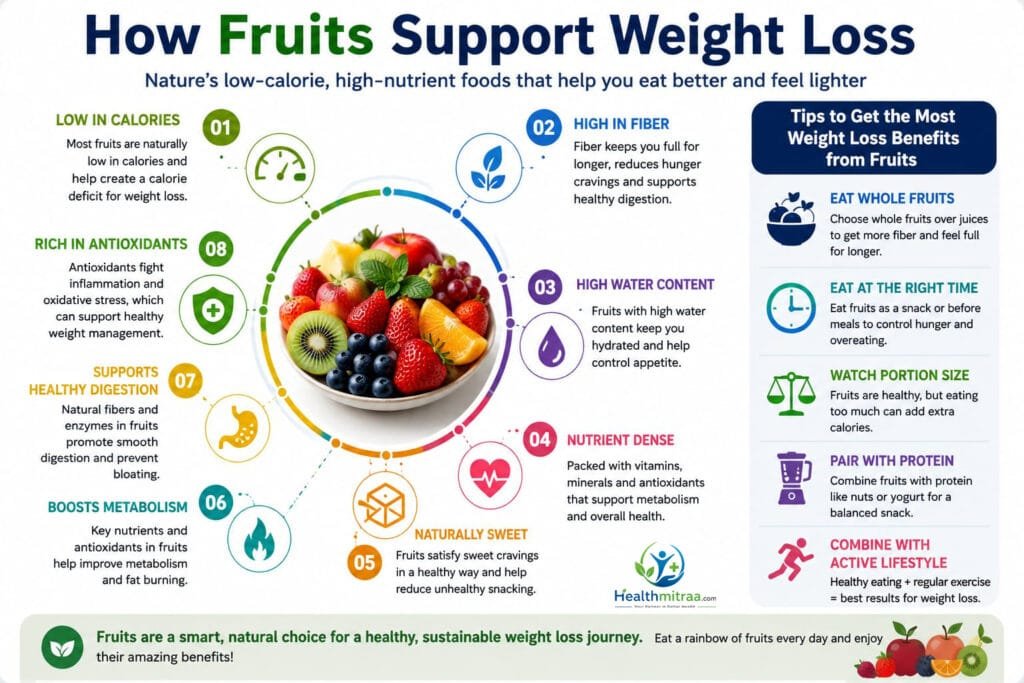
Including more fruit in your diet doesn’t have to be complicated. Simple, consistent habits can help you enjoy the health benefits of fruit while supporting your weight loss goals.
Start Your Day with Fruit
Add berries to oatmeal, sliced bananas to whole-grain toast with peanut butter, or enjoy an apple alongside eggs or Greek yogurt for a balanced breakfast.
Choose Fruit as a Healthy Snack
Keep fresh fruits like apples, oranges, pears, or grapes within easy reach. Replacing processed snacks with whole fruit can help reduce unnecessary calories while increasing your fiber intake.
Add Fruit to Yogurt or Oatmeal
Fresh or frozen fruits can boost the flavor and nutrition of plain Greek yogurt, cottage cheese, or oatmeal without relying on added sugars.
Blend Smart Smoothies
Prepare smoothies using whole fruits, unsweetened milk or yogurt, leafy greens, and a source of protein. Avoid adding sugary syrups or fruit juice concentrates.
Include Fruit in Salads
Combine fruits such as strawberries, apples, oranges, or pomegranate seeds with leafy greens, nuts, and lean protein to create a satisfying, nutrient-rich meal.
Make Healthy Habits Easy
- Keep a bowl of fresh fruit on your kitchen counter.
- Wash and cut fruits in advance for quick snacks.
- Choose seasonal fruits for better flavor and value.
- Aim for variety to enjoy a wide range of vitamins, minerals, and antioxidants.
Small daily changes like these can make it easier to eat more fruit consistently and support long-term, healthy weight loss.
Common Mistakes People Make When Eating Fruits for Weight Loss
Fruits are healthy, but simply eating more fruit doesn’t guarantee weight loss. Certain habits can increase your calorie intake or reduce the nutritional benefits of fruit. Avoiding these common mistakes can help you get the most from a fruit-rich diet.
1. Drinking Fruit Juice Instead of Eating Whole Fruit
Fruit juice contains vitamins but much less fiber than whole fruit. Whole fruits help you stay full longer and are generally a better choice for weight loss.
2. Eating Very Large Portions
Even healthy fruits contain calories. Eating several large servings throughout the day can make it more difficult to maintain a calorie deficit.
3. Choosing Sweetened Dried Fruits
Many packaged dried fruits contain added sugar, increasing their calorie content. Fresh fruit is usually the better everyday option.
4. Depending Only on Fruits
A healthy weight loss diet should also include lean protein, vegetables, whole grains, and healthy fats. Eating only fruit may leave you short on important nutrients.
5. Adding Too Many High-Calorie Toppings
Covering fruit with sugar, chocolate syrup, whipped cream, or sweetened condensed milk can significantly increase calories and reduce its health benefits.
6. Ignoring Overall Eating Habits
No single food can cause weight loss on its own. Regular physical activity, balanced meals, portion control, and healthy lifestyle habits all play an important role.
Key Tip
Choose whole, fresh fruits, watch your portion sizes, and pair fruit with protein or healthy fats when appropriate. Small, consistent habits are more effective for long-term weight loss than relying on any single “superfood.”
Frequently Asked Questions (FAQs)
1. What are the best fruits for weight loss?
Some of the best fruits for weight loss include apples, berries, grapefruit, pears, kiwi, guava, oranges, watermelon, papaya, and avocados. These fruits are rich in fiber, water, vitamins, and antioxidants that help increase fullness and support healthy eating habits.
2. Can I eat fruit every day while trying to lose weight?
Yes. For most healthy people, eating a variety of whole fruits every day can be part of a balanced weight loss diet. Fruits provide important nutrients and are generally a healthier choice than processed snacks and sugary desserts.
3. Which fruit has the least sugar?
Lemons, limes, raspberries, blackberries, strawberries, and grapefruit are among the lower-sugar fruit options. However, whole fruits can still fit into a healthy diet because they also provide fiber and other beneficial nutrients.
4. Is it better to eat fruit before or after meals?
There is no single best time to eat fruit for weight loss. Whole fruits can be enjoyed with meals or as snacks. The most important factors are your total daily calorie intake, portion sizes, and overall diet quality.
5. Should I avoid bananas or mangoes when trying to lose weight?
Not necessarily. Bananas and mangoes can still be included in a balanced weight loss diet when eaten in appropriate portions. Weight loss depends on your overall eating pattern rather than avoiding specific fruits.
6. Are fruit juices as healthy as whole fruits?
Whole fruits are generally a better choice because they contain more fiber, which helps you feel full and supports healthy digestion. Fruit juice is easier to consume in large amounts and may not provide the same level of satiety as whole fruit.
Key Takeaways
- Whole fruits can be an excellent part of a healthy weight loss plan because they are rich in fiber, water, vitamins, and antioxidants.
- Apples, berries, grapefruit, pears, guava, kiwi, and other fiber-rich fruits can help increase fullness and reduce unnecessary snacking.
- Choose whole fruits instead of fruit juice to get more fiber and better appetite control.
- Eating a variety of fruits throughout the week provides a wider range of nutrients and health benefits.
- Watch portion sizes, especially with dried fruits and higher-calorie options like avocados.
- Pair fruits with protein-rich foods such as Greek yogurt, cottage cheese, or nuts for a more satisfying snack.
- Long-term weight loss depends on a balanced diet, regular physical activity, good sleep, and consistent healthy habits—not on any single fruit.
Conclusion
The best fruits for weight loss can help you enjoy naturally sweet foods while supporting healthy eating habits. By choosing whole fruits, controlling portions, and combining them with a balanced diet and active lifestyle, you can make weight loss more sustainable. Small, consistent changes often lead to the best long-term results.
Expert Tips
- Choose whole fruits instead of fruit juice whenever possible.
- Pair fruits with protein-rich foods like Greek yogurt or nuts for better satiety.
- Eat a variety of colorful fruits to maximize nutrients and antioxidants.
- Keep portion sizes in mind, especially with dried fruits and higher-calorie fruits.
- Build healthy habits by replacing processed snacks with fresh fruit.
Did You Know?
Fruits with a high water and fiber content, such as apples, berries, grapefruit, and watermelon, can help you feel fuller for longer while providing relatively few calories—making them a smart choice for healthy weight loss.
Healthy Fruit Swap Ideas
🍪 Cookies → Apple slices with peanut butter
🍦 Ice Cream → Greek yogurt with berries
🥤 Soda → Sparkling water with lemon and lime
🍫 Candy → Fresh strawberries or grapes
🍟 Chips → Apple or pear with a handful of almonds
Who Should Be Careful?
- People with diabetes: Monitor portion sizes and discuss fruit choices with your healthcare provider.
- Kidney disease: Some fruits are high in potassium and may need to be limited.
- Fruit allergies: Avoid fruits that trigger allergic reactions.
- Digestive conditions: Some fruits may worsen symptoms in people following low-FODMAP or other specialized diets.
Internal Links
- 25 Best Foods for Weight Loss: What to Eat for Healthy Fat Loss
- High-Protein Foods for Weight Loss: 25 Best Choices Backed by Science
- How to Lose Belly Fat Naturally
- Weight Loss: 15 Amazing Tips That Really Work
External References
- Mayo Clinic – Healthy Weight
- Harvard T.H. Chan School of Public Health – The Nutrition Source: Vegetables & Fruits
- CDC – Healthy Weight and Growth
- NHS – Healthy Weight
- American Heart Association – Healthy Eating