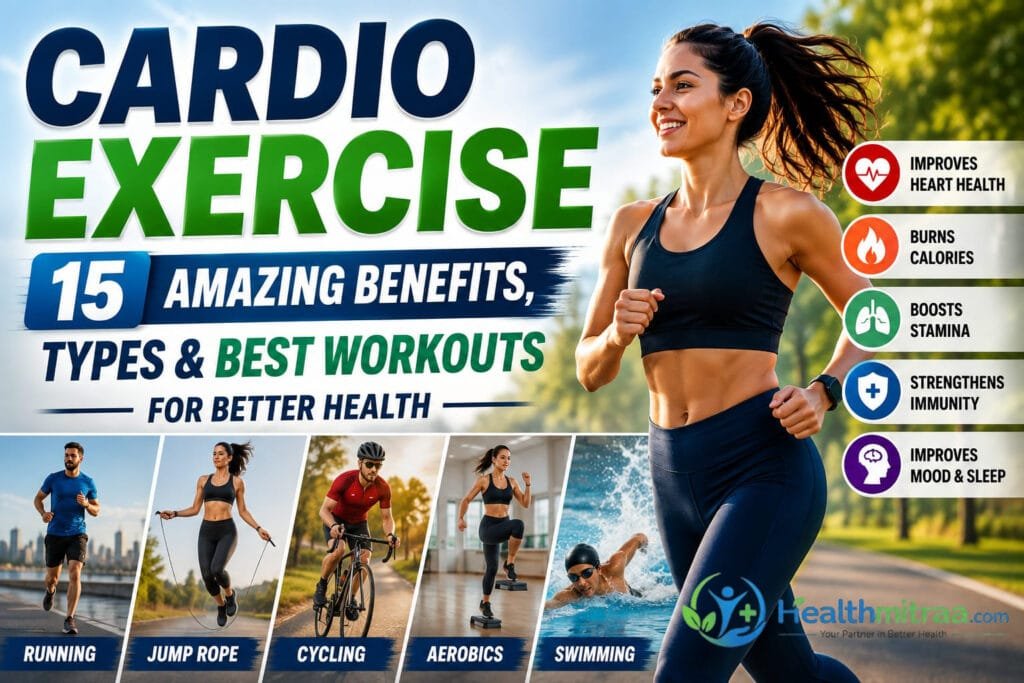
Cardio exercise is one of the simplest and most effective ways to improve your overall health. Whether you choose brisk walking, cycling, swimming, or jogging, regular exercise strengthens your heart, boosts endurance, and supports long-term well-being. It also helps manage body weight, improve blood circulation, reduce stress, and lower the risk of chronic diseases such as heart disease and type 2 diabetes. In this guide, you’ll discover the proven benefits of exercise, the different types available, the best workouts for every fitness level, and practical tips to build a safe, sustainable routine for lifelong health.
What Is Cardio Exercise?
Cardio exercise, also known as aerobic exercise, is any physical activity that increases your heart rate and breathing for a sustained period. As you perform exercise, your heart pumps more oxygen-rich blood to working muscles while your lungs deliver oxygen more efficiently throughout the body. Over time, these natural adaptations improve cardiovascular fitness, endurance, and overall health.
Common forms of exercise include brisk walking, jogging, cycling, swimming, dancing, rowing, and hiking. Unlike strength training, which mainly focuses on building muscle, cardio primarily improves the health of your heart, lungs, and circulatory system. Regular exercise can also help burn calories, support healthy weight management, improve blood pressure, and reduce the risk of chronic diseases such as heart disease, stroke, and type 2 diabetes. The best cardio routine is one that matches your fitness level, supports your goals, and can be maintained consistently.
How Does Cardio Exercise Benefit Your Body?
Regular cardio exercise creates positive changes throughout your body, beginning with your heart and lungs. As your heart pumps more efficiently, oxygen-rich blood reaches your muscles and organs more effectively, helping you feel stronger and less fatigued during daily activities. Over time, exercise improves endurance, supports healthy blood pressure, and enhances circulation.
The benefits extend beyond physical fitness. Consistent exercise helps improve insulin sensitivity, supports healthy weight management, and may reduce the risk of heart disease, stroke, and type 2 diabetes. It also stimulates the release of endorphins, natural chemicals that help reduce stress, improve mood, and promote better sleep. When performed regularly, exercise becomes one of the most effective lifestyle habits for protecting both physical and mental health while improving your overall quality of life.
15 Amazing Benefits of Cardio Exercise
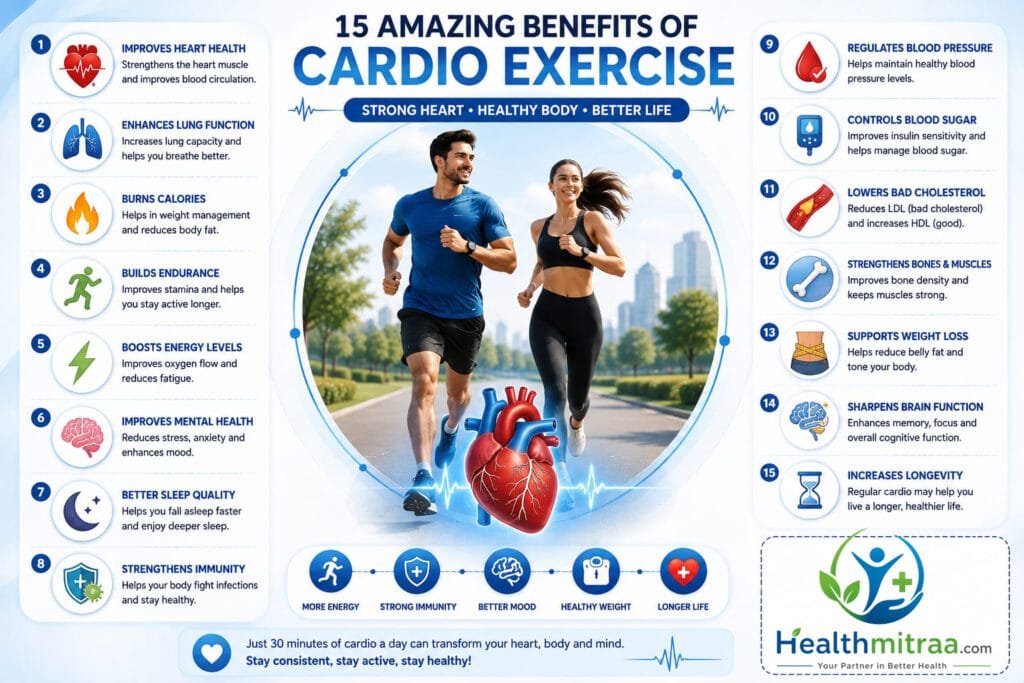
Adding cardio exercise to your weekly routine offers far more than improved fitness. It supports nearly every major organ system, helping you stay healthier, more energetic, and physically active throughout life. Here are 15 evidence-based benefits of regular cardio exercise.
1. Strengthens Heart Health
Regular cardio exercise strengthens the heart muscle, allowing it to pump blood more efficiently. A stronger heart can deliver oxygen throughout the body with less effort, supporting long-term cardiovascular health.
2. Improves Lung Function
Aerobic activity trains your lungs to use oxygen more efficiently. Over time, this can improve endurance and make daily activities feel easier.
3. Boosts Stamina and Endurance
One of the most noticeable benefits of exercise is increased stamina. As your cardiovascular system becomes more efficient, you can remain active for longer periods without tiring quickly.
4. Helps Maintain a Healthy Weight
Cardio exercise increases calorie expenditure and supports healthy weight management when combined with balanced nutrition and consistent physical activity.
5. Supports Healthy Blood Pressure
Regular aerobic activity helps improve blood vessel function and circulation, which may contribute to maintaining healthy blood pressure levels in many adults.
6. Improves Blood Sugar Control
Physical activity increases insulin sensitivity, helping the body use glucose more effectively. This supports healthy blood sugar management and may reduce the risk of type 2 diabetes.
7. Lowers the Risk of Heart Disease
Consistent cardio exercise is associated with a reduced risk of coronary artery disease, heart attack, and stroke by improving several cardiovascular risk factors.
8. Increases Energy Levels
Although exercise requires energy, regular cardio training improves how efficiently your body produces and uses energy, helping you feel more active throughout the day.
9. Enhances Mental Well-Being
During cardio exercise, the brain releases endorphins and other chemicals that promote a positive mood, reduce stress, and support emotional well-being.
10. Improves Sleep Quality
People who perform regular aerobic exercise often experience deeper, more refreshing sleep and may find it easier to fall asleep at night.
11. Strengthens the Immune System
Moderate cardio exercise supports normal immune function and may help the body respond more effectively to common illnesses when combined with healthy lifestyle habits.
12. Supports Brain Health
Improved blood circulation delivers more oxygen and nutrients to the brain, supporting memory, concentration, and overall cognitive function.
13. Builds Stronger Muscles and Bones
Activities such as brisk walking, stair climbing, and jogging help strengthen the muscles used during movement while supporting bone health over time.
14. Promotes Healthy Aging
Regular cardio exercise helps preserve mobility, balance, endurance, and independence as you grow older, improving overall quality of life.
15. Increases Life Expectancy
Research consistently shows that people who stay physically active through regular aerobic exercise have a lower risk of premature death and enjoy better long-term health than those who remain inactive.
Types of Cardio Exercise
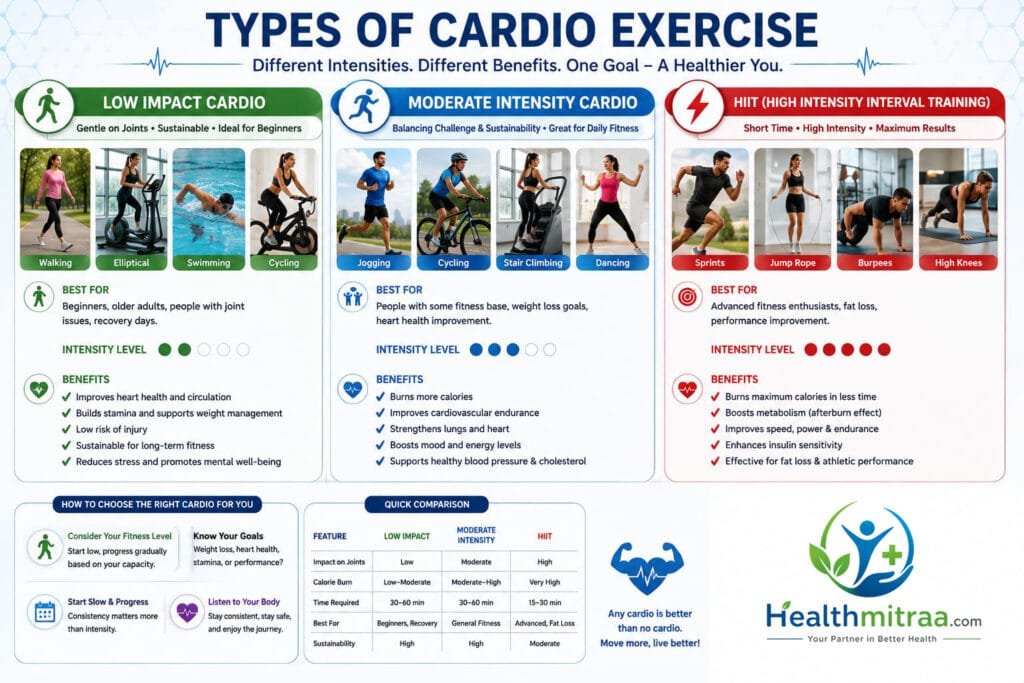
One of the greatest advantages of cardio exercise is its versatility. Whether you are a beginner, an older adult, or an experienced athlete, there is a cardio workout that matches your fitness level and health goals. Understanding the different types of cardio exercise can help you choose activities that are safe, enjoyable, and sustainable over the long term.
Low-Impact Cardio
Low-impact cardio exercise places minimal stress on the joints while still increasing your heart rate. These activities are ideal for beginners, older adults, people recovering from injuries, or anyone with joint discomfort.
Common examples include:
- Brisk walking
- Swimming
- Water aerobics
- Cycling on a stationary bike
- Elliptical training
These workouts improve heart health, endurance, and calorie burning while reducing the risk of joint strain. Starting with 20–30 minutes of low-impact cardio most days of the week is an excellent way to build a strong fitness foundation.
Moderate-Intensity Cardio
Moderate-intensity cardio exercise raises your heart rate enough that you can still talk but not comfortably sing during the activity. This level of exercise is recommended for most healthy adults because it provides substantial cardiovascular benefits with a relatively low risk of overexertion.
Popular options include:
- Fast walking
- Recreational cycling
- Dancing
- Hiking
- Low-impact aerobic classes
Health experts generally recommend accumulating at least 150 minutes of moderate-intensity cardio exercise per week to support heart health, blood pressure, blood sugar control, and overall physical fitness.
High-Intensity Cardio (HIIT)
High-Intensity Interval Training (HIIT) alternates short bursts of vigorous cardio exercise with brief recovery periods. For example, you might sprint for 30 seconds, walk for one minute, and repeat the cycle several times.
Examples include:
- Sprint intervals
- Jump rope intervals
- Cycling sprints
- High-intensity circuit training
- Rowing intervals
HIIT can improve cardiovascular fitness, increase calorie expenditure, and save time because workouts are often shorter than traditional cardio sessions. However, beginners and people with certain medical conditions should consult a healthcare professional before starting vigorous exercise and gradually increase intensity as their fitness improves.
15 Best Cardio Workouts for Better Health
Choosing the right cardio exercise depends on your age, fitness level, health condition, and personal goals. The best workout is one you enjoy and can perform consistently. Mixing different forms of cardio also helps prevent boredom, reduces the risk of overuse injuries, and challenges different muscle groups. Here are 15 of the most effective cardio workouts for improving heart health, stamina, and overall fitness.
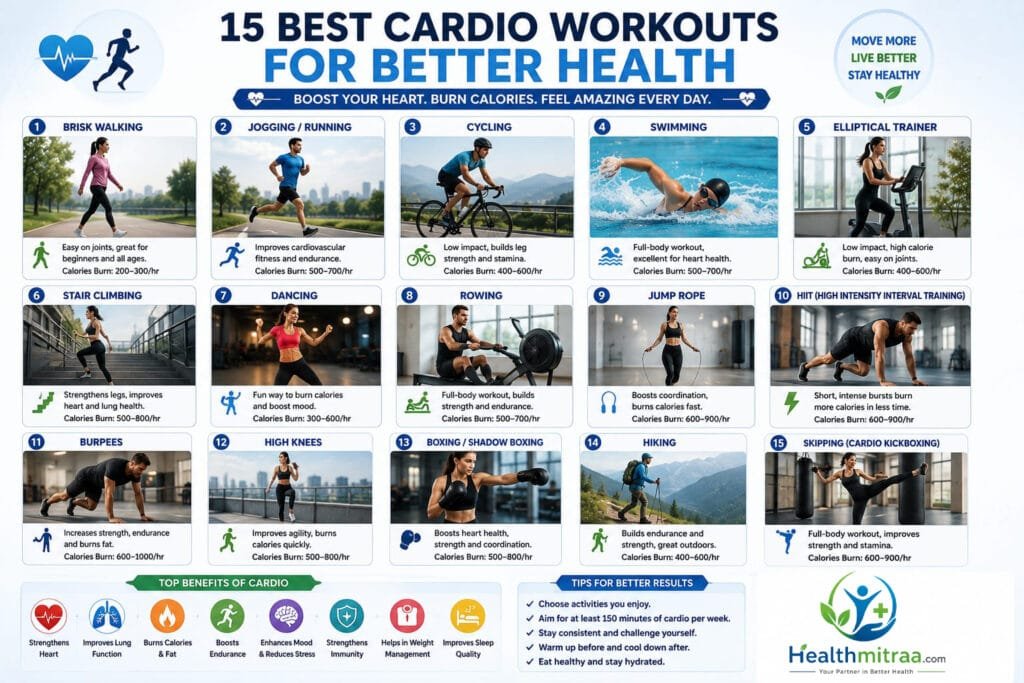
1. Brisk Walking
Brisk walking is one of the safest and most accessible forms of cardio exercise. It requires no special equipment and is suitable for nearly all age groups.
2. Jogging
Jogging provides greater cardiovascular benefits than walking and helps improve endurance while burning more calories.
3. Running
Running is a vigorous cardio exercise that strengthens the heart, improves lung capacity, and significantly increases aerobic fitness.
4. Cycling
Whether outdoors or on a stationary bike, cycling offers an excellent low-impact workout that improves cardiovascular endurance while placing less stress on the knees and hips.
5. Swimming
Swimming provides a full-body workout by engaging multiple muscle groups while reducing pressure on the joints. It is an excellent choice for people with arthritis or mobility limitations.
6. Jump Rope
Jump rope is an efficient, high-intensity cardio workout that improves coordination, agility, and cardiovascular fitness in a short amount of time.
7. Stair Climbing
Walking or running up stairs strengthens the lower body while rapidly increasing heart rate, making it an effective calorie-burning exercise.
8. Dancing
Dance-based workouts combine movement with music, making cardio exercise enjoyable while improving endurance, balance, and coordination.
9. Hiking
Hiking challenges the cardiovascular system while strengthening the legs and improving balance, especially on uneven terrain.
10. Rowing
Rowing provides a low-impact, full-body cardio workout that improves both muscular endurance and cardiovascular health.
11. Elliptical Training
An elliptical trainer offers an effective aerobic workout with reduced impact on the joints compared with running.
12. Aerobic Classes
Group aerobic classes can increase motivation while providing structured, moderate- to vigorous-intensity cardio exercise.
13. High-Intensity Interval Training (HIIT)
HIIT alternates short bursts of vigorous activity with recovery periods, improving cardiovascular fitness in less time than many traditional workouts.
14. Kickboxing Fitness
Fitness kickboxing combines aerobic movement with strength and coordination, providing an energetic full-body workout.
15. Power Walking
Power walking at a faster pace than normal walking is an excellent option for beginners and older adults who want the benefits of cardio exercise without the higher impact of running.
How Much Cardio Exercise Do You Need?
For most healthy adults, experts recommend at least 150 minutes of moderate-intensity cardio exercise each week or 75 minutes of vigorous-intensity cardio exercise. You can also combine both intensities to achieve similar health benefits. Spreading your workouts across the week—for example, 30 minutes on five days—is generally more effective than exercising only once or twice.
If you’re new to cardio exercise, start with shorter sessions such as 15–20 minutes and gradually increase the duration and intensity as your fitness improves. Choose activities you enjoy to make exercise a lasting habit. Remember, consistency is more important than perfection. Even regular, moderate cardio exercise can strengthen your heart, improve endurance, and support better long-term health.
Cardio Exercise Mistakes to Avoid
Even the best cardio exercise routine can produce disappointing results if common mistakes become habits. One of the biggest errors is skipping a warm-up, which increases the risk of muscle strain and injury. Starting too intensely instead of progressing gradually can also lead to fatigue or overuse injuries.
Many people overlook hydration, recovery, and proper footwear, all of which play an important role in safe cardio exercise. Exercising every day without allowing your body to recover may reduce performance and increase injury risk.
Finally, never ignore warning signs such as chest pain, severe shortness of breath, dizziness, or fainting during cardio exercise. Stop exercising immediately and seek medical attention if these symptoms occur. Safe, consistent training always delivers better long-term results than pushing beyond your body’s limits.
Who Should Be Careful Before Starting Cardio Exercise?
Most people can safely perform cardio exercise, but some should consult a healthcare professional before beginning a new routine. This includes individuals with heart disease, uncontrolled high blood pressure, diabetes, chronic lung disease, severe joint problems, or those recovering from major surgery.
If you experience chest pain, severe shortness of breath, dizziness, fainting, or an irregular heartbeat during cardio exercise, stop immediately and seek medical care. Starting slowly with low-impact activities and increasing intensity gradually helps make cardio exercise safer while allowing your body to adapt and gain long-term health benefits.
Healthy Tips for Getting the Most Out of Cardio Exercise
Starting cardio exercise is important, but following healthy habits can help you exercise more safely, improve performance, and achieve better long-term results. Whether your goal is improving heart health, increasing endurance, or staying physically active, these evidence-based tips can help you get the most from every workout.
Start Slowly and Progress Gradually
If you are new to cardio exercise, avoid doing too much too soon. Begin with low- to moderate-intensity activities such as brisk walking or cycling for 20–30 minutes. Gradually increase the duration, frequency, and intensity as your cardiovascular fitness improves.
Always Warm Up and Cool Down
Spend at least 5–10 minutes warming up before your workout with light movement and dynamic stretches. After finishing, cool down by walking slowly and performing gentle stretching exercises. This helps your heart rate return to normal gradually and may reduce muscle stiffness.
Choose Activities You Enjoy
The best cardio exercise is the one you can perform consistently. Walking, swimming, dancing, cycling, rowing, hiking, or group fitness classes are all excellent options. Enjoyable activities make it easier to maintain an active lifestyle.
Stay Hydrated
Drink water before, during, and after exercise, especially during hot weather or longer workouts. Proper hydration supports normal body temperature, improves physical performance, and helps replace fluids lost through sweat.
Wear Appropriate Clothing and Footwear
Comfortable, breathable clothing and supportive athletic shoes reduce discomfort and lower the risk of blisters, joint pain, and sports-related injuries. Replace worn-out shoes regularly if you exercise frequently.
Fuel Your Body Wisely
Eat a balanced diet rich in fruits, vegetables, whole grains, lean protein, and healthy fats to support your workouts and recovery. A light snack before cardio exercise may help maintain energy during longer sessions, while a nutritious meal afterward supports muscle recovery.
Listen to Your Body
Mild tiredness during exercise is normal, but persistent pain, dizziness, chest discomfort, or unusual shortness of breath should never be ignored. Reduce intensity or stop exercising if these symptoms occur and seek medical advice when necessary.
Stay Consistent
Consistency is more valuable than occasional intense workouts. Aim to include cardio exercise in your weekly routine, gradually making it a lifelong habit rather than a short-term fitness challenge. Even moderate amounts of regular physical activity can produce significant improvements in heart health, endurance, energy levels, and overall quality of life.
When Should You Stop Exercising and See a Doctor?
While cardio exercise is generally safe, stop exercising immediately if you develop chest pain, severe shortness of breath, dizziness, fainting, or an irregular heartbeat. These symptoms are not a normal response to exercise and require prompt medical evaluation. Persistent joint pain or sudden swelling should also be assessed before continuing your routine. If you have heart disease, diabetes, or another chronic medical condition, follow your healthcare provider’s advice about safe cardio exercise intensity and seek medical care whenever concerning symptoms occur.
Frequently Asked Questions About Cardio Exercise
Is walking considered cardio exercise?
Yes. Brisk walking is an excellent cardio exercise that improves heart health and endurance.
How often should I do cardio exercise?
Most adults should aim for at least 150 minutes of moderate-intensity cardio exercise each week.
Can cardio exercise help with weight loss?
Yes. Cardio exercise burns calories and supports healthy weight management when combined with a balanced diet.
Can I do cardio exercise every day?
Light to moderate cardio exercise can be done most days, but include recovery time after vigorous workouts to help your body repair and adapt safely.
Bonus Section
Expert Tips
Make cardio exercise a regular habit instead of chasing intense workouts. Start with an activity you enjoy, increase intensity gradually, and pair cardio with strength training, healthy nutrition, and adequate sleep for the best long-term results.
Did You Know?
Just 30 minutes of moderate cardio exercise on most days of the week can significantly improve heart health, increase endurance, and lower the risk of several chronic diseases.
Cardio Fitness Self-Assessment
Ask yourself:
- Can I stay active for 30 minutes without excessive fatigue?
- Do I recover within a few minutes after cardio exercise?
- Am I meeting my weekly activity goal?
Healthy Cardio Checklist
✔ Warm up before every workout
✔ Stay hydrated
✔ Wear supportive shoes
✔ Cool down and stretch
✔ Exercise consistently
Myth vs. Fact
Myth: Only intense workouts improve fitness.
Fact: Regular cardio exercise, even at moderate intensity, provides substantial health benefits when performed consistently.
Key Takeaways
- Cardio exercise strengthens your heart, lungs, and overall endurance.
- Aim for at least 150 minutes of moderate-intensity activity each week.
- Choose workouts you enjoy to stay consistent.
- Exercise safely, progress gradually, and stop if warning symptoms occur.
- Small, regular efforts lead to lasting health benefits.
Conclusion
Cardio exercise is one of the most effective ways to improve heart health, increase endurance, and support overall well-being. Whether you choose walking, cycling, swimming, or running, staying consistent matters most. Make cardio exercise a lifelong habit to enjoy lasting physical and mental health benefits.
External References
- Mayo Clinic
- American Heart Association
- Centers for Disease Control and Prevention (CDC) – Physical Activity Basics
Related Articles
Medical Disclaimer
This article is for educational purposes only and is not a substitute for professional medical advice, diagnosis, or treatment. Always consult a qualified healthcare provider before starting a new exercise program or if you have any underlying medical conditions.