Feeling unusually tired, weak, or noticing pale skin? These symptoms may seem harmless but could be early signs of folic acid deficiency. Because folate is essential for healthy red blood cells and normal cell growth, recognizing the warning signs early can help prevent complications and support timely treatment.
What Is Folic Acid Deficiency?
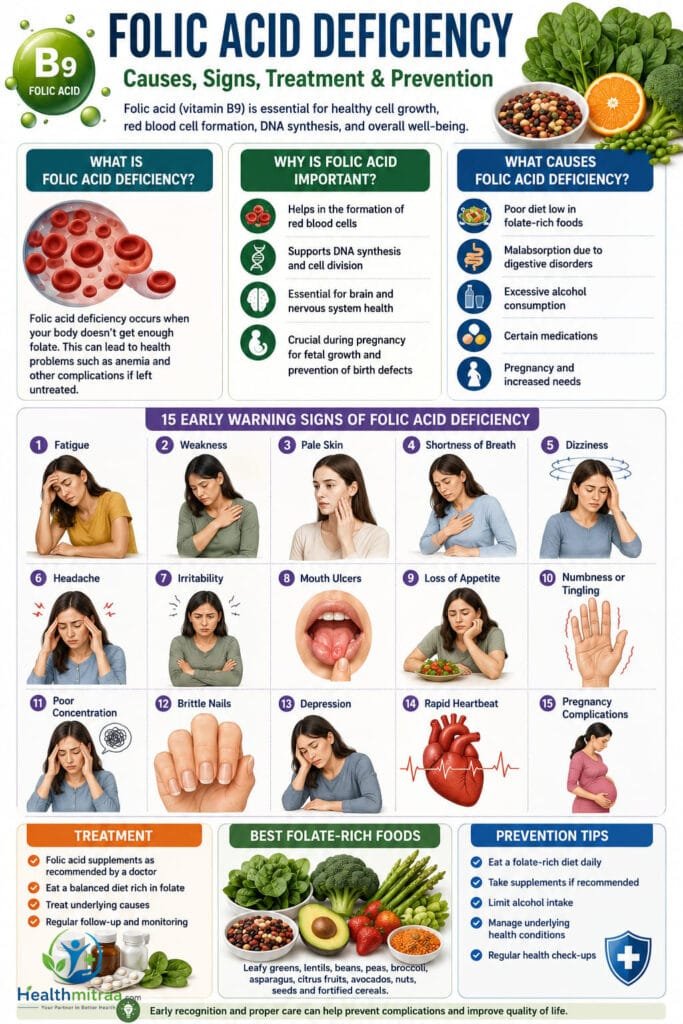
Folic acid deficiency occurs when your body does not have enough folate (vitamin B9) to support normal cell growth and other essential functions. Folate plays a key role in making healthy red blood cells, producing DNA, and supporting the growth and repair of tissues. Without enough folate, the body may produce unusually large, immature red blood cells that do not function properly, a condition known as megaloblastic anemia.
Folic acid deficiency can develop because of a diet low in folate-rich foods, poor nutrient absorption, increased folate requirements, certain medications, or excessive alcohol use. If left untreated, it may lead to fatigue, weakness, pale skin, mouth ulcers, and other health problems.
Why Is Folic Acid Important for Your Body?
Folic acid, also known as vitamin B9, is an essential nutrient that helps your body make healthy red blood cells, produce DNA, and support normal cell growth and repair. Because new cells are constantly being formed, an adequate supply of folate is especially important during periods of rapid growth, such as pregnancy, infancy, and adolescence.
Folate also plays a vital role in supporting healthy brain function and helping tissues grow and repair properly. During pregnancy, getting enough folate is particularly important because it helps reduce the risk of certain neural tube defects in the developing baby.
15 Early Warning Signs of Folic Acid Deficiency
1. Persistent Fatigue and Low Energy
Persistent fatigue is one of the earliest and most common signs of folic acid deficiency. You may feel unusually tired, weak, or drained even after getting enough sleep. Daily activities such as climbing stairs, walking, or completing routine tasks may become more exhausting than usual.
This occurs because folate is needed to produce healthy red blood cells. When your body cannot make enough normal red blood cells, less oxygen reaches your tissues and muscles, resulting in ongoing fatigue and reduced stamina.
2. Pale or Yellowish Skin
A pale complexion may develop because folic acid deficiency can reduce the number of healthy red blood cells, limiting oxygen delivery throughout the body. Some people may also notice a slight yellowish tint to the skin due to the breakdown of abnormal red blood cells.
Although pale skin can have many causes, it should not be ignored when it occurs with fatigue or other symptoms of anemia.
3. Weakness and Reduced Physical Stamina
Many people notice that they become physically weaker than usual. Activities that once felt easy may require more effort, and recovery after exercise may take longer.
Reduced oxygen delivery to muscles caused by anemia is often responsible for this symptom.
4. Shortness of Breath
If your body is not getting enough oxygen because of anemia, even mild physical activity may leave you feeling breathless. Walking uphill, climbing stairs, or exercising can become more difficult than before.
Shortness of breath should always be evaluated by a healthcare professional, especially if it develops suddenly or becomes severe.
5. Dizziness or Lightheadedness
Feeling dizzy or lightheaded—particularly when standing up quickly—is another possible warning sign. Reduced oxygen supply to the brain may contribute to these episodes.
Some people also report feeling unsteady or having difficulty concentrating during periods of dizziness.
6. Frequent Headaches
Recurring headaches may occur because the brain is receiving less oxygen than it normally needs. While headaches have many possible causes, persistent headaches combined with fatigue or pale skin may suggest an underlying nutritional deficiency.
If headaches are severe, frequent, or associated with neurological symptoms, medical evaluation is important.
7. Mouth Ulcers
Painful sores inside the mouth are a recognized symptom of folic acid deficiency. These ulcers may make eating, drinking, or speaking uncomfortable and can reduce overall quality of life.
In many cases, the ulcers improve once folate levels return to normal through appropriate treatment.
8. Swollen, Red, or Smooth Tongue
A swollen, tender, or unusually smooth tongue—known medically as glossitis—is another classic sign of folate deficiency. The tongue may appear bright red, feel sore, or lose its normal textured surface.
This change occurs because rapidly growing cells in the mouth are particularly sensitive to low folate levels.
9. Difficulty Concentrating
Folate supports healthy brain function and normal cell activity. Low folate levels may make it harder to focus, stay attentive, or complete mentally demanding tasks.
Although poor concentration can have many causes, it may improve once the deficiency is identified and treated.
10. Memory Problems
Some people experience mild forgetfulness or difficulty recalling recent information. These changes are usually subtle and may occur alongside fatigue or poor concentration.
Memory problems should always be discussed with a healthcare professional, especially if they worsen over time.
11. Irritability and Mood Changes
Folic acid plays an important role in several processes that support normal brain function. Some individuals with folate deficiency may become more irritable, emotionally sensitive, or experience changes in mood.
These symptoms are often nonspecific but may improve after the underlying deficiency is corrected.
12. Heart Palpitations
When anemia develops, the heart may need to work harder to deliver oxygen throughout the body. As a result, some people notice a racing, pounding, or irregular heartbeat, particularly during physical activity.
Persistent palpitations should always be medically evaluated to rule out heart-related conditions.
13. Poor Appetite
A reduced appetite is another possible symptom of folic acid deficiency. Eating less than usual over time may contribute to unintended weight loss and make the deficiency even worse.
Restoring normal folate levels often helps improve appetite.
14. Unintentional Weight Loss
Some individuals lose weight because poor appetite, mouth ulcers, or ongoing illness reduce their food intake. Weight loss related to folate deficiency is usually gradual rather than sudden.
Any unexplained weight loss should be assessed by a healthcare professional to identify the underlying cause.
15. Frequent Infections
Folate is essential for healthy cell production, including certain immune cells that help protect the body from infection. A prolonged deficiency may weaken the immune system, increasing susceptibility to common infections or slowing recovery from illness.
While frequent infections alone do not confirm folic acid deficiency, they may occur alongside other warning signs and should be evaluated by a healthcare provider.
Important: These symptoms are not unique to folic acid deficiency and can occur with many other medical conditions, including vitamin B12 deficiency, iron deficiency, and other forms of anemia. If you experience several of these symptoms together, consult a healthcare professional. A blood test can help determine the underlying cause and guide appropriate treatment.
What Causes Folic Acid Deficiency?
Folic acid deficiency develops when your body does not get enough folate, cannot absorb it properly, or uses it faster than it can be replaced. In many cases, more than one factor contributes to the deficiency, making it important to identify the underlying cause before starting treatment.
Common causes include:
- Inadequate dietary intake: Not eating enough folate-rich foods—such as leafy green vegetables, legumes, citrus fruits, asparagus, and fortified grains—is one of the most common reasons for folate deficiency.
- Poor absorption: Certain digestive conditions, including celiac disease, Crohn’s disease, and other disorders affecting the small intestine, can reduce the body’s ability to absorb folate from food.
- Increased folate requirements: Pregnancy, breastfeeding, periods of rapid growth, and some chronic medical conditions increase the body’s demand for folate. Without adequate intake, deficiency can develop over time.
- Excessive alcohol use: Heavy alcohol consumption interferes with folate absorption, reduces the body’s folate stores, and is often associated with poor dietary habits, further increasing the risk of deficiency.
- Certain medications: Some medicines, including methotrexate, phenytoin, trimethoprim, and sulfasalazine, can interfere with folate metabolism or absorption. Do not stop taking prescribed medications without first consulting your healthcare provider.
Because folic acid deficiency and vitamin B12 deficiency can cause similar symptoms, healthcare professionals often recommend blood tests to confirm the diagnosis before treatment begins.
Risk Factors for Folic Acid Deficiency
Anyone can develop folic acid deficiency, but certain people are at a higher risk. Eating a diet low in folate-rich foods, such as leafy green vegetables, legumes, and fortified grains, increases the likelihood of deficiency. The risk is also higher in people with celiac disease, Crohn’s disease, or other digestive disorders that reduce folate absorption.
Pregnant women and people who are breastfeeding need more folate to support healthy growth and development, making them more vulnerable if their intake is inadequate. Heavy alcohol use, certain medications—including methotrexate, phenytoin, and sulfasalazine—and conditions that increase the body’s folate requirements can also contribute to deficiency.
How Is Folic Acid Deficiency Diagnosed?
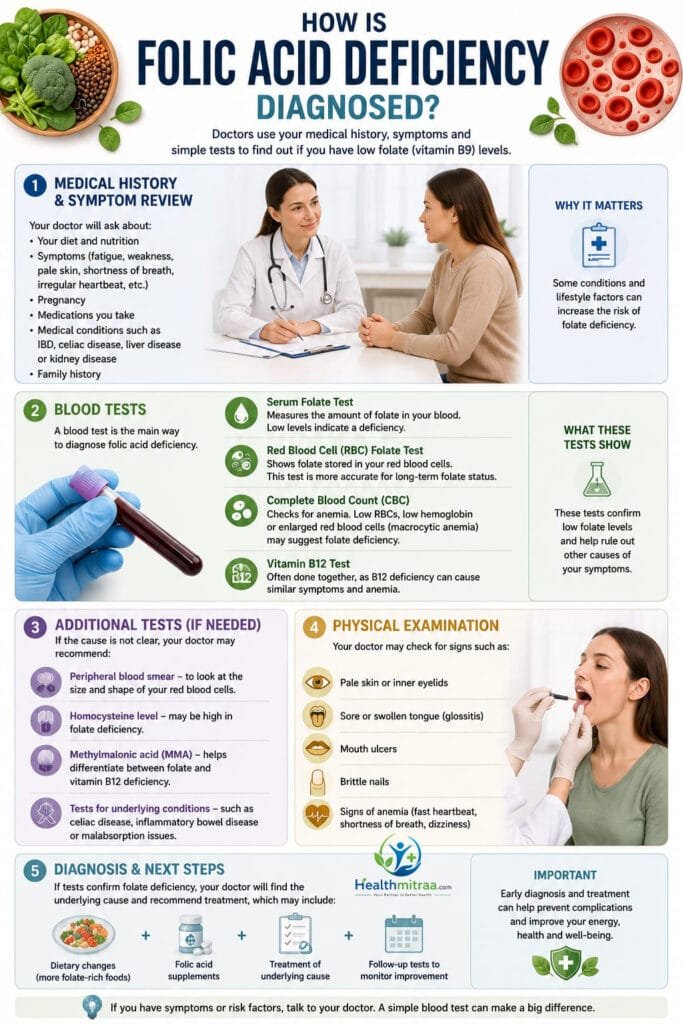
Diagnosing folic acid deficiency usually begins with a review of your symptoms, medical history, dietary habits, medications, and any conditions that may affect nutrient absorption. Because the symptoms can be similar to those of vitamin B12 deficiency, iron deficiency, and other forms of anemia, laboratory testing is needed to confirm the diagnosis.
Your healthcare provider will typically order a complete blood count (CBC) to check for signs of anemia, such as enlarged red blood cells (megaloblastic anemia). A blood folate test may also be performed to measure folate levels and determine whether a deficiency is present.
In many cases, a vitamin B12 test is recommended at the same time. This is important because treating folic acid deficiency without identifying an underlying vitamin B12 deficiency may improve anemia while allowing nerve damage caused by low vitamin B12 to continue.
Depending on your symptoms and medical history, additional tests may be needed to look for underlying causes, such as celiac disease, Crohn’s disease, or other conditions that interfere with folate absorption.
Treatment for Folic Acid Deficiency
Treatment for folic acid deficiency aims to restore healthy folate levels, correct the underlying cause, and prevent the deficiency from returning. The right treatment depends on the severity of the deficiency, your overall health, and the reason your folate levels are low.
For most people, healthcare providers recommend folic acid supplements to replenish the body’s folate stores. The appropriate dose and duration vary from person to person, so supplements should only be taken as advised by a healthcare professional.
Dietary changes are also an important part of treatment. Regularly eating folate-rich foods—including spinach, kale, broccoli, asparagus, lentils, beans, chickpeas, citrus fruits, avocados, and fortified cereals—can help maintain healthy folate levels and support long-term recovery.
If an underlying condition, such as celiac disease, Crohn’s disease, excessive alcohol use, or certain medications, is contributing to the deficiency, treating or managing that condition is essential to prevent recurrence.
Best Folate-Rich Foods to Prevent Folic Acid Deficiency
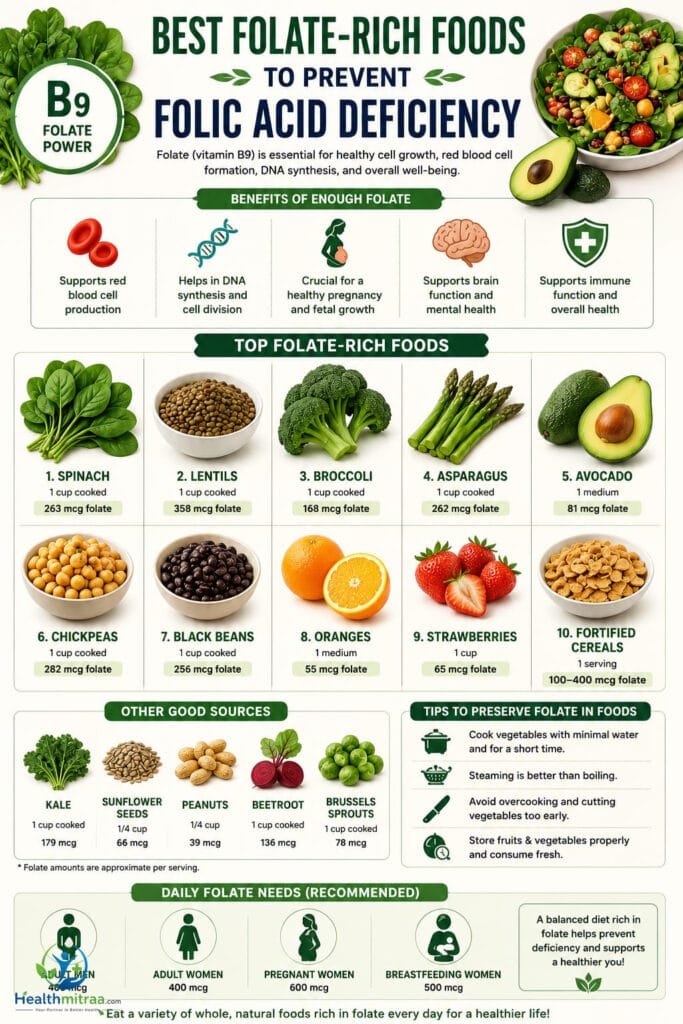
Eating a variety of folate-rich foods is one of the most effective ways to maintain healthy folate levels and reduce the risk of folic acid deficiency. Folate is the natural form of vitamin B9 found in foods, while folic acid is the synthetic form added to fortified foods and dietary supplements. Both help support healthy red blood cell production, DNA synthesis, and normal cell growth.
Dark Leafy Green Vegetables
- Spinach
- Kale
- Romaine lettuce
- Mustard greens
Legumes
- Lentils
- Chickpeas
- Black beans
- Kidney beans
- Green peas
Vegetables
- Asparagus
- Broccoli
- Brussels sprouts
- Okra
Fruits
- Oranges
- Avocados
- Papaya
- Strawberries
Fortified Foods
Many breakfast cereals, breads, rice, and pasta are fortified with folic acid, making them an important source for people who may not get enough folate from natural foods alone.
Tips to Preserve Folate
Folate is sensitive to heat and can be lost during prolonged cooking. Steaming or lightly cooking vegetables instead of boiling them for long periods may help retain more of this important vitamin.
A healthy, balanced diet is usually the best way to meet your daily folate needs. However, some people—including pregnant women, individuals with certain digestive disorders, or those diagnosed with folic acid deficiency—may require folic acid supplements under medical supervision to restore normal folate levels.
Can Folic Acid Deficiency Be Prevented?
In many cases, folic acid deficiency can be prevented by eating a balanced diet that includes folate-rich foods, such as leafy green vegetables, legumes, citrus fruits, asparagus, and fortified grains. Limiting excessive alcohol consumption and managing conditions that affect nutrient absorption may also help reduce the risk.
Some people—including pregnant women and those with certain medical conditions or increased folate needs—may require folic acid supplements. These should be taken only as recommended by a healthcare professional. Regular medical follow-up can help identify and treat folate deficiency before complications develop.
Possible Complications of Untreated Folic Acid Deficiency
If left untreated, folic acid deficiency can lead to serious health problems over time. One of the most common complications is megaloblastic anemia, a condition in which the body produces abnormally large, immature red blood cells that cannot carry oxygen efficiently. This may result in persistent fatigue, weakness, shortness of breath, and reduced physical stamina.
During pregnancy, inadequate folate levels increase the risk of certain neural tube defects in the developing baby, making early diagnosis and prevention especially important.
Because folic acid deficiency can occur alongside vitamin B12 deficiency, treating folate deficiency alone without identifying a vitamin B12 deficiency may mask anemia while allowing nerve damage related to low vitamin B12 to continue.
When Should You See a Doctor?
See a healthcare professional if you have persistent fatigue, weakness, pale skin, shortness of breath, mouth ulcers, or dizziness that does not improve or worsens over time. Medical evaluation is also important if you are pregnant, have a digestive disorder, take medications that affect folate levels, or are at increased risk of deficiency.
Because these symptoms can also be caused by vitamin B12 deficiency, iron deficiency, or other medical conditions, your healthcare provider may recommend blood tests to determine the underlying cause and guide appropriate treatment.
Frequently Asked Questions (FAQs)
1. What is the most common symptom of folic acid deficiency?
Persistent fatigue is one of the most common early symptoms. Other signs may include weakness, pale skin, mouth ulcers, dizziness, and shortness of breath.
2. Which foods are highest in folate?
Leafy green vegetables, lentils, chickpeas, beans, asparagus, broccoli, citrus fruits, avocados, and fortified cereals are excellent sources of folate.
3. How is folic acid deficiency diagnosed?
Healthcare providers usually diagnose folic acid deficiency using blood tests, including a complete blood count (CBC), blood folate level, and often a vitamin B12 test.
4. Can folic acid deficiency be cured?
Yes. In most cases, it can be successfully treated with folic acid supplements, dietary changes, and treatment of the underlying cause.
5. Is folic acid deficiency the same as vitamin B12 deficiency?
No. They are different conditions, although they can cause similar symptoms. Blood tests help distinguish between them and guide the appropriate treatment.
References
- Mayo Clinic – Folate (Folic Acid)
- NIH Office of Dietary Supplements
- MedlinePlus – Folate Deficiency Anemia
Related Articles
- 15 Signs of Calcium Deficiency That Could Be Affecting Your Health
- 15 Signs of Magnesium Deficiency That Could Be Affecting Your Health
- 15 Signs of Iron Deficiency That Could Be Affecting Your Health
- Vitamin B12 Deficiency: 10 Critical Warning Signs You Should Never Ignore
- Vitamin D Deficiency: 15 Warning Signs, Causes, Treatment & Prevention
Medical Disclaimer
This article is for educational purposes only and should not replace professional medical advice, diagnosis, or treatment. If you have symptoms of folic acid deficiency or other health concerns, consult a qualified healthcare professional for proper evaluation and personalized care.