
What if just 30 minutes every morning could improve your energy, sharpen your focus, and support better long-term health? The good news is that you don’t need a complicated schedule to see real benefits. A healthy morning routine is built on small, consistent habits that prepare your body and mind for the day ahead. From hydrating after waking up to moving your body, eating a nutritious breakfast, and getting natural sunlight, these simple actions can have a lasting impact on your overall well-being. In this guide, you’ll discover a healthy morning routine with 15 simple habits that are practical, easy to follow, and designed to help you feel healthier, more productive, and ready to make every day your best.
Why a Healthy Morning Routine Matters
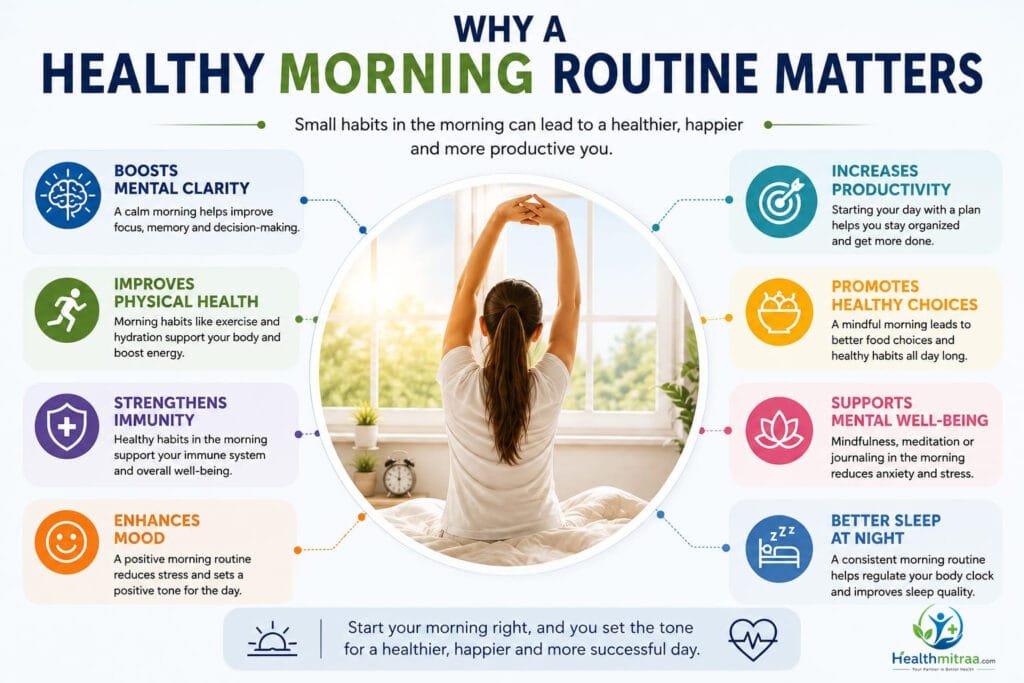
A healthy morning routine is more than just waking up early—it’s an opportunity to set a positive tone for your entire day. The habits you practice in the morning can influence your energy, focus, mood, and overall well-being. Starting your day with hydration, light physical activity, nutritious food, and a few moments of mindfulness can help you feel more alert and prepared for daily challenges.
Over time, a healthy morning routine may also encourage healthier lifestyle choices, improve consistency, and make it easier to maintain good habits throughout the day. You don’t need to overhaul your life overnight. Small, practical changes repeated every morning can build momentum, support better physical and mental health, and help you create a routine that works for your lifestyle and long-term wellness goals.
15 Simple Morning Habits to Transform Your Health
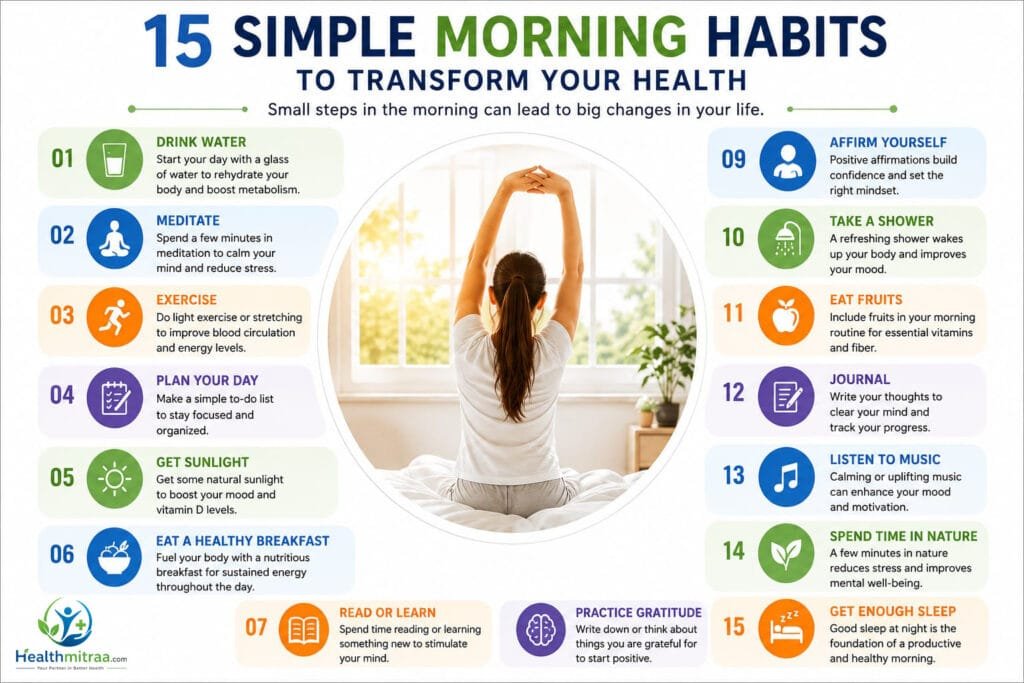
1. Drink Water After Waking Up
The first step in a healthy morning routine is drinking a glass of water soon after you wake up. During sleep, your body naturally loses fluids through breathing and perspiration. Rehydrating in the morning helps you feel refreshed and encourages healthy hydration throughout the day. Keep a water bottle or glass near your bed so this habit becomes effortless.
2. Get Natural Sunlight
Spend at least 10–20 minutes in natural daylight whenever possible. Morning sunlight helps regulate your body’s internal clock, making it easier to feel awake during the day and sleep better at night. Adding sunlight to your healthy morning routine can also improve alertness, mood, and overall well-being.
3. Move Your Body
You don’t need an intense workout to enjoy the benefits of movement. Gentle stretching, yoga, a brisk walk, or a few bodyweight exercises can wake up your muscles, improve circulation, and reduce morning stiffness. Including regular movement in your healthy morning routine helps prepare your body for the day ahead while making physical activity a consistent habit.
4. Practice Deep Breathing
Before rushing into your day, spend two to five minutes taking slow, deep breaths. This simple habit can help you feel calmer, improve focus, and create a positive mindset. Deep breathing requires no equipment and fits easily into any healthy morning routine, even on busy mornings.
5. Avoid Checking Your Phone Immediately
Instead of scrolling through emails or social media as soon as you wake up, give yourself 20–30 minutes without screens. This allows you to focus on your own priorities rather than reacting to notifications. Protecting your attention early in the day makes your healthy morning routine more peaceful, intentional, and productive.
6. Eat a Nutritious Breakfast
A balanced breakfast gives your body the fuel it needs after an overnight fast. Try to include protein, whole grains, healthy fats, and fresh fruit instead of sugary cereals or pastries. Foods such as eggs, oatmeal, Greek yogurt, nuts, or fruit can help you stay satisfied and energized throughout the morning. Making breakfast part of your healthy morning routine can also support better food choices later in the day.
7. Practice Mindfulness
Take five to ten minutes to meditate, practice deep breathing, pray, or simply sit quietly. A few moments of mindfulness can help you begin the day with a calmer mindset and improve your ability to handle daily stress. Adding mindfulness to your healthy morning routine is a simple way to improve focus and emotional well-being without requiring special equipment or a lot of time.
8. Plan Your Day
Before your day becomes busy, write down your top priorities or create a simple to-do list. Focusing on two or three important tasks makes your schedule feel more manageable and reduces the chances of forgetting essential responsibilities. Planning ahead makes your healthy morning routine more purposeful and helps you stay organized throughout the day.
9. Avoid Sugary Drinks
Many popular breakfast beverages contain large amounts of added sugar. Instead, choose water, plain coffee, or unsweetened tea if they fit your preferences. Reducing sugary drinks as part of your healthy morning routine helps you avoid unnecessary calories and encourages healthier hydration habits.
10. Spend a Few Minutes Outdoors
If possible, step outside for a short walk or simply enjoy fresh air. Combining light movement with natural daylight is an easy way to feel more awake and refreshed. This simple habit strengthens your healthy morning routine and creates a positive start before work, school, or other daily responsibilities.
11. Read Something Inspiring
Spend 10–15 minutes reading a book, an educational article, or listening to an inspiring podcast. Starting your day with positive and informative content can improve your mindset and encourage lifelong learning. Including this habit in your healthy morning routine helps you begin each day with fresh ideas instead of distractions.
12. Practice Gratitude
Take a moment to think about three things you’re grateful for or write them in a journal. Gratitude is a simple habit that can help shift your attention toward positive experiences and improve your outlook. Making gratitude part of your healthy morning routine can help you start the day with a more optimistic mindset.
13. Review Your Goals
Before beginning work or other responsibilities, look over your short-term or long-term goals. This quick review keeps your priorities clear and reminds you why your daily actions matter. A goal-focused healthy morning routine can help you stay motivated and make better decisions throughout the day.
14. Prepare Healthy Snacks
Packing healthy snacks such as fruit, nuts, yogurt, or cut vegetables before leaving home makes nutritious choices more convenient later in the day. This small step supports healthier eating habits and fits naturally into a healthy morning routine designed for long-term wellness.
15. Stay Consistent
The most effective healthy morning routine is one you can follow regularly. You don’t have to complete every habit perfectly every day. Start with a few simple habits, build them gradually, and adjust your routine to fit your lifestyle. Consistency—not perfection—is what creates lasting improvements in your health, energy, and overall well-being.
Science-Backed Benefits of a Healthy Morning Routine
A healthy morning routine offers benefits that go beyond simply starting your day on time. Research suggests that consistent morning habits can support better sleep patterns, improve focus, enhance mood, and encourage healthier lifestyle choices. Beginning the day with hydration, physical activity, natural sunlight, and a balanced breakfast may help you feel more energized and mentally prepared for daily tasks.
A structured healthy morning routine can also reduce decision fatigue by turning positive behaviors into automatic habits. Over time, these small actions may contribute to better productivity, improved emotional well-being, and greater consistency in maintaining healthy routines. While no single habit is a magic solution, combining several evidence-informed morning habits can make a meaningful difference in your overall health and quality of life when practiced consistently.
What Is the Best Morning Routine for Better Health?
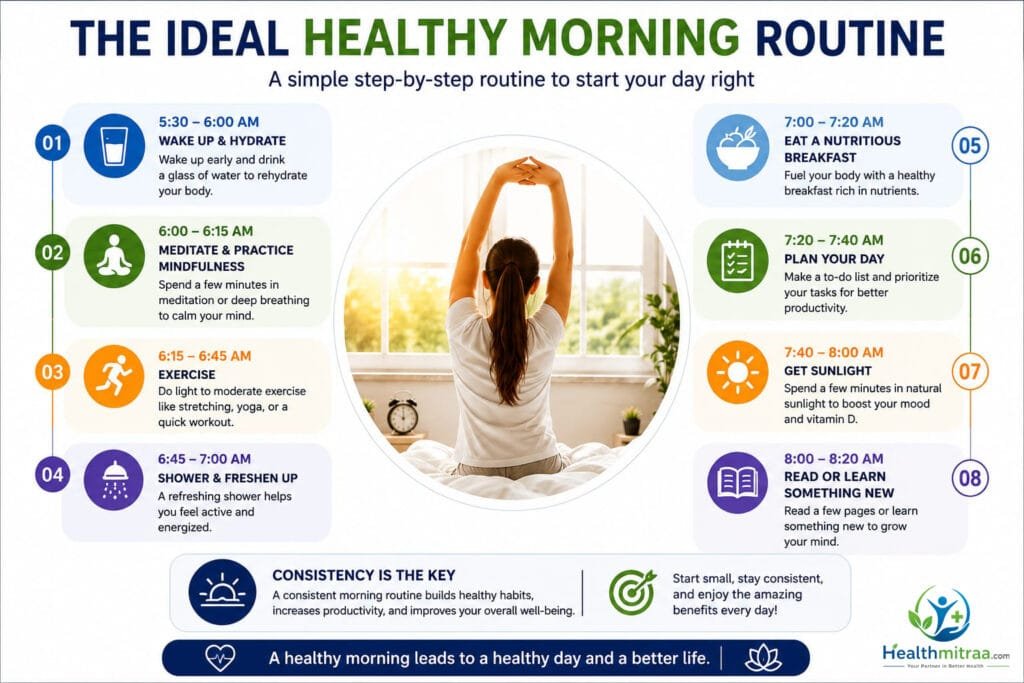
The best healthy morning routine is one that is simple, realistic, and easy to follow every day. You don’t need to wake up at 5 a.m. or complete a long checklist to enjoy the benefits. A practical morning routine can begin with drinking water, getting natural sunlight, moving your body for a few minutes, eating a balanced breakfast, and taking time to plan your day. These habits help create a positive start without feeling overwhelming.
The most effective healthy morning routine is personalized to your schedule, health goals, and lifestyle. Start with two or three habits, practice them consistently, and gradually add more as they become part of your daily life. Small, sustainable changes are more likely to last than dramatic routines that are difficult to maintain, making long-term health improvements much more achievable.
Common Morning Routine Mistakes to Avoid
Even the best healthy morning routine can lose its benefits if a few common mistakes become daily habits. Hitting the snooze button repeatedly may leave you feeling less refreshed, while skipping breakfast can make it harder for some people to maintain steady energy through the morning. Checking your phone immediately after waking may increase distractions and reduce focus before your day even begins. Another common mistake is trying to change too many habits at once, which can make your healthy morning routine difficult to maintain.
Instead, build one or two simple habits first and add more gradually. Consistency is far more effective than perfection. By avoiding these common mistakes and following a realistic routine, you’ll be more likely to enjoy lasting improvements in your health, productivity, and overall well-being.
Easy Ways to Build a Healthy Morning Routine
Building a healthy morning routine doesn’t have to be difficult. Start by choosing one or two simple habits that fit naturally into your lifestyle, such as drinking water after waking up or taking a short walk. Once these habits become automatic, gradually add others like stretching, eating a balanced breakfast, or planning your day.
Preparing the night before by setting out workout clothes or organizing breakfast ingredients can also make your healthy morning routine easier to follow. Try waking up at a consistent time every day, including weekends, to help establish a regular rhythm. Most importantly, be patient with yourself. Missing a day doesn’t mean you’ve failed. Focus on progress instead of perfection, and remember that small, consistent habits are the foundation of a successful healthy morning routine that supports better health and long-term well-being.
Who Can Benefit Most from a Healthy Morning Routine?
Almost everyone can benefit from a healthy morning routine, regardless of age or lifestyle. Students may find it easier to stay focused during classes, while working professionals can start the day with better energy and productivity. Parents often benefit from a structured morning that helps reduce stress before busy schedules begin. Older adults may also find that a healthy morning routine supports regular physical activity, balanced eating, and overall well-being. Even if your mornings are busy, following just a few simple habits can make a positive difference. The key is to create a routine that matches your daily schedule, personal goals, and physical abilities so it remains practical, enjoyable, and sustainable over the long term.
Myth vs. Fact
| Myth | Fact |
|---|---|
| You must wake up at 5 a.m. to have a healthy morning routine. | The best healthy morning routine is the one that fits your schedule and allows you to get enough quality sleep. |
| Skipping breakfast is always healthier. | A balanced breakfast can help many people maintain energy and nutrient intake, although individual needs vary. |
| A healthy morning routine must be long and complicated. | Even 20–30 minutes of consistent healthy habits can provide meaningful benefits. |
| Checking your phone immediately after waking is harmless. | Starting the day without screens can help reduce distractions and improve focus. |
| Missing one morning ruins your progress. | Long-term consistency matters much more than following a perfect routine every single day. |
Frequently Asked Questions (FAQs)
1. How long should a healthy morning routine be?
A healthy morning routine doesn’t have to take an hour. Even 20–30 minutes is enough if you focus on simple habits like hydration, light movement, and planning your day.
2. Do I need to wake up at 5 a.m. to have a healthy morning routine?
No. The best healthy morning routine is one that matches your schedule and allows you to get enough quality sleep consistently.
3. What is the first thing I should do after waking up?
Start by drinking a glass of water, opening the curtains for natural light, and avoiding your phone for the first few minutes whenever possible.
4. Can a healthy morning routine improve productivity?
Yes. A consistent healthy morning routine can help you begin the day feeling more organized, focused, and prepared for daily tasks.
5. How can I stick to a healthy morning routine?
Begin with one or two simple habits, practice them every day, and gradually build your routine instead of trying to change everything at once.
Key Takeaways
- A healthy morning routine doesn’t have to be complicated to be effective.
- Focus on simple, consistent habits like hydration, movement, nutritious eating, and planning your day.
- Build your routine gradually instead of changing everything overnight.
- Avoid common mistakes such as checking your phone immediately after waking or skipping breakfast.
- Small daily actions can lead to lasting improvements in your energy, focus, productivity, and overall well-being.
Conclusion
A healthy morning routine is one of the simplest ways to support better physical and mental well-being. You don’t need a perfect schedule—just a few consistent habits that fit your lifestyle. Start small, stay consistent, and make gradual improvements over time. With patience and commitment, your morning routine can become a powerful foundation for a healthier, more productive, and balanced life.
Bonus Section
Expert Tips
- Prepare your morning the night before by setting out your clothes, filling a water bottle, or planning breakfast.
- Start with just two or three habits and add new ones gradually to make your healthy morning routine easier to maintain.
- Aim for a consistent wake-up time every day, including weekends, to support a regular sleep schedule.
Did You Know?
Research suggests that regular exposure to natural morning light helps regulate your body’s internal clock, supporting better daytime alertness and healthier sleep patterns at night.
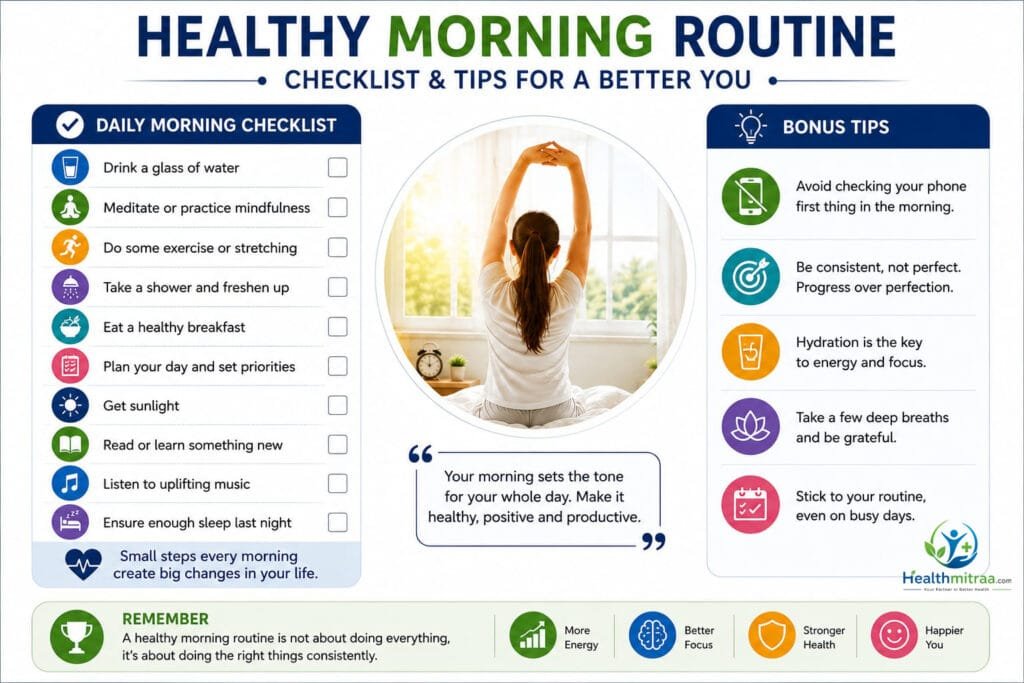
Healthy Morning Routine Checklist
- ✅ Drink a glass of water
- ✅ Get 10–20 minutes of natural sunlight
- ✅ Move your body or stretch
- ✅ Eat a balanced breakfast
- ✅ Practice mindfulness or deep breathing
- ✅ Plan your top priorities
- ✅ Avoid checking your phone immediately
Healthy Swaps
- ❌ Check your phone first thing → ✅ Drink a glass of water first
- ❌ Sugary breakfast cereals → ✅ Oatmeal, eggs, or Greek yogurt
- ❌ Skip movement → ✅ 5–10 minutes of stretching or a brisk walk
- ❌ Sugary coffee drinks → ✅ Plain coffee or unsweetened tea
- ❌ Rush into the day → ✅ Spend 5 minutes planning your priorities
External References
- Mayo Clinic – Healthy Lifestyle
- Centers for Disease Control and Prevention (CDC) – Healthy Living
- National Institutes of Health (NIH) – Your Daily Life (Health Information)
- American Heart Association – Healthy Living
- World Health Organization (WHO) – Health Topics
Related Articles
- Best Fruits for Weight Loss: 25 Healthy Fruits Backed by Science
- Sleep Hygiene: 15 Science-Backed Tips for Better Sleep
- Stress Management: 15 Proven Ways to Reduce Stress Naturally
Medical Disclaimer: This article is for educational purposes only and is not a substitute for professional medical advice, diagnosis, or treatment. Always consult a qualified healthcare provider for personalized guidance.