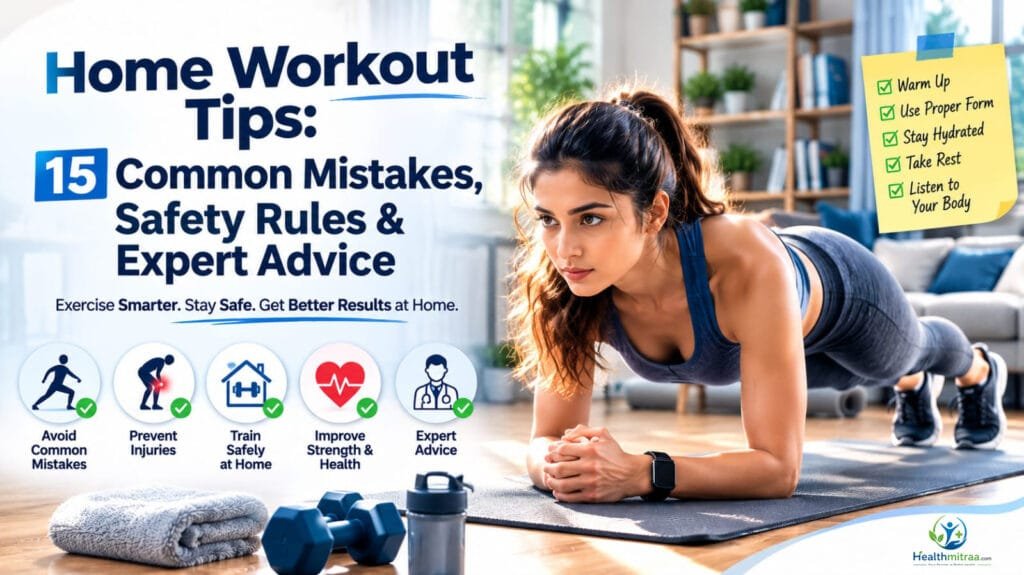
A home workout can help you improve your fitness, lose weight, and build strength without stepping into a gym. However, even the best workout routine can fail if you make common mistakes like using poor form, skipping warm-ups, or exercising beyond your limits. These habits not only slow your progress but can also increase your risk of injury.
The good news is that most home workout mistakes are easy to fix with the right knowledge. In this guide, you’ll learn the 15 most common home workout mistakes, essential safety rules, expert tips to improve your workouts, and warning signs that mean it’s time to stop exercising and seek medical advice. If you’re ready to exercise smarter and achieve better results, this guide is for you.
Why Proper Home Workout Habits Matter

Building healthy home workout habits is just as important as choosing the right exercises. Good exercise habits help you perform movements with proper form, reduce the risk of injuries, and make it easier to stay consistent over time. In contrast, poor habits—such as rushing through workouts, ignoring recovery, or using incorrect technique—can limit your progress and increase the chance of muscle strains or joint pain. home workout.
A successful workout routine is not about exercising until you feel exhausted. Instead, it focuses on gradual improvement, balanced training, and allowing your body enough time to recover. Small, consistent efforts performed with correct form often deliver better long-term results than occasional high-intensity sessions.
Developing proper workout habits also helps you listen to your body’s signals. Knowing when to slow down, take a rest day, or stop exercising because of pain is an important part of staying healthy and preventing avoidable injuries.
Whether your goal is weight loss, muscle strength, improved endurance, or better overall fitness, safe and consistent exercise habits create a strong foundation for lasting success. By following evidence-based fitness practices and avoiding common mistakes, you can make every home workout more effective, enjoyable, and sustainable. home workout.
15 Common Home Workout Mistakes
Even a well-planned home workout can become less effective if you develop poor exercise habits. Recognizing and correcting these common mistakes can improve your results while helping reduce the risk of injury.
1. Skipping the Warm-Up
Starting intense exercises without warming up can leave your muscles and joints unprepared for movement. Spend 5–10 minutes on light cardio and dynamic stretches to gradually increase blood flow and improve mobility.
2. Using Poor Exercise Form
Incorrect technique is one of the leading causes of workout-related injuries. Focus on performing each movement with proper posture and controlled motion instead of rushing through repetitions. If needed, practice in front of a mirror or follow trusted instructional resources.
3. Exercising Too Hard Too Soon
Many beginners try to complete advanced workouts during their first few sessions. Increasing intensity too quickly can lead to muscle soreness, fatigue, or injury. Progress gradually by adding repetitions, sets, or workout time over several weeks.
4. Skipping Rest Days
Your muscles grow and recover during rest—not while you are exercising. Training the same muscle groups every day without recovery may increase the risk of overuse injuries and reduce performance. Schedule regular rest or active recovery days each week.
5. Ignoring Pain
It is normal to feel mild muscle soreness after a workout, but sharp, sudden, or persistent pain should never be ignored. Stop exercising if you experience significant pain and seek medical advice if symptoms continue or worsen. home workout.
6. Holding Your Breath
Many people unintentionally hold their breath while performing challenging exercises. Proper breathing helps improve oxygen delivery and supports better movement. Exhale during the effort phase and inhale as you return to the starting position.
7. Doing the Same Workout Every Day
Repeating the same routine daily can slow progress and increase the chance of overuse injuries. Include a variety of strength, cardio, flexibility, and balance exercises to challenge different muscle groups and maintain motivation.
8. Forgetting to Stay Hydrated
Even short home workouts can lead to fluid loss through sweating. Drink water before, during, and after exercise, especially in warm environments or during longer sessions.
9. Wearing Unsupportive Footwear
Shoes that lack proper support may affect balance and place unnecessary stress on your feet, ankles, and knees. Choose footwear that matches your activity, or perform barefoot exercises only when they are specifically designed for safe barefoot training.
10. Focusing Only on One Body Part
Training only the arms, legs, or abdominal muscles can create muscle imbalances. A balanced workout plan that targets the entire body promotes better strength, posture, and overall fitness.
11. Skipping the Cool-Down
Ending a workout abruptly may leave your heart rate elevated and your muscles feeling tight. Spend a few minutes walking slowly and performing gentle stretches to help your body return to its resting state.
12. Comparing Yourself to Others
Fitness progress is different for everyone. Comparing your performance with friends, social media influencers, or experienced athletes can lead to unrealistic expectations and unnecessary frustration. Focus on your own gradual improvement.
13. Neglecting Nutrition
Exercise alone is not enough to achieve long-term fitness goals. Eating balanced meals with adequate protein, whole grains, fruits, vegetables, and healthy fats supports energy levels, muscle recovery, and overall health. home workout.
14. Not Listening to Your Body
Fatigue, dizziness, unusual shortness of breath, or excessive exhaustion may indicate that your body needs rest. Paying attention to these signals helps prevent overtraining and supports safe, sustainable progress.
15. Expecting Instant Results
Building strength, improving fitness, and losing weight take time. Consistency is more important than perfection. Following a realistic workout routine and maintaining healthy lifestyle habits will produce better long-term results than chasing quick fixes.
Safety Tips Before Exercising

Following a few simple safety measures before your home workout can help improve performance while reducing the risk of injuries. Preparing your body properly also makes exercise more comfortable and effective. home workout.
Warm Up First
Begin every workout with 5–10 minutes of light activity, such as brisk walking, marching in place, or dynamic stretching. A proper warm-up increases blood flow to your muscles, improves flexibility, and prepares your body for exercise.
Wear Comfortable Clothing and Supportive Footwear
Choose breathable clothing that allows free movement. If your workout involves jumping or high-impact exercises, wear supportive athletic shoes to help protect your feet, ankles, and knees.
Create a Safe Exercise Space
Clear the workout area of furniture, loose rugs, toys, or other objects that could cause slips or falls. Make sure you have enough room to move comfortably in all directions.
Stay Hydrated
Drink water before, during, and after your workout, especially if you exercise for longer periods or in a warm environment. Proper hydration helps regulate body temperature and supports physical performance.
Start at Your Fitness Level
Avoid copying advanced workout routines if you’re a beginner. Choose exercises that match your current fitness level and gradually increase the intensity as your strength and endurance improve.
Listen to Your Body
Pay attention to warning signs such as chest pain, severe shortness of breath, dizziness, or sharp joint pain. Stop exercising immediately if these symptoms occur and seek medical advice if they do not improve.
Never Skip Recovery
Rest is an essential part of any fitness routine. Allow your muscles enough time to recover between challenging workouts, get adequate sleep, and eat balanced meals to support healing and long-term progress.
By making these safety habits part of your routine, you can enjoy a more effective home workout while lowering your risk of preventable injuries and building a sustainable fitness habit.
How to Progress Your Workout Safely
Improving your fitness doesn’t mean making every workout longer or harder. The safest and most effective approach is to increase the challenge gradually, allowing your body enough time to adapt. Slow, steady progress helps build strength, endurance, and confidence while lowering the risk of injuries. home workout.
One simple strategy is to increase only one aspect of your workout at a time. For example, you can add a few repetitions, perform an extra set, extend your workout by 5–10 minutes, or choose a slightly more challenging variation of an exercise. Making too many changes at once can place unnecessary stress on your muscles and joints.
As your fitness improves, include a balanced mix of strength training, cardiovascular exercise, flexibility, and balance exercises. This helps prevent muscle imbalances, supports overall fitness, and keeps your routine interesting.
Recovery is just as important as exercise itself. Give your body enough time to rest between challenging workouts, stay well hydrated, eat nutritious meals, and aim for adequate sleep each night. These healthy habits support muscle repair and long-term progress.
Most importantly, pay attention to how your body feels. Mild muscle soreness is common after exercise, but persistent pain, excessive fatigue, or declining performance may be signs that you’re progressing too quickly. Adjust your routine when needed and focus on consistency rather than rapid results. Small improvements over time are more likely to lead to lasting fitness success than pushing yourself beyond your limits. home workout.
Signs You’re Overtraining
Regular exercise is beneficial, but doing too much without enough recovery can lead to overtraining. This happens when your body does not have sufficient time to repair and adapt between workouts. Recognizing the early warning signs can help prevent injuries and support long-term fitness.
One of the most common signs is persistent fatigue that doesn’t improve with a good night’s sleep or a rest day. You may also notice declining workout performance, difficulty completing exercises that once felt easy, or feeling unusually exhausted after normal activities.
Muscle soreness is expected after a challenging workout, but soreness that lasts for several days or keeps getting worse may indicate that your body needs more recovery time. Other warning signs include poor sleep, reduced motivation to exercise, frequent minor injuries, mood changes, or an unusually high resting heart rate. home workout.
If you experience these symptoms, reduce the intensity of your workouts and allow your body time to recover. Staying hydrated, eating a balanced diet, getting enough sleep, and scheduling regular rest days are essential parts of preventing overtraining.
Remember, fitness is built through a balance of exercise and recovery—not by pushing yourself to the limit every day. Listening to your body and making gradual progress will help you stay active, healthy, and injury-free over the long term.
When to Stop Exercising and Seek Medical Advice

Exercise should make you feel stronger over time, but certain symptoms may signal that it’s unsafe to continue. Knowing when to stop can help prevent serious complications and protect your overall health.
Stop exercising immediately if you experience chest pain, severe shortness of breath, dizziness, fainting, confusion, or a sudden loss of balance. These symptoms may indicate a medical emergency and should never be ignored. home workout.
You should also stop your workout if you develop sharp or severe pain in a muscle, joint, or bone. Unlike normal muscle soreness, sudden pain may be a sign of a strain, sprain, or other injury that requires proper evaluation. Continuing to exercise through pain can make the injury worse.
Persistent swelling, significant joint instability, or an inability to move a limb normally are additional warning signs that need medical attention. Likewise, if your heart continues to race long after you stop exercising or you experience unusual palpitations, consult a healthcare professional.
If you have a chronic medical condition—such as heart disease, uncontrolled high blood pressure, diabetes, or a lung disorder—talk to your healthcare provider before starting or significantly increasing your exercise routine. They can recommend activities that are safe and appropriate for your health needs.
Remember, stopping a workout when something feels wrong is a smart decision, not a sign of weakness. Paying attention to your body’s warning signals and seeking timely medical advice can help you recover safely and continue your fitness journey with confidence.
Who Should Consult a Doctor Before Starting?
For most healthy adults, a home workout is a safe way to improve fitness. However, some people should consult a healthcare professional before beginning a new exercise program, especially if they have existing medical conditions or concerns that could affect their safety.
You should seek medical advice if you have heart disease, uncontrolled high blood pressure, diabetes, chronic lung disease, kidney disease, or a history of stroke. A healthcare provider can recommend an exercise plan that matches your current health status and fitness level.
People who experience symptoms such as chest pain, unexplained shortness of breath, dizziness, fainting, or irregular heartbeats during daily activities should also be evaluated before starting a workout routine.
If you have a recent injury, have undergone surgery, or experience ongoing joint, muscle, or back pain, talk to your healthcare provider or a qualified physical therapist before exercising. They can help you choose safe movements and reduce the risk of further injury.
Pregnant individuals, older adults with balance or mobility concerns, and anyone returning to exercise after a long period of inactivity may also benefit from professional guidance before increasing their activity level.
Getting medical advice before starting an exercise program does not mean you should avoid physical activity. Instead, it helps ensure that your home workout is safe, appropriate, and tailored to your individual health needs, allowing you to build fitness with greater confidence.
Frequently Asked Questions (FAQs)
1. Is it safe to do a home workout every day?
Yes, many people can exercise daily if they vary the intensity and include rest or active recovery days. Avoid training the same muscle groups intensely every day to give your body enough time to recover.
2. How long should a beginner home workout last?
For most beginners, 20–30 minutes is a good starting point. As your fitness improves, you can gradually increase the duration and intensity based on your goals and comfort level.
3. What should I do if I feel pain during exercise?
Stop exercising immediately if you experience sharp, severe, or sudden pain. Mild muscle soreness after a workout is common, but persistent or worsening pain should be evaluated by a healthcare professional.
4. How can I avoid injuries during a home workout?
Warm up before exercising, use proper form, wear supportive footwear when needed, stay hydrated, and increase workout intensity gradually. Listening to your body’s signals is one of the best ways to prevent injuries.
5. Can I build muscle without gym equipment?
Yes. Bodyweight exercises such as push-ups, squats, lunges, planks, and glute bridges can effectively improve strength and muscle endurance. As you progress, increasing repetitions or trying more challenging exercise variations can continue to build muscle.
6. When should I consult a doctor before starting a home workout?
Consult a healthcare provider if you have heart disease, uncontrolled high blood pressure, diabetes, chronic lung disease, a recent injury or surgery, or if you experience symptoms such as chest pain, dizziness, fainting, or unexplained shortness of breath.
Key Takeaways
- Focus on proper form instead of speed or intensity.
- Warm up before every workout and cool down afterward.
- Increase workout intensity gradually to avoid injuries.
- Take rest days and prioritize recovery for long-term progress.
- Stop exercising if you experience warning signs such as chest pain, dizziness, or severe pain.
- When in doubt, consult a healthcare professional before starting or changing your exercise routine.
Conclusion
A successful home workout is built on safe habits, proper technique, and consistent effort—not extreme intensity. By avoiding common mistakes, following essential safety rules, and progressing gradually, you can reduce your risk of injury while improving your overall fitness. Stay patient, listen to your body, and make exercise a sustainable part of your lifestyle. Small, consistent steps today can lead to stronger, healthier results in the long run.
Explore More
- Home Workout for Beginners: 15 Best No-Equipment Exercises to Stay Fit
- Breast Cancer: 12 Early Warning Signs Every Woman Should Never Ignore
- PCOS: 15 Silent Symptoms Every Woman Should Never Ignore
- How to Lose Belly Fat Naturally: 15 Proven Diet, Exercise & Lifestyle Tips
- Weight Loss: 15 Amazing Tips That Really Work
Sources and Refrences
Medical Disclaimer: This article is for educational purposes only and is not a substitute for professional medical advice, diagnosis, or treatment. Always consult a qualified healthcare professional before starting a new exercise program, especially if you have an underlying medical condition, recent injury, or concerns about your health. Never ignore or delay seeking medical advice because of information you have read here.