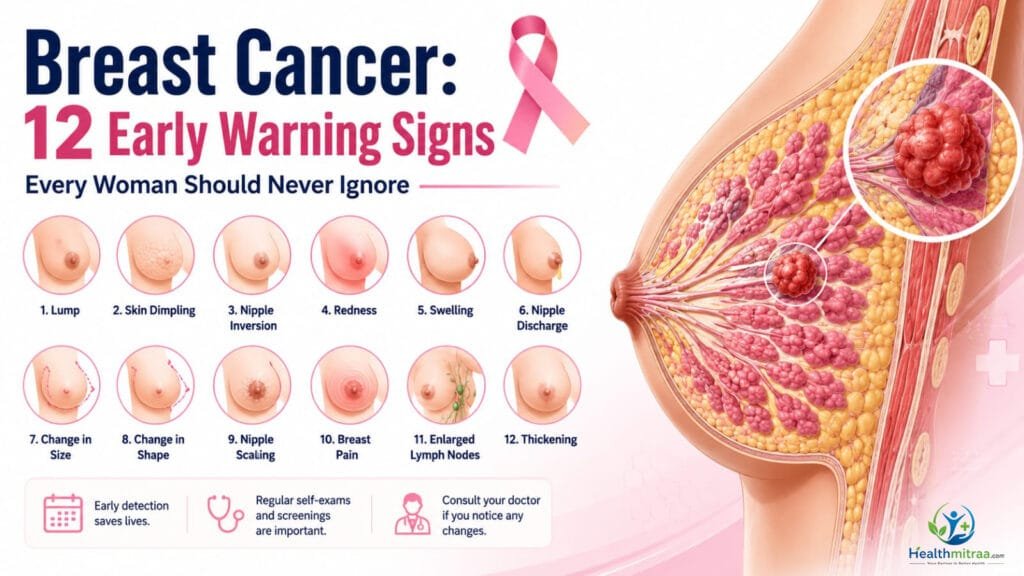
Breast cancer is one of the most common cancers affecting women worldwide, but early detection can significantly improve treatment outcomes and survival rates. While many people associate breast cancer with a lump, the disease can also cause several subtle warning signs that are easy to overlook. Recognizing these symptoms early and seeking timely medical evaluation can make a meaningful difference. In this guide, you’ll learn the 12 early warning signs of breast cancer, along with its causes, risk factors, diagnosis, treatment options, and practical prevention tips to help you make informed decisions about your breast health.
What Is Breast Cancer? Everything You Need to Know
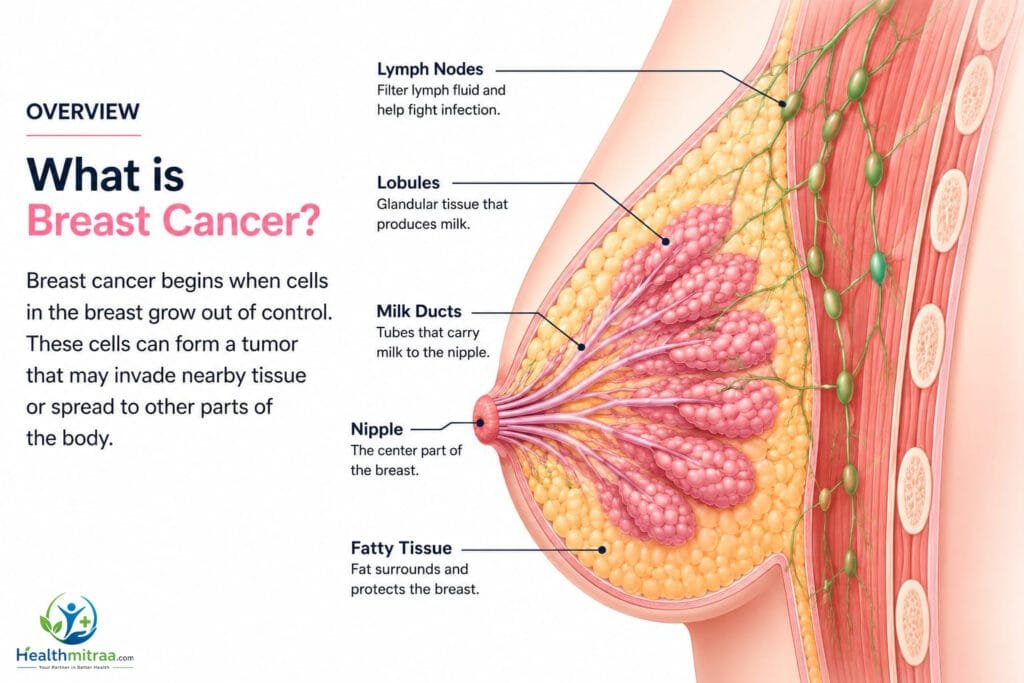
Breast cancer is a disease in which abnormal cells in the breast grow uncontrollably and form a tumor. It can develop in the milk ducts, milk-producing lobules, or surrounding breast tissue. Although it is most common in women, men can also develop breast cancer, though it is much less frequent.
The condition often progresses silently in its early stages, which is why regular screening and awareness of warning signs are so important. Detecting breast cancer early greatly increases the chances of successful treatment and long-term survival.
It is important to remember that not every breast lump is cancer, and many breast changes are caused by non-cancerous conditions. However, any new lump, persistent pain, skin changes, or unusual nipple discharge should never be ignored. A timely medical evaluation can help determine the cause and, if necessary, begin treatment before the disease advances.
12 Early Warning Signs of Breast Cancer You Should Never Ignore
Breast cancer does not always begin with severe pain or a large lump. In many cases, the earliest symptoms are subtle and can easily be mistaken for harmless breast changes. Paying attention to these warning signs and seeking medical advice promptly can lead to earlier diagnosis and more effective treatment. While experiencing one of these symptoms does not automatically mean you have cancer, persistent or unusual changes should never be ignored.
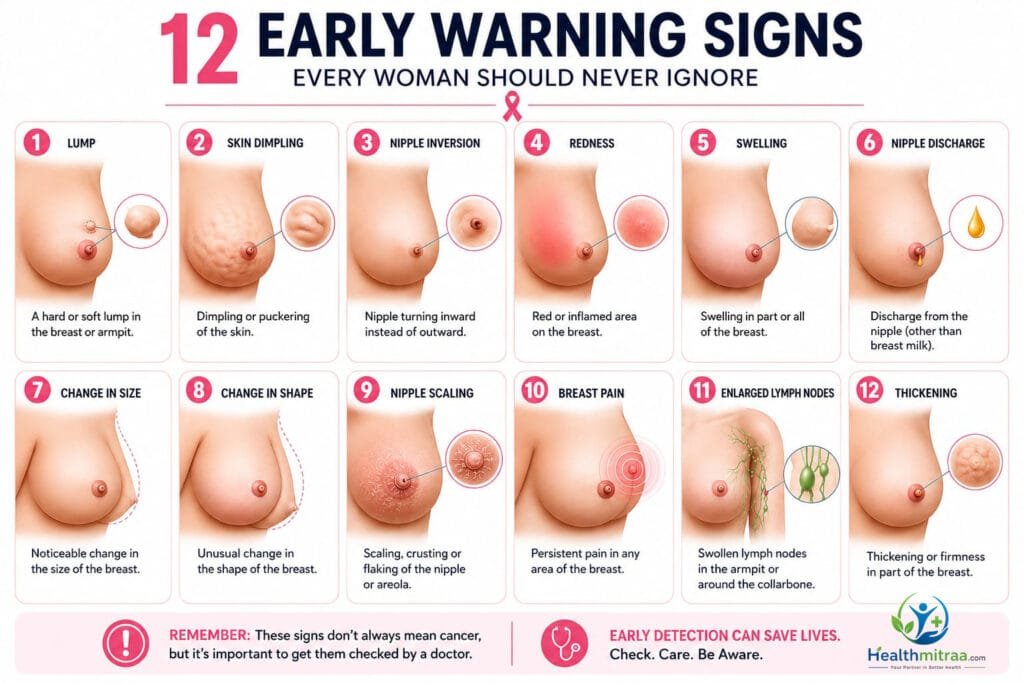
1. A New Lump in the Breast or Underarm
A new lump is one of the most recognized warning signs of breast cancer. It may feel hard, painless, and have irregular edges, although some cancerous lumps can also be soft or tender. Lumps may appear in the breast, near the collarbone, or under the arm where lymph nodes are located. Any lump that persists for more than a few weeks or continues to grow should be evaluated by a healthcare professional.
2. Changes in Breast Size or Shape
A noticeable change in the size, shape, or contour of one breast without an obvious reason can be an early warning sign. One breast may suddenly appear larger, swollen, or differently shaped than the other. These changes can develop gradually, making them easy to overlook, so comparing both breasts regularly can help you identify anything unusual.
3. Swelling in All or Part of the Breast
Unexplained swelling in all or part of one breast can be an early warning sign, even if you cannot feel a lump. The affected breast may appear larger, heavier, or feel unusually warm. In some cases, the swelling develops gradually and becomes noticeable only when compared with the other breast. Persistent swelling without an obvious injury or infection should always be assessed by a healthcare professional.
4. Changes in the Skin of the Breast
Breast skin may undergo visible changes before other symptoms appear. You may notice redness, thickening, dimpling, or a texture that resembles the peel of an orange, often called peau d’orange. These changes can occur when cancer affects the lymphatic vessels beneath the skin. While skin irritation can have many harmless causes, changes that do not improve or continue to worsen deserve prompt medical attention.
5. Nipple Changes or Unusual Discharge
A nipple that suddenly turns inward, changes position, develops persistent crusting, or produces unexpected discharge—especially if it is bloody or occurs without squeezing—should never be ignored. Although infections and other non-cancerous conditions can also cause these symptoms, a medical evaluation is important to identify the underlying cause and determine whether further testing is needed.
6. Persistent Breast or Nipple Pain
Breast pain is common and is often linked to hormonal changes, menstrual cycles, or non-cancerous breast conditions. However, pain that affects only one breast, continues for several weeks, or occurs without a clear cause should not be ignored. Although breast cancer is usually painless in its early stages, persistent discomfort combined with other unusual changes may require further evaluation.
7. Swollen Lymph Nodes Under the Arm or Near the Collarbone
Breast cancer can sometimes spread to nearby lymph nodes before a lump in the breast becomes noticeable. As a result, you may feel a painless swelling or firmness under the arm or around the collarbone. Enlarged lymph nodes can also occur due to infections, but if the swelling persists or continues to increase in size, it is important to consult a healthcare provider for a proper examination.
8. A Breast Lump That Does Not Go Away
Not every breast lump is cancerous, but any lump that remains after your menstrual cycle, continues to grow, or feels different from the surrounding tissue deserves medical attention. Avoid waiting to see if it disappears on its own. Early evaluation with a clinical examination and appropriate imaging tests can help identify the cause and, if necessary, begin treatment as early as possible.
9. Persistent Redness or Rash on the Breast
A rash or redness that does not improve with routine skin care or prescribed treatment may be more than a simple skin irritation. In rare cases, persistent redness, warmth, or inflammation can be associated with inflammatory breast cancer, an aggressive form of the disease. If these symptoms continue for more than a few days or worsen over time, seek medical attention without delay.
10. Thickening of Breast Tissue
Some women notice an area of the breast that feels unusually firm or thicker than the surrounding tissue. Unlike normal hormonal changes, this thickening does not disappear after the menstrual cycle and may gradually become more noticeable. Any persistent change in breast texture should be evaluated by a healthcare provider.
11. Unexplained Changes Around the Nipple or Areola
Dryness, scaling, itching, or crusting around the nipple or the darker skin surrounding it can sometimes indicate an underlying medical condition. Although eczema and skin allergies are common causes, these symptoms may also be linked to certain forms of breast cancer. Persistent changes that do not respond to treatment should never be ignored.
12. Persistent Breast Changes That Do Not Improve
Any unusual breast change that lasts for several weeks—including a lump, swelling, skin changes, nipple abnormalities, or unexplained pain—deserves medical evaluation. Early diagnosis offers the best chance for successful treatment. Even if a symptom seems minor, it is always safer to have it examined rather than wait for it to become more serious.
What Causes Breast Cancer? Understanding the Risk Factors
The exact cause of breast cancer is not always known. It develops when healthy breast cells undergo changes in their DNA, causing them to grow and divide uncontrollably. Over time, these abnormal cells can form a tumor and may spread to nearby tissues or other parts of the body if left untreated. While researchers do not fully understand why these genetic changes occur, several factors are known to increase the likelihood of developing the disease.
Age is one of the strongest risk factors, with most cases occurring in women over 50. A family history of breast cancer, especially in a mother, sister, or daughter, can also raise the risk. Inherited gene mutations such as BRCA1 and BRCA2 are linked to a significantly higher lifetime risk, although they account for only a small percentage of cases.
Hormonal influences also play an important role. Early menstruation, late menopause, hormone replacement therapy after menopause, and having children later in life or not at all may slightly increase the risk because of longer exposure to estrogen.
Lifestyle choices can also contribute. Being overweight after menopause, drinking alcohol regularly, smoking, and leading a physically inactive lifestyle have all been associated with a greater risk. Exposure to radiation therapy involving the chest at a young age may further increase the likelihood of developing the disease.
Although some risk factors cannot be changed, maintaining a healthy lifestyle, attending regular screening appointments, and recognizing unusual breast changes can help improve the chances of early detection.
Who Is Most at Risk of Developing Breast Cancer?
Breast cancer can affect anyone, but certain factors increase the likelihood of developing the disease. Having one or more risk factors does not mean you will definitely get breast cancer, and many people diagnosed with the condition have no obvious risk factors. Understanding these risks can help you make informed decisions about screening and lifestyle habits.
- Growing older: The risk increases with age, particularly after 50 years.
- Family history: Having a mother, sister, daughter, or close relative diagnosed with breast cancer may increase your risk.
- Inherited gene mutations: Changes in genes such as BRCA1 and BRCA2 can significantly raise the lifetime risk.
- Personal history of breast conditions: Women who have previously had breast cancer or certain non-cancerous breast abnormalities may be at higher risk.
- Hormonal and reproductive factors: Early menstruation, late menopause, having children later in life, or never being pregnant can slightly increase risk due to longer lifetime exposure to estrogen.
- Lifestyle factors: Obesity, physical inactivity, excessive alcohol consumption, and smoking have all been linked to a higher risk.
Even if you have none of these risk factors, staying aware of changes in your breasts and following recommended screening guidelines remain essential. Early detection continues to be one of the most effective ways to improve treatment outcomes and survival.
How Is Breast Cancer Diagnosed? Tests and Screening Explained
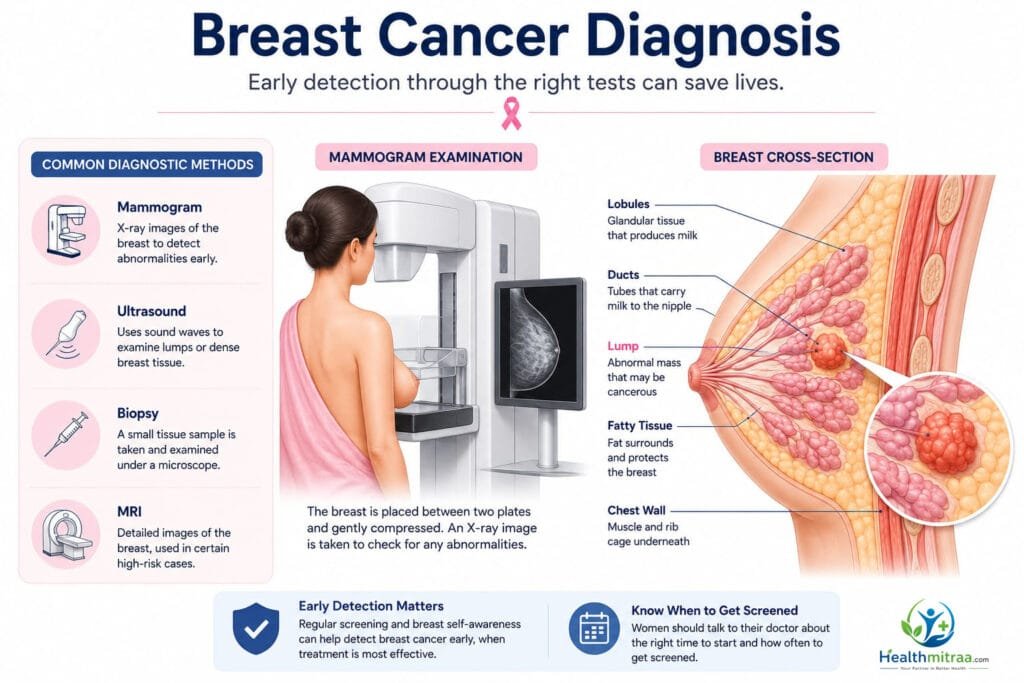
Early diagnosis plays a vital role in improving treatment success and survival. If a doctor suspects breast cancer based on your symptoms or a routine screening, several tests may be recommended to confirm the diagnosis and determine the stage of the disease.
A clinical breast examination is often the first step. During this examination, a healthcare provider carefully checks the breasts and nearby lymph nodes for lumps or other unusual changes.
A mammogram is the most common imaging test used to detect abnormal areas in the breast, including tumors that may be too small to feel. Women at average risk are often advised to begin routine screening at the recommended age based on their healthcare provider’s guidance.
If additional information is needed, a breast ultrasound may be performed to determine whether a lump is solid or filled with fluid. In certain situations, especially for women at high risk, a breast MRI can provide more detailed images.
The only way to confirm breast cancer is through a biopsy. During this procedure, a small sample of breast tissue is removed and examined under a microscope to determine whether cancer cells are present. If cancer is confirmed, additional laboratory tests help identify the specific type of cancer and guide the most effective treatment plan.
Prompt evaluation of suspicious symptoms and regular screening can help detect breast cancer at an earlier, more treatable stage.
Breast Cancer Stages: What They Mean for Treatment and Recovery
Breast cancer is classified into stages based on the size of the tumor, whether it has spread to nearby lymph nodes, and whether it has reached other parts of the body. Determining the stage helps doctors choose the most effective treatment plan and estimate the likely outcome.
- Stage 0: Abnormal cells are confined to the milk ducts and have not spread into surrounding breast tissue. This is also known as non-invasive breast cancer.
- Stage I: The tumor is small and limited to the breast or has spread only minimally to nearby lymph nodes.
- Stage II: The tumor is larger or has spread to a few nearby lymph nodes, but it has not reached distant organs.
- Stage III: Cancer has spread more extensively to nearby lymph nodes or surrounding tissues, making treatment more complex.
- Stage IV: The disease has spread to distant organs such as the bones, liver, lungs, or brain. This stage is also called metastatic breast cancer.
Although higher stages usually require more intensive treatment, advances in surgery, targeted therapy, immunotherapy, chemotherapy, radiation therapy, and hormone therapy have significantly improved outcomes for many patients. Early detection remains the most effective way to diagnose breast cancer before it progresses to advanced stages.
Breast Cancer Treatment Options: What to Expect
Breast cancer treatment depends on several factors, including the stage of the disease, the type of cancer, its hormone receptor status, and the patient’s overall health. In many cases, doctors combine two or more treatment methods to achieve the best possible results.
Surgery is often the primary treatment. Depending on the size and location of the tumor, a surgeon may remove only the cancerous tissue (lumpectomy) or the entire breast (mastectomy). Nearby lymph nodes may also be examined or removed if needed.
Radiation therapy uses high-energy beams to destroy any remaining cancer cells after surgery and reduce the risk of recurrence.
Chemotherapy involves powerful medicines that kill rapidly growing cancer cells. It may be given before surgery to shrink a tumor or after surgery to lower the chance of the disease returning.
For cancers that are sensitive to hormones, hormone therapy helps block or reduce the effects of estrogen, slowing cancer growth. Some patients may also benefit from targeted therapy or immunotherapy, which attack specific cancer cells while minimizing damage to healthy tissue.
Treatment plans are personalized for every patient. Following your doctor’s recommendations, attending regular follow-up appointments, and maintaining a healthy lifestyle can improve recovery and long-term outcomes. Many people diagnosed today go on to live full, active lives thanks to advances in breast cancer treatment.
How to Perform a Breast Self-Examination (BSE) at Home
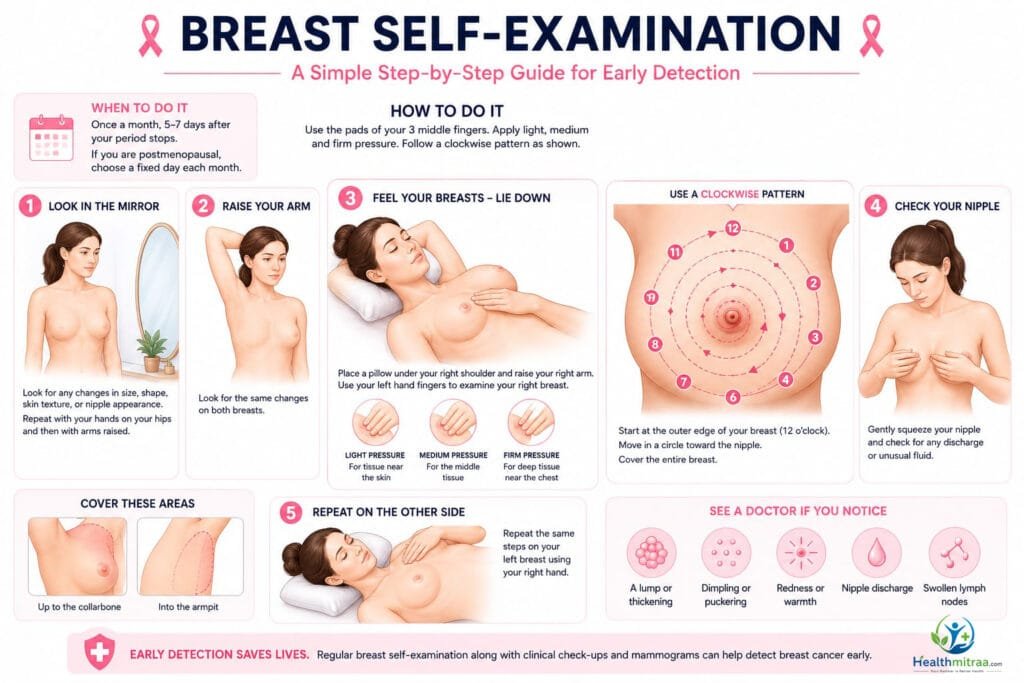
A breast self-examination (BSE) is a simple way to become familiar with the normal look and feel of your breasts. While it does not replace regular screening, it can help you notice unusual changes that should be evaluated by a healthcare professional.
Stand in front of a mirror with your shoulders straight and your arms at your sides. Look for any changes in breast size, shape, skin texture, or nipple appearance. Next, raise both arms and check for the same changes from a different angle.
While lying down or during a shower, use the pads of your three middle fingers to examine each breast using gentle circular motions. Cover the entire breast area, including the armpit, and check for lumps, thickened tissue, or areas of persistent tenderness.
If you notice a new lump, unusual nipple discharge, skin dimpling, persistent redness, or any change that does not go away, schedule a medical evaluation promptly. Most breast changes are not caused by cancer, but early assessment is always the safest approach.
Can Breast Cancer Be Prevented? Practical Ways to Lower Your Risk
Although breast cancer cannot always be prevented, adopting healthy lifestyle habits may help reduce your risk and improve overall breast health. Small, consistent changes can make a meaningful difference over time.
Maintain a healthy body weight, especially after menopause, and stay physically active by exercising regularly. Eating a balanced diet rich in fruits, vegetables, whole grains, and lean proteins can support overall well-being. Limiting alcohol consumption and avoiding smoking are also important steps that may lower the risk.
Women with a strong family history or inherited gene mutations should discuss personalized screening and prevention strategies with their healthcare provider. Regular mammograms, routine clinical breast examinations, and being aware of any changes in your breasts can help detect problems at an earlier stage.
If you notice a new lump, persistent breast pain, nipple discharge, or any unusual change that does not improve, do not ignore it. Early medical evaluation offers the best chance for successful treatment. While no prevention method is guaranteed, combining a healthy lifestyle with regular screening remains one of the most effective ways to protect your long-term breast health.
When Should You See a Doctor? Warning Signs That Need Immediate Attention
Do not ignore persistent changes in your breasts, even if they seem minor. While many breast changes are harmless, some may require prompt medical evaluation. Early diagnosis can significantly improve treatment outcomes.
Schedule an appointment with your healthcare provider if you notice a new breast lump, swelling, persistent pain, skin dimpling, nipple discharge (especially if it is bloody), nipple inversion, or swollen lymph nodes under the arm. You should also seek medical advice if redness, a rash, or any unusual breast change lasts for more than a few weeks.
Remember, experiencing these symptoms does not necessarily mean you have breast cancer. However, only a proper medical examination and appropriate tests can determine the exact cause. If something feels unusual or different from your normal breast tissue, trust your instincts and have it checked without delay.
Frequently Asked Questions (FAQs)
Can men get breast cancer?
Yes. Although breast cancer is much more common in women, men can also develop it. Any new lump, nipple discharge, or unusual breast change in men should be evaluated by a healthcare professional.
Does every breast lump mean cancer?
No. Many breast lumps are caused by non-cancerous conditions such as cysts or fibroadenomas. However, every new or persistent lump should be examined by a doctor to determine the exact cause.
At what age should women start getting mammograms?
The recommended age varies depending on individual risk factors and national screening guidelines. Women with a strong family history or inherited gene mutations may need earlier screening after discussing it with their healthcare provider.
Can breast cancer be cured if detected early?
In many cases, yes. When diagnosed at an early stage, treatment is often highly effective, and the chances of long-term survival are significantly better.
How often should I perform a breast self-examination?
A breast self-examination can be performed once a month to help you become familiar with your normal breast tissue. It should complement—not replace—regular clinical examinations and recommended screening tests.
Key Takeaways
Breast cancer is one of the most common cancers worldwide, but early detection can greatly improve treatment success and survival. Learning the warning signs, performing regular breast self-examinations, attending recommended screening appointments, and seeking medical advice for any unusual breast changes are essential steps toward protecting your health.
Remember, not every breast lump or change is cancer, but no persistent symptom should be ignored. Staying informed, maintaining a healthy lifestyle, and acting quickly when something feels unusual can make a significant difference. Prioritizing breast health today may help safeguard your future and provide peace of mind for you and your loved ones.
Related Articles You May Also Like
- PCOS: 15 Silent Symptoms Every Woman Should Never Ignore
- How to Lose Belly Fat Naturally: 15 Proven Diet, Exercise & Lifestyle Tips
- Weight Loss: 15 Amazing Tips That Really Work
- Walking Benefits: 15 Powerful Reasons to Walk Every Day
- Exercise Benefits: 15 Amazing Health Benefits of Regular Exercise
Sources & References
Medical Disclaimer:
The information provided in this article is for educational and informational purposes only and is not intended to replace professional medical advice, diagnosis, or treatment. While every effort has been made to ensure the accuracy of the content, medical knowledge continues to evolve, and individual health conditions may vary.Always consult a qualified healthcare professional regarding any medical concerns, symptoms, or treatment decisions. If you notice a breast lump, persistent pain, nipple discharge, skin changes, or any other unusual symptoms, seek prompt medical evaluation.
Never ignore professional medical advice or delay seeking treatment because of information you have read on HealthMitraa. This content should be used as a general health resource and not as a substitute for personalized medical care.