Trying to lose weight but feeling hungry all the time? You’re not alone. Many popular diets fail because they leave you feeling unsatisfied, making it difficult to stay consistent. That’s where high-protein foods can make a real difference.
Protein is one of the most important nutrients for healthy and sustainable weight loss. It helps keep you full for longer, reduces cravings, supports muscle maintenance while losing fat, and may even boost the number of calories your body burns during digestion. Instead of focusing on restrictive diets, choosing the right protein-rich foods can make your weight loss journey easier and more enjoyable.
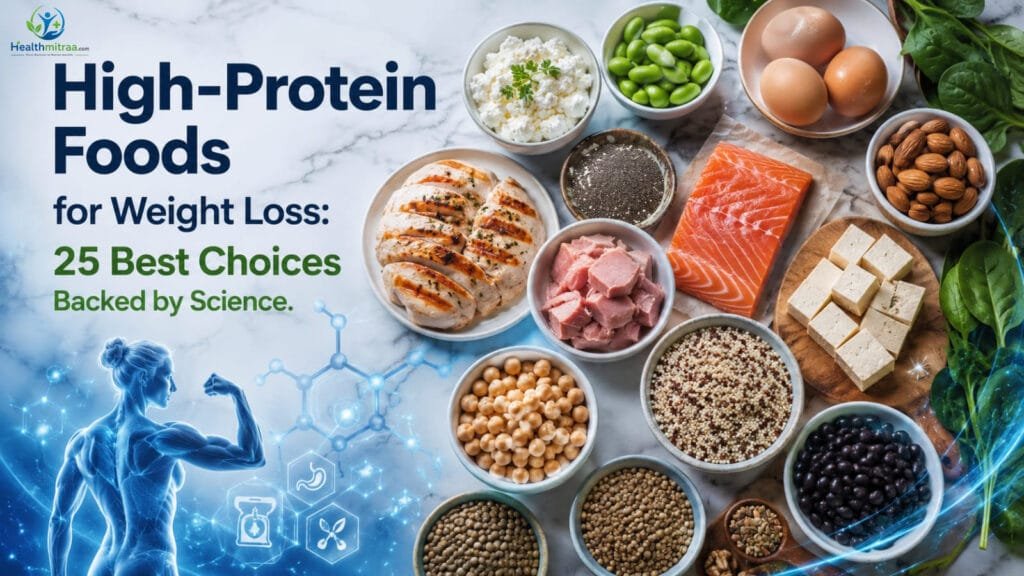
In this guide, you’ll discover the 25 best high-protein foods for weight loss, learn why protein is essential for fat loss, how much you need each day, the best times to eat protein, and simple ways to include more protein in your daily meals. Whether you’re just starting your weight loss journey or looking to improve your current diet, these science-backed recommendations can help you achieve healthier, long-lasting results.
Why Protein Is Important for Weight Loss
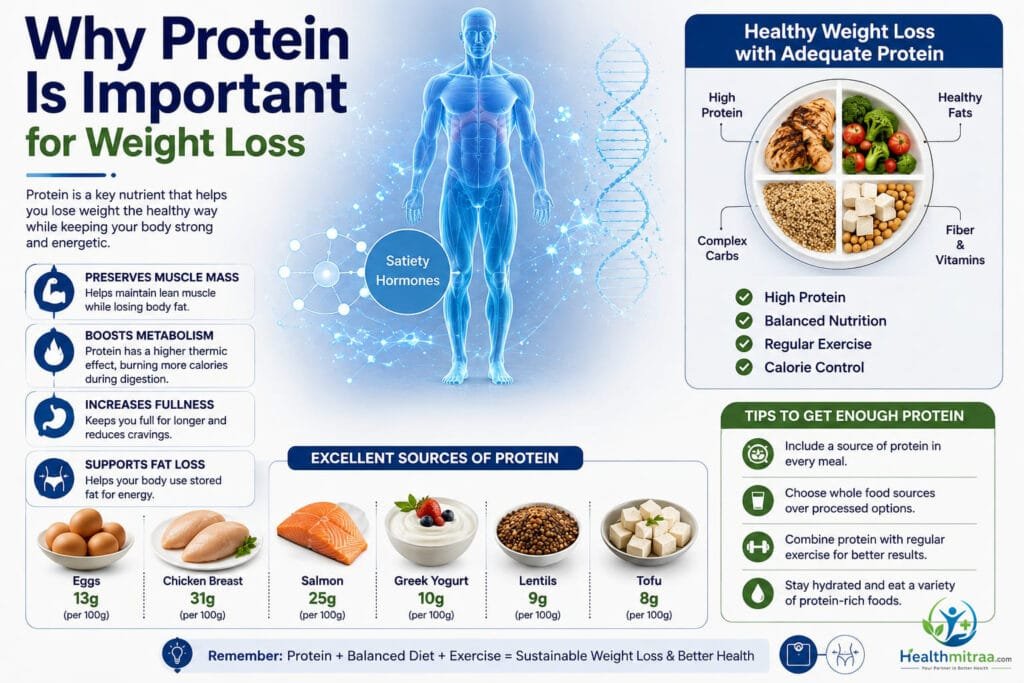
Protein plays a key role in healthy and sustainable weight loss. Unlike refined carbohydrates and sugary foods, protein takes longer to digest, helping you stay full for longer and reducing the urge to snack between meals. This can naturally lower your overall calorie intake without leaving you feeling deprived.
Another important benefit of protein is that it helps preserve lean muscle mass while your body burns fat. Maintaining muscle is essential because muscle tissue burns more calories than fat, helping support a healthier metabolism during weight loss. In addition, digesting protein requires more energy than digesting fats or carbohydrates—a process known as the thermic effect of food (TEF)—which means your body burns slightly more calories during digestion.
High-protein foods also help stabilize blood sugar levels, reducing sudden energy crashes and cravings that often lead to overeating. When combined with regular physical activity and a balanced diet, protein-rich foods can make weight loss easier, healthier, and more sustainable.
Some of the key benefits of eating enough protein include:
- Helps you stay full longer and reduces hunger.
- Supports fat loss while preserving lean muscle.
- May slightly increase calorie burning through digestion.
- Helps reduce cravings and unnecessary snacking.
- Supports a healthy metabolism and overall body composition.
For the best results, include a quality source of protein in every meal rather than consuming most of your daily protein in just one sitting.
25 Best High-Protein Foods for Weight Loss
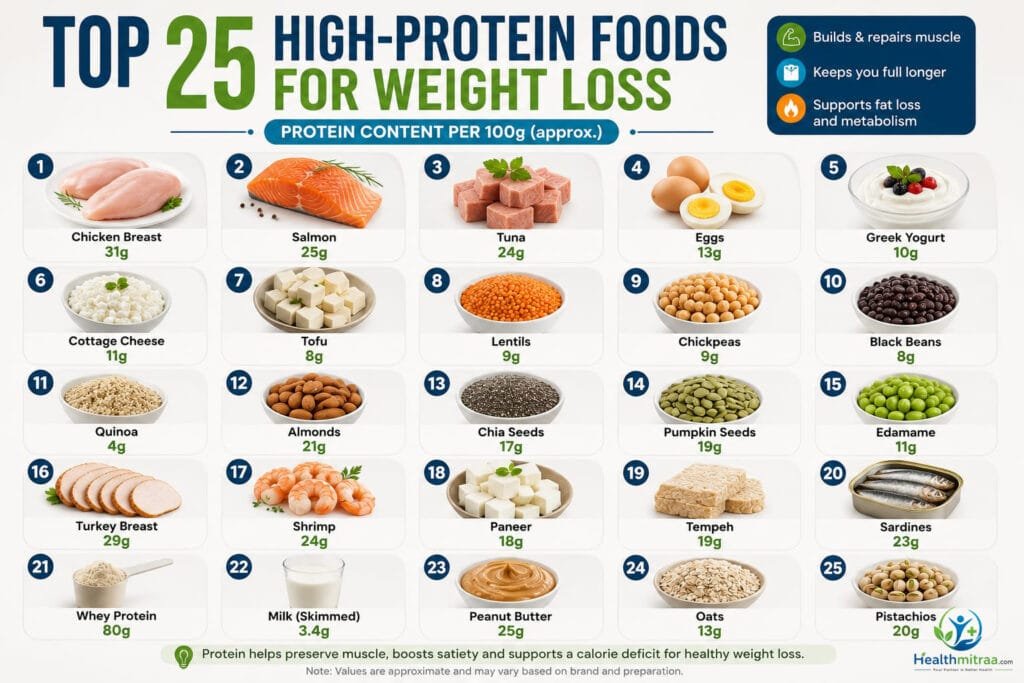
1. Eggs
Why it helps: Eggs are one of the most complete protein sources and help keep you full for hours, making them an excellent choice for weight loss.
Key nutrients: High-quality protein, vitamin D, choline, vitamin B12, selenium.
Best way to eat: Boiled, poached, or lightly scrambled with vegetables.
Simple tip: Pair eggs with whole-grain toast or spinach for a balanced breakfast.
2. Chicken Breast
Why it helps: Skinless chicken breast is lean, protein-rich, and low in saturated fat, making it ideal for preserving muscle while losing body fat.
Key nutrients: Protein, niacin, vitamin B6, phosphorus, selenium.
Best way to eat: Grilled, baked, or air-fried with herbs and vegetables.
Simple tip: Avoid deep-fried chicken to keep calories under control.
3. Greek Yogurt
Why it helps: Greek yogurt contains significantly more protein than regular yogurt, helping reduce hunger while supporting digestive health.
Key nutrients: Protein, calcium, probiotics, vitamin B12.
Best way to eat: Choose plain, unsweetened Greek yogurt with berries or chia seeds.
Simple tip: Avoid flavored varieties that contain added sugars.
4. Salmon
Why it helps: Salmon provides high-quality protein and heart-healthy omega-3 fatty acids that support overall health while keeping you satisfied.
Key nutrients: Protein, omega-3 fatty acids, vitamin D, selenium.
Best way to eat: Bake, grill, or air-fry with vegetables.
Simple tip: Include fatty fish in your meals one to two times per week.
5. Cottage Cheese
Why it helps: Cottage cheese is packed with slow-digesting protein, making it an excellent option for reducing hunger between meals.
Key nutrients: Protein, calcium, phosphorus, vitamin B12.
Best way to eat: Enjoy with fresh fruit, vegetables, or whole-grain crackers.
Simple tip: Choose low-fat versions if you’re trying to reduce calorie intake.
6. Tuna
Why it helps: Tuna is high in protein and naturally low in calories, making it a smart choice for healthy weight management.
Key nutrients: Protein, vitamin D, selenium, omega-3 fatty acids.
Best way to eat: Mix with salads, whole-grain sandwiches, or grain bowls.
Simple tip: Choose tuna packed in water instead of oil whenever possible.
7. Turkey Breast
Why it helps: Turkey breast is a lean source of protein that helps increase fullness while supporting muscle maintenance during weight loss.
Key nutrients: Protein, niacin, vitamin B6, selenium, phosphorus.
Best way to eat: Roast, grill, or bake with herbs and vegetables.
Simple tip: Choose skinless turkey breast to reduce saturated fat.
8. Shrimp
Why it helps: Shrimp is rich in protein but naturally low in calories, making it a great addition to a weight loss diet.
Key nutrients: Protein, iodine, selenium, vitamin B12.
Best way to eat: Grill, steam, or stir-fry with vegetables.
Simple tip: Avoid breaded or deep-fried shrimp.
9. Lean Beef
Why it helps: Lean cuts of beef provide complete protein and important nutrients that help maintain muscle while losing fat.
Key nutrients: Protein, iron, zinc, vitamin B12.
Best way to eat: Grill or roast lean cuts and pair with vegetables.
Simple tip: Trim visible fat and keep portions moderate.
10. Tofu
Why it helps: Tofu is a versatile plant-based protein that promotes fullness and supports healthy weight management.
Key nutrients: Protein, calcium, iron, magnesium.
Best way to eat: Grill, bake, stir-fry, or add to salads.
Simple tip: Marinate tofu before cooking for better flavor.
11. Lentils
Why it helps: Lentils are packed with both protein and fiber, making them highly satisfying and beneficial for healthy digestion.
Key nutrients: Protein, fiber, iron, folate, potassium.
Best way to eat: Add to soups, curries, salads, or grain bowls.
Simple tip: Include lentils in your weekly meal plan for a nutritious plant-based protein source.
12. Chickpeas
Why it helps: Chickpeas provide protein and fiber that help control appetite while supporting stable energy levels.
Key nutrients: Protein, fiber, folate, iron, magnesium.
Best way to eat: Roast for a healthy snack or add to salads and soups.
Simple tip: Rinse canned chickpeas to reduce excess sodium.
13. Black Beans
Why it helps: Black beans are rich in both protein and fiber, helping you stay full longer while supporting healthy digestion.
Key nutrients: Protein, fiber, iron, folate, magnesium.
Best way to eat: Add to salads, soups, burrito bowls, or chili.
Simple tip: Choose low-sodium canned beans or cook dried beans at home.
14. Edamame
Why it helps: Edamame is a complete plant protein that helps satisfy hunger while providing fiber and essential nutrients.
Key nutrients: Protein, fiber, folate, vitamin K, iron.
Best way to eat: Steam and enjoy as a snack or add to salads.
Simple tip: Sprinkle with a small amount of sea salt or herbs instead of butter.
15. Tempeh
Why it helps: Tempeh is a fermented soy food that’s high in protein and supports long-lasting fullness.
Key nutrients: Protein, fiber, iron, calcium, probiotics.
Best way to eat: Grill, bake, or stir-fry with vegetables.
Simple tip: Marinate before cooking for a richer flavor.
16. Quinoa
Why it helps: Quinoa is one of the few grains that contains complete protein while also providing fiber to keep you satisfied.
Key nutrients: Protein, fiber, magnesium, iron, manganese.
Best way to eat: Use as a base for salads, bowls, or healthy side dishes.
Simple tip: Rinse quinoa before cooking to remove its natural bitter coating.
17. Pumpkin Seeds
Why it helps: Pumpkin seeds provide protein, healthy fats, and minerals that support satiety and overall health.
Key nutrients: Protein, magnesium, zinc, iron, healthy fats.
Best way to eat: Sprinkle over salads, yogurt, or oatmeal.
Simple tip: Keep portions moderate since seeds are calorie-dense.
18. Almonds
Why it helps: Almonds combine protein, fiber, and healthy fats to help control hunger between meals.
Key nutrients: Protein, vitamin E, magnesium, healthy fats.
Best way to eat: Enjoy as a snack or add to oatmeal and yogurt.
Simple tip: Stick to a small handful to avoid excess calories.
19. Chia Seeds
Why it helps: Chia seeds are rich in protein, fiber, and healthy omega-3 fats that absorb water and help you feel full for longer.
Key nutrients: Protein, fiber, omega-3 fatty acids, calcium, magnesium.
Best way to eat: Mix into yogurt, smoothies, oatmeal, or overnight oats.
Simple tip: Soak chia seeds before eating for a softer texture.
20. Hemp Seeds
Why it helps: Hemp seeds provide complete plant protein along with healthy fats that support satiety and overall nutrition.
Key nutrients: Protein, omega-3 and omega-6 fats, magnesium, iron.
Best way to eat: Sprinkle over salads, yogurt, or smoothie bowls.
Simple tip: Add one to two tablespoons to your breakfast for an easy protein boost.
21. Low-Fat Milk
Why it helps: Low-fat milk offers high-quality protein while providing calcium and vitamin D for bone health.
Key nutrients: Protein, calcium, vitamin D, vitamin B12.
Best way to eat: Drink with breakfast or blend into protein-rich smoothies.
Simple tip: Choose unsweetened milk to avoid added sugars.
22. Kefir
Why it helps: Kefir is a fermented dairy drink rich in protein and probiotics that support gut health and may improve digestion.
Key nutrients: Protein, probiotics, calcium, vitamin B12.
Best way to eat: Enjoy plain as a snack or breakfast drink.
Simple tip: Select plain kefir instead of flavored varieties with added sugar.
23. Sardines
Why it helps: Sardines provide high-quality protein along with heart-healthy omega-3 fatty acids and calcium.
Key nutrients: Protein, omega-3 fatty acids, calcium, vitamin D, vitamin B12.
Best way to eat: Add to whole-grain toast, salads, or pasta dishes.
Simple tip: Choose sardines packed in water or olive oil.
24. Seitan
Why it helps: Seitan is one of the highest-protein plant-based foods, making it an excellent meat alternative for many people.
Key nutrients: Protein, iron, selenium.
Best way to eat: Grill, stir-fry, or add to wraps and salads.
Simple tip: Avoid seitan if you have celiac disease or gluten sensitivity.
25. Protein Powder (When Needed)
Why it helps: Protein powders can help increase daily protein intake when meeting your needs through food alone is difficult.
Key nutrients: Protein (varies by product), depending on whether it’s whey, casein, soy, pea, or other plant-based protein.
Best way to eat: Blend into smoothies or mix with water or milk after exercise or as part of a balanced meal.
Simple tip: Whole foods should be your primary protein source. Use protein powders only when needed and choose products with minimal added sugars and unnecessary ingredients.
Animal vs Plant Protein: Which Is Better?
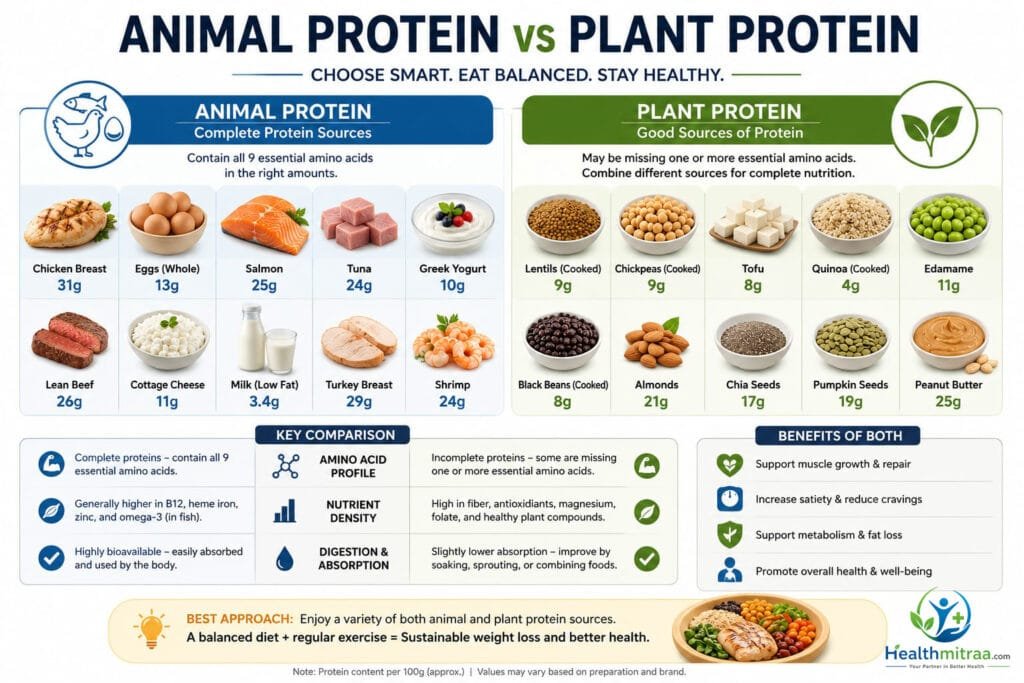
Both animal and plant proteins can support healthy weight loss, but each offers unique nutritional benefits. The best choice depends on your dietary preferences, overall health, and nutritional needs. For most people, including a variety of both protein sources can provide the greatest health benefits.
Animal Protein
Animal-based foods generally contain complete proteins, meaning they provide all nine essential amino acids your body needs. They are also highly digestible and rich in nutrients such as vitamin B12, iron, zinc, and omega-3 fatty acids (in certain fish).
Examples:
- Eggs
- Chicken breast
- Turkey
- Salmon
- Tuna
- Greek yogurt
- Cottage cheese
- Low-fat milk
Pros:
- Complete source of protein.
- Supports muscle growth and maintenance.
- Highly satisfying and filling.
- Rich in several essential vitamins and minerals.
Things to consider:
- Limit processed meats like bacon, sausages, and deli meats.
- Choose lean cuts and low-fat dairy whenever possible.
Plant Protein
Plant-based proteins provide protein along with fiber, antioxidants, vitamins, and minerals that support overall health. Although some plant proteins are lower in one or more essential amino acids, eating a variety of plant foods throughout the day easily meets most people’s protein needs.
Examples:
- Lentils
- Chickpeas
- Black beans
- Tofu
- Tempeh
- Edamame
- Quinoa
- Chia seeds
- Hemp seeds
Pros:
- High in fiber, helping you stay full longer.
- Supports digestive and heart health.
- Naturally lower in saturated fat.
- Rich in beneficial plant compounds.
Things to consider:
- Some plant foods contain less protein per serving than animal sources.
- Eating a variety of protein-rich plant foods helps ensure a balanced amino acid intake.
Which Is Better for Weight Loss?
There isn’t a single winner. Both animal and plant proteins can help with weight loss when included as part of a balanced, calorie-appropriate diet. The healthiest approach is to choose minimally processed, nutrient-dense protein sources and include a variety of them throughout the week.
How Much Protein Do You Need Each Day?
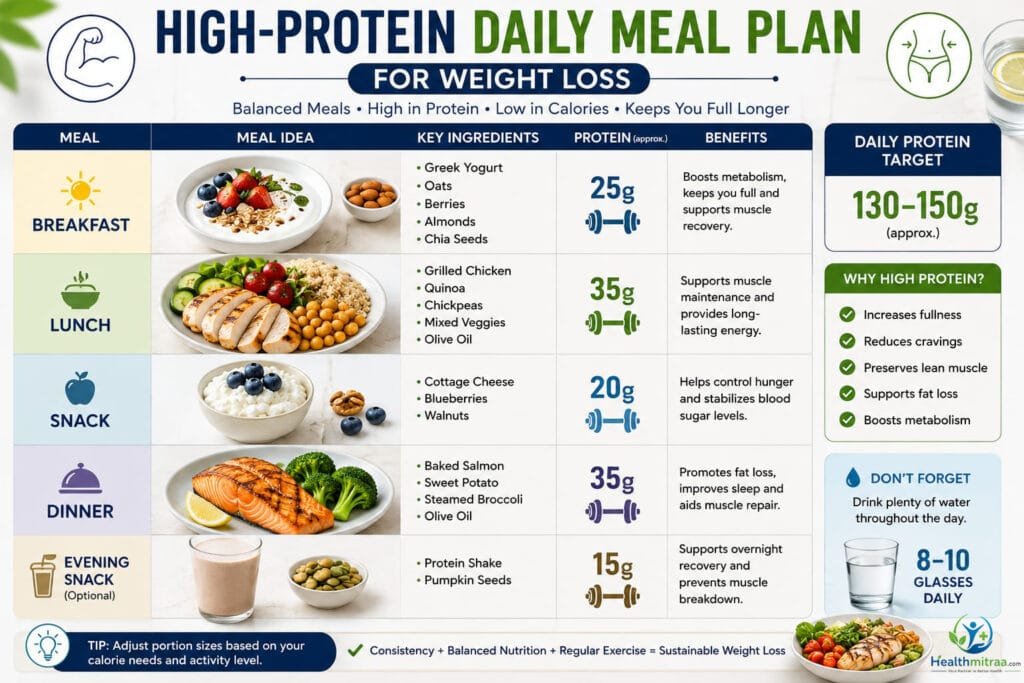
Your daily protein needs depend on factors such as your age, body weight, activity level, health status, and weight loss goals. There isn’t a one-size-fits-all recommendation, but getting enough protein throughout the day can help support fat loss while preserving lean muscle.
For healthy adults, the Recommended Dietary Allowance (RDA) is 0.8 grams of protein per kilogram of body weight per day. However, people trying to lose weight or those who exercise regularly may benefit from a higher protein intake as part of a balanced eating plan.
General Daily Protein Guidelines
| Goal | Suggested Protein Intake* |
|---|---|
| General healthy adults | 0.8 g/kg of body weight/day |
| Regularly active adults | 1.0–1.2 g/kg/day |
| Weight loss with regular exercise | 1.2–1.6 g/kg/day |
| Strength training or muscle building | 1.6–2.2 g/kg/day |
Individual protein needs vary. Your healthcare provider or a registered dietitian can help determine the right amount for you.
Tips to Meet Your Daily Protein Needs
- Include a protein source with every meal and snack.
- Spread your protein intake evenly throughout the day instead of eating most of it at one meal.
- Combine protein with high-fiber foods like vegetables, fruits, legumes, and whole grains for better satiety.
- Prioritize whole food protein sources before relying on supplements.
- Stay hydrated, especially if you increase your protein intake.
Can You Eat Too Much Protein?
While protein is an important part of a healthy diet, more isn’t always better. Extremely high-protein diets may not be suitable for everyone, particularly people with certain kidney conditions or other medical concerns. If you have a chronic health condition or are planning major dietary changes, consult your healthcare provider before significantly increasing your protein intake.
Best Times to Eat Protein for Weight Loss
While your total daily protein intake matters most, spreading protein evenly throughout the day may help control hunger, support muscle maintenance, and improve overall diet quality. Including protein at each meal can also help you feel satisfied for longer and reduce the temptation to snack on high-calorie foods.
Breakfast
Starting your day with a protein-rich breakfast may help reduce hunger and cravings later in the day.
Good choices:
- Eggs
- Greek yogurt
- Cottage cheese
- Protein oatmeal
- Smoothies made with milk or unsweetened yogurt
Lunch
A balanced lunch with lean protein and fiber can help maintain steady energy levels throughout the afternoon.
Good choices:
- Grilled chicken breast
- Salmon
- Tuna
- Lentil soup
- Quinoa with tofu and vegetables
Dinner
Including protein at dinner helps support muscle maintenance and keeps you satisfied into the evening.
Good choices:
- Turkey breast
- Fish
- Lean beef
- Tofu
- Tempeh
- Beans with vegetables
After Exercise
If you exercise regularly, eating a protein-rich meal or snack after your workout can help support muscle recovery and growth.
Good choices:
- Greek yogurt with berries
- Cottage cheese
- A protein smoothie
- Boiled eggs
- Grilled chicken with vegetables
Before Bed (Optional)
A light protein-rich snack may help some people stay full overnight and support muscle recovery, especially after evening exercise.
Good choices:
- Cottage cheese
- Plain Greek yogurt
- A glass of low-fat milk
Key Tip
Instead of eating most of your daily protein at one meal, aim to include a quality protein source with breakfast, lunch, dinner, and healthy snacks. This approach may help improve fullness, support healthy muscle mass, and make long-term weight loss easier.
Common Mistakes When Eating High-Protein Foods
Adding more protein to your diet can support healthy weight loss, but certain mistakes may reduce its benefits. Avoiding these common pitfalls can help you get the most from a high-protein eating plan while maintaining balanced nutrition.
1. Eating Too Much Processed Meat
Foods like bacon, sausages, hot dogs, and deli meats may be high in protein, but they often contain large amounts of sodium, saturated fat, and preservatives. Choose fresh, minimally processed protein sources whenever possible.
2. Ignoring Portion Sizes
Even healthy protein-rich foods contain calories. Consistently eating very large portions may make it harder to maintain a calorie deficit for weight loss.
3. Forgetting Fiber
Protein alone isn’t enough. Pair protein-rich foods with vegetables, fruits, legumes, and whole grains to improve fullness, digestion, and overall nutrition.
4. Relying Too Much on Protein Supplements
Protein powders can be convenient, but they shouldn’t replace whole foods. Whole food sources provide vitamins, minerals, fiber, and other nutrients that supplements often lack.
5. Skipping Other Important Nutrients
Healthy fats, complex carbohydrates, vitamins, and minerals are all essential for overall health. A balanced diet is more effective than focusing on protein alone.
6. Choosing Sugary Protein Products
Some protein bars, shakes, and flavored yogurts contain large amounts of added sugar. Always check the nutrition label and choose products with minimal added sugars.
7. Eating Most of Your Protein at One Meal
Spreading protein intake across breakfast, lunch, dinner, and snacks may help improve satiety and support muscle maintenance better than eating most of it in a single meal.
Key Tip
The healthiest approach is to choose lean, minimally processed protein sources, combine them with high-fiber foods, control portion sizes, and maintain an overall balanced eating pattern instead of relying on protein alone.
Common Mistakes When Eating High-Protein Foods
Sample High-Protein Meal Ideas
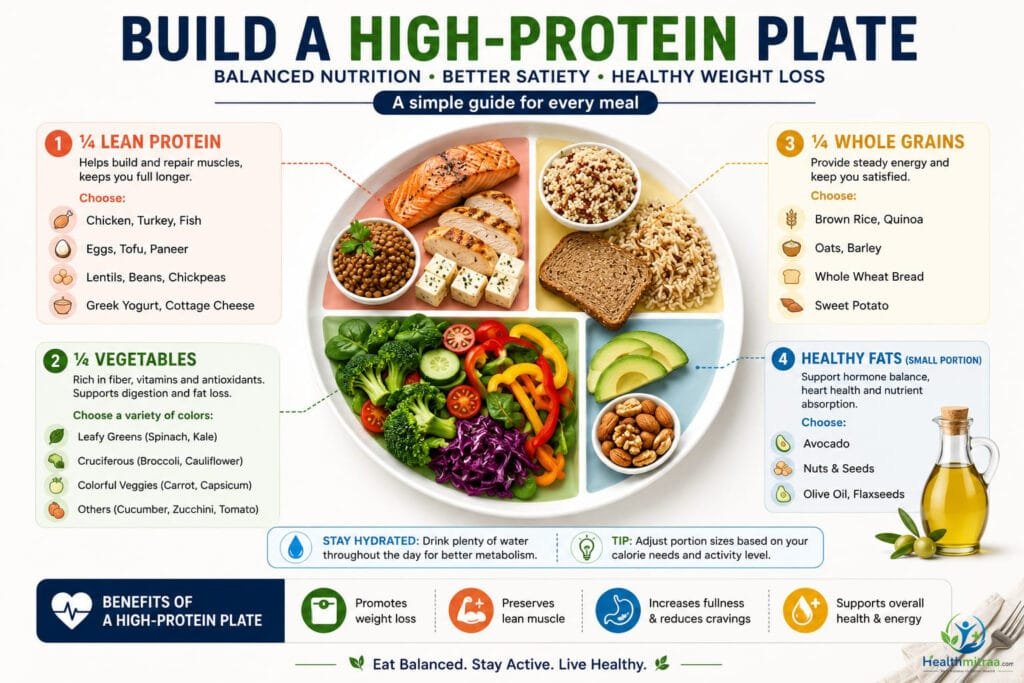
Creating protein-rich meals doesn’t have to be complicated. Combining lean protein with fiber-rich vegetables, healthy fats, and whole grains can help keep you full, support muscle health, and make weight loss more sustainable.
Breakfast
- Two boiled eggs with whole-grain toast and spinach.
- Plain Greek yogurt topped with berries, chia seeds, and almonds.
- Protein oatmeal made with low-fat milk and a sprinkle of hemp seeds.
Lunch
- Grilled chicken breast with quinoa and steamed broccoli.
- Salmon served with brown rice and mixed vegetables.
- Lentil and vegetable soup with a side salad.
Dinner
- Baked tofu stir-fry with colorful vegetables.
- Turkey breast with roasted sweet potatoes and green beans.
- Grilled shrimp served with quinoa and a fresh salad.
Healthy Snacks
- Cottage cheese with sliced apples.
- Roasted chickpeas.
- A handful of almonds.
- Plain Greek yogurt with berries.
- Edamame sprinkled with herbs.
Post-Workout Meal
- Grilled chicken with brown rice.
- Greek yogurt with fruit.
- A protein smoothie made with milk, fruit, and oats.
- Tuna with whole-grain crackers.
Build a Balanced Plate
For healthy and sustainable weight loss, try to include:
- ¼ Plate: Lean protein (chicken, fish, eggs, tofu, beans)
- ½ Plate: Non-starchy vegetables
- ¼ Plate: Whole grains or starchy vegetables
- Healthy fats: Small portions of nuts, seeds, or avocado
Small, consistent changes to your meals can make a big difference over time. Focus on variety, portion control, and choosing minimally processed protein sources whenever possible.
Frequently Asked Questions (FAQs)
1. What are the best high-protein foods for weight loss?
Some of the best high-protein foods include eggs, chicken breast, Greek yogurt, salmon, tuna, cottage cheese, lentils, chickpeas, tofu, tempeh, quinoa, and edamame. These foods help increase fullness while supporting muscle maintenance during weight loss.
2. Can eating more protein help you lose weight?
Yes. Protein can help reduce hunger, increase feelings of fullness, preserve lean muscle during weight loss, and slightly increase calorie burning through digestion. However, successful weight loss still depends on maintaining an overall calorie deficit and a balanced lifestyle.
3. How much protein should I eat each day to lose weight?
Protein needs vary based on age, body weight, activity level, and health conditions. Many physically active adults trying to lose weight may benefit from consuming around 1.2–1.6 grams of protein per kilogram of body weight per day, but individual needs vary. Speak with a healthcare professional or registered dietitian for personalized guidance.
4. Are plant-based proteins as good as animal proteins?
Yes. Both plant and animal proteins can support healthy weight loss. Animal proteins generally provide all essential amino acids, while eating a variety of plant-based protein sources throughout the day can also meet your nutritional needs.
5. Is it safe to eat high-protein foods every day?
For most healthy adults, including protein-rich foods in daily meals is safe and beneficial as part of a balanced diet. However, people with kidney disease or certain medical conditions should consult their healthcare provider before significantly increasing protein intake.
6. Do I need protein powder for weight loss?
Not necessarily. Most people can meet their protein needs through whole foods such as eggs, fish, poultry, dairy products, legumes, tofu, and nuts. Protein powders can be convenient when dietary intake is insufficient but should not replace a balanced diet.
Key Takeaways
- High-protein foods can help reduce hunger, increase fullness, and support healthy, sustainable weight loss.
- Include a quality source of protein with every meal to help preserve lean muscle while losing body fat.
- Choose minimally processed protein sources such as eggs, fish, poultry, Greek yogurt, legumes, tofu, and lentils.
- Combine protein with fiber-rich foods like vegetables, fruits, and whole grains for better appetite control.
- Spread your protein intake throughout the day instead of eating most of it at one meal.
- Whole foods should be your primary source of protein, while protein supplements are optional when dietary intake is insufficient.
- Long-term weight loss depends on a balanced diet, regular physical activity, adequate sleep, and consistent healthy habits—not protein alone.
References
Explore More
- 25 Best Foods for Weight Loss: What to Eat for Healthy Fat Loss
- How to Lose Belly Fat Naturally: 15 Proven Diet, Exercise & Lifestyle Tips
- Weight Loss: 15 Amazing Tips That Really Work