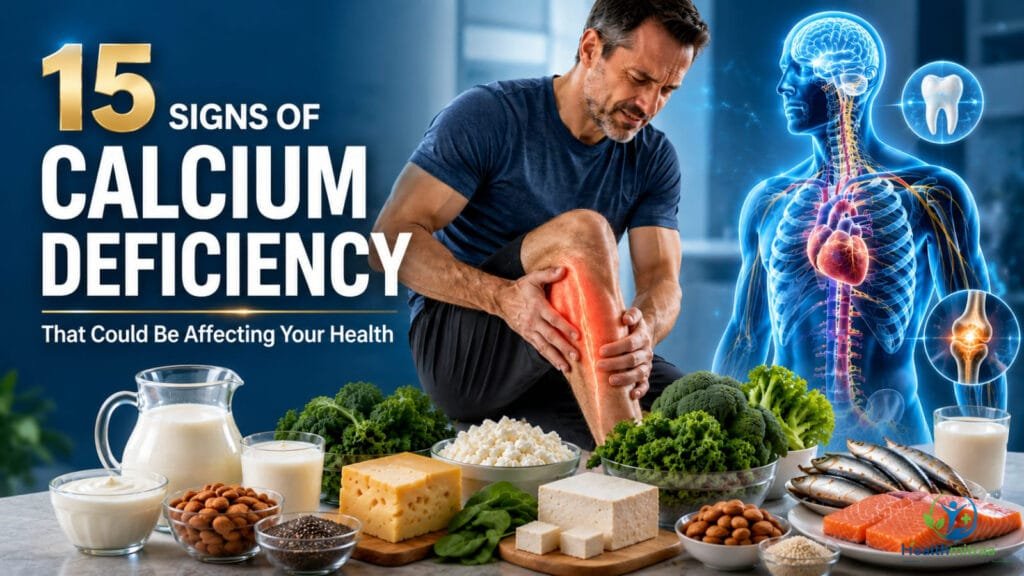
Calcium plays an essential role in keeping your bones, teeth, muscles, nerves, and heart functioning properly. When your body doesn’t get enough calcium or cannot absorb it effectively, it may begin to show subtle warning signs that are easy to overlook. Recognizing these symptoms early can help prevent more serious health problems and support long-term well-being. In this guide, you’ll learn 15 signs of calcium deficiency, its possible causes, risk factors, diagnosis, treatment options, calcium-rich foods, and practical ways to maintain healthy calcium levels.
What Is Calcium Deficiency?
Calcium deficiency occurs when your body does not have enough calcium to support its normal functions. Calcium is an essential mineral that plays a vital role in building and maintaining strong bones and teeth. It also helps your muscles contract, supports healthy nerve signaling, regulates heart rhythm, and contributes to normal blood clotting.
When calcium levels become too low, your body may begin taking calcium from your bones to keep important organs functioning. Over time, this can weaken bones and increase the risk of fractures and other health problems. Some people may not notice symptoms in the early stages, while others may experience muscle cramps, numbness, fatigue, or changes in bone and dental health.
Although calcium deficiency can affect anyone, it is more common in older adults, people with vitamin D deficiency, individuals with certain digestive disorders, and those who do not consume enough calcium-rich foods. Early diagnosis and appropriate treatment can help restore healthy calcium levels and reduce the risk of long-term complications.
15 Signs of Calcium Deficiency

1. Muscle Cramps and Spasms
Frequent muscle cramps are one of the most common signs of calcium deficiency. Calcium helps muscles contract and relax properly. When calcium levels are low, muscles may tighten involuntarily, leading to painful cramps or spasms, particularly in the legs, feet, or back. These cramps may occur during physical activity or even while resting at night. If muscle cramps become frequent or severe without an obvious cause, it’s important to consult a healthcare professional.
2. Tingling or Numbness in the Hands and Feet
Low calcium levels can interfere with normal nerve function, causing tingling, numbness, or a “pins and needles” sensation in the hands, feet, fingers, or around the mouth. These sensations may come and go at first but can become more noticeable if calcium deficiency continues. Because similar symptoms can also occur with other medical conditions, persistent numbness or tingling should always be evaluated by a healthcare professional.
3. Fatigue and Weakness
Feeling unusually tired or physically weak despite getting enough rest may be another sign of calcium deficiency. Calcium supports normal muscle function and plays an important role in many cellular processes that help produce energy. When calcium levels are too low, you may feel less energetic, experience reduced muscle strength, or find everyday activities more exhausting than usual. Although fatigue has many possible causes, persistent tiredness combined with other symptoms may warrant medical evaluation.
4. Brittle Nails
Weak or brittle nails that crack, split, or break easily may sometimes be linked to calcium deficiency, especially when combined with other symptoms. Although nail health is influenced by many factors, including aging and other nutritional deficiencies, calcium plays an important role in maintaining strong, healthy tissues. If your nails have become noticeably weaker without an obvious reason, it may be worth discussing your symptoms with a healthcare professional.
5. Dry Skin
Calcium contributes to maintaining healthy skin by supporting normal skin cell function and renewal. When calcium levels are low, some people may notice dry, rough, or flaky skin that does not improve with regular moisturizers. While dry skin is common and can result from many causes, persistent skin changes accompanied by other signs of calcium deficiency should not be ignored.
6. Tooth Problems
Calcium is essential for strong teeth and healthy tooth enamel. A long-term calcium deficiency may increase the risk of weak teeth, tooth decay, gum problems, or delayed tooth development in children. Some people may also experience increased tooth sensitivity or a higher likelihood of dental cavities. Maintaining adequate calcium intake, along with good oral hygiene and regular dental checkups, helps support long-term dental health.
7. Frequent Muscle Aches
In addition to muscle cramps, calcium deficiency may cause ongoing muscle aches or soreness without recent strenuous physical activity. Muscles may feel stiff, tender, or uncomfortable during daily movements. If muscle pain continues despite adequate rest or occurs along with other symptoms such as numbness or weakness, medical evaluation may be necessary to identify the underlying cause.
8. Bone Pain
Calcium is the primary mineral that gives bones their strength and structure. When calcium levels remain low for a long time, bones may gradually become weaker, leading to persistent aches or discomfort, especially in the hips, lower back, wrists, or legs. Bone pain caused by calcium deficiency is often dull and long-lasting rather than sudden or severe. If you experience ongoing bone pain without a clear injury, consult a healthcare professional for evaluation.
9. Frequent Bone Fractures
Long-term calcium deficiency can reduce bone density, making bones more fragile and increasing the risk of fractures. Minor falls or injuries that would not normally cause broken bones may result in fractures when bones have become weak. Older adults, postmenopausal women, and people with vitamin D deficiency are particularly at risk. Maintaining adequate calcium and vitamin D intake is essential for healthy bones throughout life.
10. Muscle Stiffness
Calcium helps muscles relax after they contract. When calcium levels are low, muscles may remain tight or stiff, making movement uncomfortable. Some people notice stiffness after sitting for long periods, while others experience reduced flexibility during daily activities or exercise. Persistent muscle stiffness accompanied by cramps or weakness may be a sign that your body needs further medical evaluation.
11. Difficulty Walking
In more severe or prolonged cases, calcium deficiency can affect muscle strength, coordination, and balance. This may make walking feel more difficult or increase the risk of stumbling and falls. While difficulty walking can have many possible causes, it should never be ignored, especially if it develops alongside muscle weakness, numbness, or bone pain. Early diagnosis and treatment can help prevent further complications.
12. Irregular Heartbeat
Calcium plays an important role in maintaining a normal heartbeat by helping the heart muscles contract properly. When calcium levels become too low, some people may experience heart palpitations, a racing heartbeat, or an irregular heart rhythm. Although these symptoms can have many possible causes, they should never be ignored. Seek medical attention promptly if you experience persistent palpitations, chest pain, dizziness, or fainting.
13. Memory Problems
Calcium is essential for healthy nerve signaling and normal brain function. In some cases, calcium deficiency may contribute to difficulty concentrating, forgetfulness, or problems with memory. These symptoms are usually mild in the early stages but may become more noticeable if the deficiency remains untreated. Since memory problems can result from many different conditions, a proper medical evaluation is important.
14. Anxiety or Depression
Low calcium levels may affect the normal functioning of the nervous system and, in some individuals, contribute to mood changes such as anxiety, irritability, or depression. While calcium deficiency is rarely the only cause of these symptoms, it may be one factor when combined with other signs of low calcium. Persistent changes in mood should be discussed with a healthcare professional to identify the underlying cause and receive appropriate care.
15. Seizures (Severe Deficiency)
Severe calcium deficiency can interfere with normal electrical activity in the brain and may lead to seizures. Although this is uncommon, it is considered a medical emergency and requires immediate treatment. Anyone who experiences a seizure, loss of consciousness, or other severe neurological symptoms should seek emergency medical care without delay. Early diagnosis and treatment can help restore healthy calcium levels and reduce the risk of serious complications.
What Causes Calcium Deficiency?
Calcium deficiency can develop when your body does not get enough calcium from food or cannot absorb and use it effectively. In many cases, more than one factor contributes to low calcium levels. Identifying the underlying cause is important because treatment often depends on addressing the reason behind the deficiency.
Some of the most common causes of calcium deficiency include:
- Not consuming enough calcium-rich foods, such as dairy products, leafy green vegetables, fortified foods, and certain nuts and seeds.
- Vitamin D deficiency, which reduces the body’s ability to absorb calcium from the digestive tract.
- Digestive disorders, including celiac disease, Crohn’s disease, and inflammatory bowel disease, which can interfere with nutrient absorption.
- Kidney disease, which affects the body’s ability to maintain healthy calcium and vitamin D levels.
- Hormonal disorders, particularly problems involving the parathyroid glands, which regulate calcium balance.
- Certain medications, such as long-term corticosteroids, some anti-seizure medications, and other drugs that may reduce calcium absorption or increase calcium loss.
- Older age, as calcium absorption naturally becomes less efficient over time.
- Poor nutrition or restrictive diets, especially those that regularly exclude major sources of calcium.
Understanding and treating the underlying cause can help restore healthy calcium levels and reduce the risk of long-term complications.
Who Is Most at Risk of Calcium Deficiency?
Although calcium deficiency can affect anyone, some people are more likely to develop it than others. Understanding these risk factors can help with early prevention and timely treatment.
People at higher risk include:
- Older adults, whose bodies absorb calcium less efficiently with age.
- Postmenopausal women, who experience bone loss due to lower estrogen levels.
- People with vitamin D deficiency, since vitamin D is essential for calcium absorption.
- Individuals with digestive disorders, such as celiac disease or Crohn’s disease, which reduce nutrient absorption.
- People who avoid dairy products or follow restrictive diets without replacing calcium-rich foods.
- Individuals with chronic kidney disease or disorders affecting the parathyroid glands.
- People taking certain medications, including long-term corticosteroids or some anti-seizure drugs, which may affect calcium balance.
- Children and teenagers with poor nutrition, as they require adequate calcium for healthy bone growth and development.
If you belong to one or more of these groups, eating calcium-rich foods, maintaining adequate vitamin D levels, and having regular medical checkups can help reduce your risk of calcium deficiency and support long-term bone health.
How Is Calcium Deficiency Diagnosed?
Calcium deficiency cannot be diagnosed based on symptoms alone because many of its signs, such as muscle cramps, fatigue, and numbness, can also occur with other medical conditions. A healthcare professional will begin by reviewing your symptoms, medical history, dietary habits, medications, and any underlying health conditions that may affect calcium levels.
Blood tests are commonly used to measure calcium levels and assess your overall mineral balance. Your doctor may also order additional tests to check vitamin D, magnesium, phosphorus, parathyroid hormone (PTH), and kidney function, as these factors play an important role in maintaining healthy calcium levels. In some cases, a bone density scan may be recommended if long-term calcium deficiency or osteoporosis is suspected.
If calcium deficiency is confirmed, treatment will depend on its underlying cause and severity. Early diagnosis and appropriate management can help restore healthy calcium levels, relieve symptoms, and reduce the risk of complications such as weak bones and fractures.
Best Calcium-Rich Foods to Increase Calcium Naturally

Eating a balanced diet that includes calcium-rich foods is one of the most effective ways to maintain healthy calcium levels. Dairy products such as milk, yogurt, and cheese are among the richest natural sources of calcium. If you do not consume dairy, many plant-based foods can also help meet your daily calcium needs, including kale, bok choy, broccoli, tofu made with calcium sulfate, fortified plant-based milk, fortified breakfast cereals, almonds, chia seeds, sesame seeds, and canned sardines or salmon with edible bones.
To support better calcium absorption, make sure you get enough vitamin D through safe sun exposure, fortified foods, or supplements if recommended by your healthcare professional. Regular physical activity, especially weight-bearing exercises such as walking or strength training, also helps maintain strong bones.
Choosing a variety of calcium-rich foods as part of a healthy, balanced diet is usually the best approach. If you are unable to meet your calcium needs through food alone, consult a healthcare professional to determine whether calcium supplements are appropriate for you.
Should You Take Calcium Supplements?

Calcium supplements can help treat calcium deficiency, but they should only be taken under the guidance of a healthcare professional. Taking more calcium than your body needs does not provide additional health benefits and may increase the risk of side effects such as constipation, kidney stones, or, in rare cases, high blood calcium levels.
If blood tests confirm calcium deficiency, your doctor may recommend a calcium supplement based on your age, overall health, dietary intake, and the underlying cause of the deficiency. In some cases, vitamin D supplements may also be prescribed because vitamin D helps the body absorb calcium more effectively.
Supplements should not replace a healthy diet. For most people, eating calcium-rich foods and maintaining adequate vitamin D levels remain the safest and most effective ways to support healthy bones and overall health. Always follow your healthcare professional’s advice regarding the type, dosage, and duration of any calcium supplement.
Simple Ways to Prevent Calcium Deficiency

Preventing calcium deficiency starts with maintaining a healthy, balanced diet that includes calcium-rich foods every day. Good sources include milk, yogurt, cheese, leafy green vegetables, fortified plant-based milk, tofu, almonds, sesame seeds, and calcium-fortified cereals. Getting enough vitamin D is equally important because it helps your body absorb calcium efficiently.
Regular weight-bearing exercises, such as walking, jogging, dancing, or strength training, help keep bones strong and healthy. Avoid smoking and limit excessive alcohol intake, as both can negatively affect bone health. If you have a medical condition or take medications that interfere with calcium absorption, work with your healthcare professional to manage your health and monitor your calcium levels when needed.
Do not take calcium supplements unless they are recommended by a healthcare professional. A nutritious diet, healthy lifestyle habits, and regular medical checkups are the most effective ways to maintain healthy calcium levels and reduce the risk of calcium deficiency.
When Should You See a Doctor?
Occasional muscle cramps or fatigue do not always mean you have calcium deficiency, but persistent or worsening symptoms should not be ignored. Schedule an appointment with a healthcare professional if you experience ongoing muscle cramps, numbness or tingling in your hands or feet, bone pain, frequent fractures, muscle weakness, or persistent fatigue without a clear cause.
Seek immediate medical attention if you develop severe symptoms such as seizures, chest pain, fainting, difficulty breathing, or an irregular heartbeat. These symptoms may indicate a serious medical condition that requires urgent evaluation and treatment.
Early diagnosis and appropriate treatment can restore healthy calcium levels, relieve symptoms, and help prevent complications such as osteoporosis and fractures. If you are at high risk of calcium deficiency, regular medical checkups and a balanced diet can help protect your long-term bone and overall health.
Frequently Asked Questions
What are the early signs of calcium deficiency?
Early signs of calcium deficiency may include muscle cramps, tingling or numbness in the hands and feet, fatigue, muscle weakness, brittle nails, and tooth problems. These symptoms often develop gradually and can be mistaken for other health conditions.
Which foods are highest in calcium?
Some of the best calcium-rich foods include milk, yogurt, cheese, kale, broccoli, tofu made with calcium sulfate, fortified plant-based milk, almonds, sesame seeds, chia seeds, and canned sardines or salmon with edible bones.
Can calcium deficiency be treated naturally?
Yes. Mild calcium deficiency may improve by eating more calcium-rich foods and maintaining adequate vitamin D levels. However, some people may require calcium supplements or treatment for an underlying medical condition, as advised by a healthcare professional.
Is it safe to take calcium supplements every day?
Calcium supplements should only be taken if they are recommended by a healthcare professional. Taking excessive amounts may increase the risk of side effects, including constipation, kidney stones, or high blood calcium levels.
Can calcium deficiency weaken bones?
Yes. Long-term calcium deficiency can reduce bone density, increasing the risk of osteoporosis and bone fractures. Maintaining adequate calcium and vitamin D intake is essential for strong, healthy bones throughout life.
Key Takeaways
Calcium is essential for healthy bones, muscles, nerves, and heart function. Because the symptoms of calcium deficiency often develop gradually, they can be easy to overlook. Recognizing early warning signs, eating a balanced diet rich in calcium, maintaining adequate vitamin D levels, and seeking timely medical advice when symptoms persist can help prevent long-term complications. Healthy lifestyle habits and regular medical checkups also play an important role in maintaining optimal calcium levels.
References
- National Institutes of Health (NIH) – Office of Dietary Supplements. Calcium Fact Sheet for Health Professionals.
- World Health Organization (WHO). Micronutrients and Nutrition.
- Mayo Clinic. Calcium and Calcium Supplements.
- Cleveland Clinic. Hypocalcemia (Low Calcium).
- NHS (UK). Vitamins and Minerals – Calcium.
- MedlinePlus. Calcium in Diet.
Explore More
- 15 Signs of Magnesium Deficiency That Could Be Affecting Your Health
- 15 Signs of Iron Deficiency That Could Be Affecting Your Health
- Vitamin B12 Deficiency: 10 Critical Warning Signs You Should Never Ignore
- Vitamin D Deficiency: 15 Warning Signs, Causes, Treatment & Prevention
- Morning Exercise: 15 Amazing Benefits of Starting Your Day with Exercise
Medical Disclaimer
This article is for informational and educational purposes only and should not be considered medical advice, diagnosis, or treatment. Always consult a qualified healthcare professional before starting or stopping any medication or supplement. Never ignore professional medical advice or delay seeking medical care because of information you have read online.